
UHF RFID Reader Antenna
UHF RFID Reader Antenna
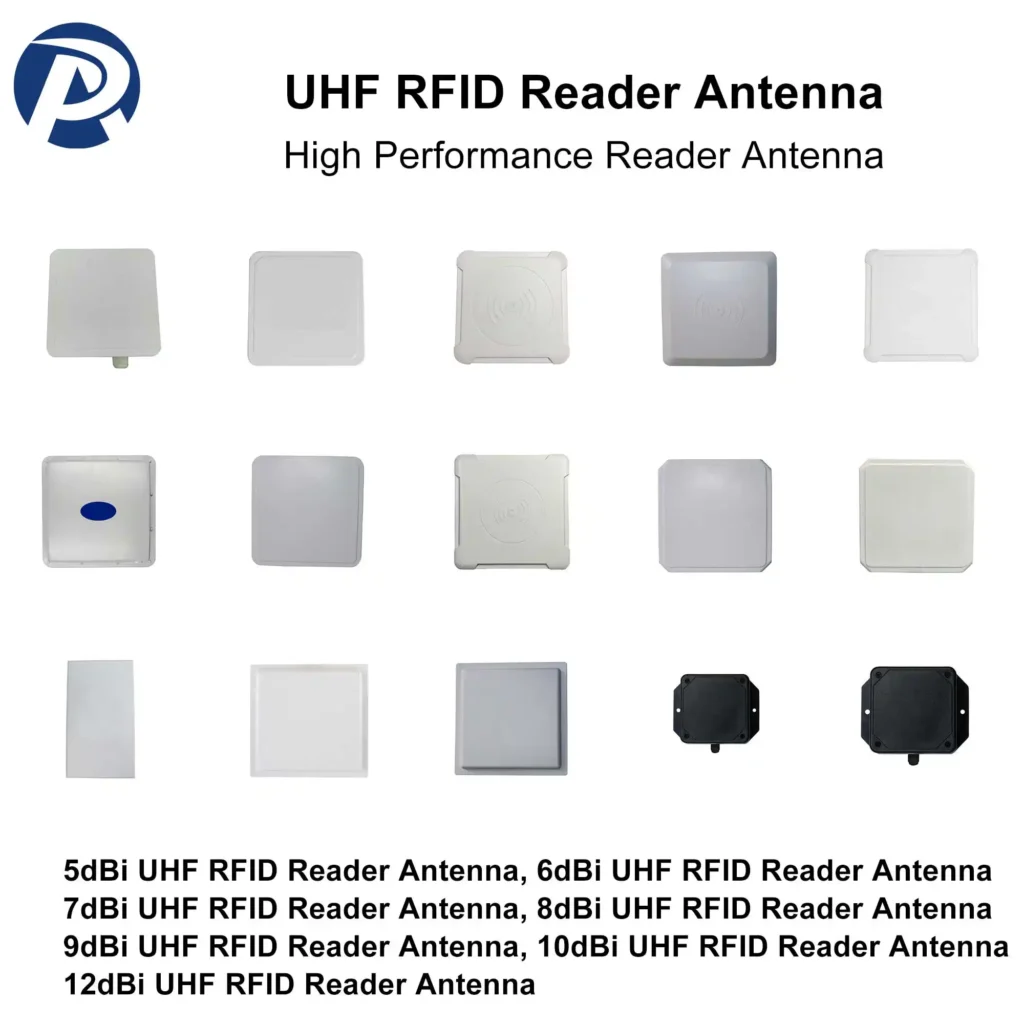
Airplux Technologies builds its UHF RFID Reader Antenna to deliver high-performance RFID reading with stable gain, low VSWR, and consistent signal quality. You can choose from 5 dBi to 12 dBi gain options, so the antenna fits short-range desktop setups as easily as long-range warehouse portals — across logistics, warehousing, access control, retail, and asset management.
We optimize every antenna’s radiation pattern, polarization purity, and RF stability to maintain accurate tag detection and reliable coverage — even in dense warehouses or outdoor yards where RF noise gets messy. On top of that, the compact and durable housing supports flexible installation on walls, ceilings, or poles for both indoor and outdoor RFID deployments.
Engineered with optimized impedance matching and minimized signal loss, Airplux UHF RFID Reader Antennas provide efficient data transmission and long-term stability. With robust construction and customization capabilities, they are ideal for RFID systems requiring accuracy, efficiency, and dependable performance.
What is a UHF RFID Reader Antenna?
A UHF RFID Reader Antenna is the component responsible for creating the RF communication zone between RFID readers and RFID tags. In a typical RFID system, the reader sends signals through the antenna, allowing tags within the coverage area to be identified and read.
Different antenna designs provide different coverage characteristics. Some models focus on short-range, tightly controlled read zones — think desktop stations or workstation scanning. Others stretch to longer distances and wider areas, like dock door portals or outdoor vehicle lanes. That choice matters more than most people expect: the antenna you pick directly shapes read accuracy, tag detection reliability, and overall system throughput.
In practice, you’ll see UHF RFID Reader Antennas everywhere from warehouse inventory tracking and logistics hubs to retail stockrooms, asset cages, and vehicle checkpoints. If the job needs stable, accurate tag reads, the antenna is doing a good chunk of the work.
How UHF RFID Reader Antennas Work
A UHF RFID Reader Antenna acts as the communication bridge between RFID readers and RFID tags. When connected to an RFID reader, the antenna transmits radio frequency signals that activate nearby RFID tags. The tags then send their stored data back to the reader, so the system can automatically identify inventory, assets, or products without manual scanning.
As a result, the performance of the antenna directly influences reading range, coverage area, and tag detection reliability, making it a critical component in any RFID system.
Why the Antenna Often Matters More Than the Reader
Most RFID projects start by comparing readers. But in real deployments, antenna selection often has a bigger impact on performance than the reader itself.
Coverage Defines the Read Zone
The antenna determines where tags can actually be read. If coverage doesn’t match the environment, missed reads and stray reads become inevitable.
Signal Quality Starts at the Antenna
Metal, liquids, and surrounding structures can weaken RF signals. A well-designed antenna helps preserve signal quality before it ever reaches the reader.
Small Decisions Make a Big Difference
Polarization, mounting angle, and antenna placement often affect performance more than reader specifications. In many cases, a simple antenna adjustment solves problems that extra hardware cannot.
More Antennas Aren't Always Better
Adding antennas can improve coverage, but overlapping read zones may create interference. Good antenna planning usually delivers better results than simply adding more equipment.
The reader processes RFID data, but the antenna controls how that data is captured. That’s why antenna selection is often one of the most important decisions in an RFID deployment.
key advantages
In many RFID deployments, the antenna has a greater impact on read performance than the reader itself. Coverage pattern, polarization, and installation position often determine whether a system performs reliably or struggles with missed reads.
Flexible Coverage for Different RFID Deployments
From desktop RFID stations to warehouse portal systems, different setups need different read ranges and coverage patterns. With gain options from 5 dBi to 12 dBi, UHF RFID reader antennas can be matched to the actual job instead of forcing one antenna to fit every scenario.
Reliable Reading Performance
A reader antenna does more than transmit RF signals — it directly determines how consistently tags get detected in real-world environments. Optimized impedance matching and low VSWR help maintain a stable link between reader and tag, which means fewer missed reads and better system reliability day to day.
Better Control Over Read Zones
In RFID systems, reading too much can be just as problematic as reading too little. Well-designed radiation patterns create more predictable read zones, so you capture the tags you actually want without pulling in stray reads from nearby aisles or adjacent dock doors.
Built for Indoor and Outdoor Use
Whether it's installed in a warehouse, a manufacturing line, a vehicle identification lane, or an outdoor logistics yard, a UHF RFID reader antenna has to hold up under real conditions. Durable housing and stable RF characteristics keep it performing consistently across different deployment environments.
Typical Applications and Deployment Scenarios
UHF RFID reader antennas earn their place wherever you need reliable long-range tag detection and fast data collection. From warehouse inventory tracking to vehicle identification systems, the right antenna keeps read performance stable and data capture accurate across a wide range of environments.
Warehouse & Inventory Management
Warehouses lean on UHF RFID antennas to automate inventory counting, pallet tracking, and goods movement monitoring. You’ll typically see antennas mounted at dock door portals to capture tags as pallets enter or leave, and along conveyor systems to track items as they move through sorting and staging areas. Overhead antennas above aisles or workstations can also read multiple tagged items at once, cutting down on manual scans and improving real-time inventory visibility.

Vehicle Identification & Access Control
At parking entrances, logistics yards, and gated facilities, antennas configured as RFID gates read windshield tags or vehicle-mounted RFID tags automatically. Drivers don’t need to stop or roll down a window — the system identifies authorized vehicles and logs entry or exit without any manual step. This setup works especially well for high-traffic checkpoints where speed and hands-free operation matter.

Retail & Smart Shelving
Retailers use UHF RFID antennas to keep stock visibility high and automate inventory audits. Smart shelf antennas built into display fixtures continuously monitor tagged products, while overhead antennas in stockrooms or back-of-house areas track replenishment movements. The result: fewer out-of-stock situations, faster cycle counts, and less time spent hand-scanning shelves.

Manufacturing & Asset Tracking
In production environments, UHF RFID antennas track tools, work-in-progress items, and finished products as they move through each stage. Conveyor-mounted antennas are particularly useful here — they create fixed reading points along the line, giving consistent reads without slowing down production. The same approach applies to tool cribs and asset cages, where antennas at entry points log which tools go out and come back, improving traceability and reducing loss.

Key UHF RFID Antenna Specifications Explained
When comparing UHF RFID reader antennas, technical specifications tell you a lot more than dimensions or frequency range alone. Key parameters like gain, beamwidth, polarization, and VSWR directly affect reading performance, coverage patterns, and whether an antenna fits a specific deployment. So before you pick a model, it helps to understand what each spec actually means in practice.
· Gain
Higher gain antennas focus RF energy into a narrower coverage area, which often means longer reading distances and a more concentrated read zone.
· beamwidth
Beamwidth determines how wide the antenna radiates RF energy. A wider beam covers larger areas, while a narrower beam gives you more focused coverage.
· polarization
Polarization affects how well tags get detected when their orientation changes. Circular polarization offers more flexibility, while linear polarization can boost performance when you can control tag orientation.
· VSWR
VSWR indicates how efficiently power transfers between the reader and antenna. Lower VSWR values generally lead to more efficient RF performance.
Common Types of UHF RFID Reader Antennas
Not all RFID antennas are designed for the same reading environment. Different antenna types provide different coverage patterns, reading distances, and installation options. Understanding their strengths can help match the antenna to the application more effectively.
| Antenna Type | Read Range | Coverage | Best For |
|---|---|---|---|
| Near Field | Short | Controlled | Item-Level Reading |
| Circular Polarized | Medium | Flexible | General RFID |
| Linear Polarized | Long | Focused | Fixed Orientation |
| Narrow Beam | Long | Directional | Vehicle ID |
| Integrated | Medium | Compact | Access Control |
- tips:If tag orientation is unpredictable, circular polarized antennas are often preferred. For long-range and controlled reading zones, narrow beam or linear polarized antennas may provide better performance.
Circular vS Linear Polarization: Which One Should You Choose?
One of the most important decisions when selecting a UHF RFID reader antenna is polarization. While circular and linear antennas operate within the same frequency range, they behave very differently in real-world RFID deployments. The right choice depends less on the antenna itself and more on how RFID tags are positioned, moved, and read within your application.
| Factor | Circular Polarization | Linear Polarization |
|---|---|---|
| Tag Orientation | Variable | Fixed |
| Read Reliability | Higher | Depends on alignment |
| Read Range | Medium | Longer |
| Installation | Easier | Requires alignment |
| Typical Applications | Warehouse, Retail, Asset Tracking | Conveyor, Production Line, Fixed Position Reading |
When Circular Polarization Is Usually Preferred
You’ll usually want circular polarization when tag orientation changes from read to read — for example, boxes moving through a dock door at random angles. In warehouse portals, retail inventory systems, and asset tracking applications, tags may face different directions each time they pass through the read zone. Circular antennas help maintain consistent reading performance without requiring precise tag alignment.
When Linear Polarization Is Usually Preferred
Linear polarization fits better when tags always pass through in a predictable orientation, like on a conveyor or fixed production line. In those cases, conveyor systems, automated production lines, and fixed-position identification stations can benefit from the additional reading distance and concentrated RF energy provided by linear antennas.
Common RFID Reading Challenges and Solutions
Even a well-designed RFID system can run into reading problems if antenna placement, tag selection, or environmental conditions aren’t carefully considered. Below are four issues that show up most often in UHF RFID deployments — and how to fix them.
01. Inconsistent Read Range
One common culprit is improper antenna positioning or interference from the surrounding environment. In practice, you’ll often fix this by optimizing antenna placement and double-checking nearby materials that could be reflecting or absorbing RF signals.
02. Missed Tag Reads
Missed reads usually happen when tags face the antenna at an unfavorable angle. If that’s the case, switching to circular polarized antennas or adding a second reading angle can make a big difference.
03. Metal Interference
Metal surfaces reflect RF signals and can easily disrupt reading performance. To work around this, use anti-metal RFID tags and adjust the antenna distance from the metal surface.
04. Multiple Unwanted Reads
Sometimes the read zone is simply too wide, so the antenna picks up tags you don’t need. In that scenario, choose an antenna with a narrower beamwidth or reduce reader power to tighten the coverage area.
How to Choose the Right RFID Reader Antenna
Selecting the right UHF RFID reader antenna depends on several factors, including reading distance, coverage requirements, tag orientation, and installation conditions. Understanding these factors can help improve reading performance and ensure reliable operation in different RFID applications.
· Consider the Required Read Range
Different RFID applications need different reading distances. If you’re dealing with short-range identification — say, a desktop station or tool crib — a near-field antenna usually works best. But for warehouse portals, vehicle lanes, and large inventory zones, you’ll want a higher-gain antenna that can cover more area.
· Evaluate the Coverage Area
The size and shape of the reading zone should match the application. Wide coverage is useful for inventory management and portal applications, while focused coverage is often preferred for conveyor systems and controlled reading environments.
· Choose the Appropriate Polarization
Circular polarized antennas are commonly used when tag orientation is unpredictable, while linear polarized antennas are suitable for applications where tags maintain a fixed orientation and longer reading distances are required.
· Consider the Installation Environment
Indoor and outdoor deployments have different requirements. Environmental conditions such as moisture, dust, temperature, and mounting location should be considered when selecting an RFID reader antenna.
UHF RFID Reader Antenna Models
· Mini Reader Antennas (5dBi)
| Model | Gain(dbi) | Connector | Dimension(mm) |
| APRIA8000808CD/APRIA9000808CD | 5 | SMA or customized | 85×85×34 |
| APRIA8001010CD/APRIA9001010CD | 5 | SMA or customized | 100×100×35 |
· Mini Reader Antennas (6-9dBi)
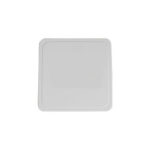
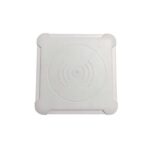
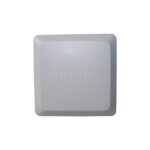
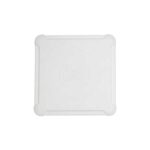
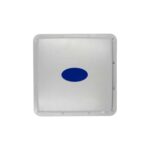
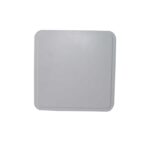
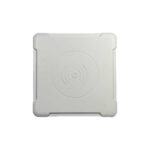
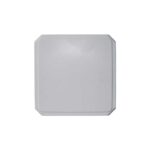
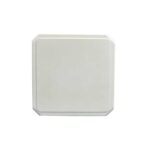
| Model | Gain(dbi) | Beamwidth (H/V) | Dimension(mm) |
| APRIA8006CS/APRIA9006CS | 6 | 105°/ 95° | 130×130×49.5 |
| APRIA8007CD/APRIA9007CD | 7 | 80°/ 70° | 165×165×54 |
| APRIA8007CG/APRIA9007CG | 7 | 70°/ 70° | 185×185×58 |
| APRIA8008CX/APRIA9008CX | 8 | 80°/ 60° | 220×220×56 |
| APRIA8008CG/APRIA9008CG | 8 | 80°/ 60° | 260×260×100 |
| APRIA8008CS/APRIA9008CS | 8 | 65°/ 60° | 256×256×100 |
| APRIA8009CSQ/APRIA9009CSQ | 9 | 70°/ 60° | 260×260×81 |
| APRIA8009CG/APRIA9009CG | 9 | 70°/ 60° | 260×260×63 |
| APRIA8009CS/APRIA9009CS | 9 | 70°/ 60° | 260×260×100 |
| APRIA8009CT/APRIA9009CT | 9 | 70°/ 60° | 258×258×74 |
· High-Gain Long-Range Antennas (10-12dBi)
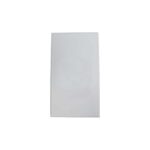
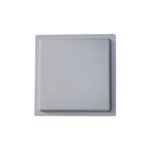
| Model | Gain(dbi) | Beamwidth (H/V) | Dimension(mm) |
| APRIA80010CD/APRIA90010CD | 10 | 75°/ 40° | 420×420×57.8 |
| APRIA80012CD/APRIA90012CD | 12 | 40°/ 40° | 445×445×74 |
| APRIA80012CS/APRIA90012CS | 12 | 40°/ 40° | 445×445×101 |
Frequently Asked Questions About UHF RFID Reader Antennas
A UHF RFID Reader Antenna is a key component of a UHF RFID system that enables communication between RFID readers and tags. It transmits RF signals from the reader to activate passive RFID tags and receives the backscattered signals returned from the tags.
A complete UHF RFID system typically includes:
RFID Tags
UHF RFID Reader
Reader Antennas
RFID Software System
Unlike the RFID reader, which processes identification data, the antenna determines how RF energy is distributed and directly affects the reading area, tag detection reliability, and system performance.
In practice, you’ll find UHF RFID Reader Antennas in:
Warehouse inventory management
Logistics tracking
Manufacturing automation
Asset management systems
Choosing the right UHF RFID Reader Antenna depends on your application environment, reading distance, coverage area, and tag orientation.
The main factors include:
Reading Distance
Long-range applications such as warehouse gates usually require higher gain antennas, while short-range applications may need lower gain antennas with controlled coverage.
Reading Area
Wide-area applications require broader beam coverage, while precise detection areas may require narrow beam antennas.
Tag Orientation
If tag positions are unpredictable, circular polarized antennas work best because they can detect tags from different orientations.
Installation Environment
Factors such as metal structures, mounting location, and surrounding objects can influence antenna performance.
Before selecting an antenna, we recommend evaluating the actual application environment and running tests.
The main difference between circular polarized and linear polarized RFID antennas comes down to how they transmit electromagnetic waves.
Circular Polarized RFID Antenna
Circular polarization sends RF waves in multiple orientations, which makes it suitable for applications where tag direction changes frequently.
Typical applications:
• Warehouse tracking
• Logistics gates
• Asset management
Linear Polarized RFID Antenna
Linear polarization provides concentrated RF energy in a specific direction and can achieve longer reading distances when tag orientation stays fixed.
Typical applications:
• Production lines
• Fixed-position tracking
• Industrial automation
For most dynamic RFID applications, circular polarized antennas tend to be the better choice because tags may not always face the antenna in the same direction.
The reading distance of a UHF RFID Reader Antenna depends on multiple factors, not just antenna gain.
Important factors include:
Antenna Gain
Higher gain antennas provide stronger directional coverage and longer reading distances.
Beam Width
A narrower beam focuses RF energy into a specific area, while a wider beam provides broader coverage.
RFID Tag Performance
Different tag sizes, chip types, and installation materials affect reading distance.
Reader Power
The output power of the RFID reader also influences the communication range.
Installation Environment
Metal objects, liquids, and signal reflections can affect RFID performance.
In short, you should evaluate the complete RFID system when selecting an antenna, not just a single specification.
The ideal RFID antenna gain depends on the application’s required reading distance and coverage area.
Higher-gain RFID antennas typically provide longer read ranges and more focused RF energy, making them suitable for portals, vehicle identification, and long-range asset tracking. Lower-gain antennas generally offer wider coverage patterns and are often used in short-range RFID applications.
When selecting a UHF RFID reader antenna, gain should be considered together with polarization, beamwidth, installation height, and the size of the reading zone to achieve the best overall system performance.
Metal and liquid can significantly affect RFID performance because they absorb or reflect RF signals. Standard RFID tags that sit directly on metal surfaces or stick to liquid-filled containers often experience reduced read range and lower reading accuracy.
That said, specialized solutions such as anti-metal RFID tags, on-metal RFID labels, and optimized antenna placement can help overcome these challenges. In industrial environments, selecting the right RFID antenna and tag combination is essential for achieving stable performance around metal equipment, tools, containers, and liquid products.
Yes. Most UHF RFID readers work with different antenna types as long as they operate within the same frequency range and use compatible connectors and impedance specifications.
You can often connect a single RFID reader to circular polarized antennas, linear polarized antennas, near-field antennas, or long-range RFID antennas depending on the application requirements. This flexibility allows system integrators to optimize coverage, reading distance, and tag orientation performance without changing the reader itself.
Before finalizing your antenna choice, make sure to verify frequency compatibility, cable requirements, and the reader’s supported antenna ports.
Near-field and far-field RFID antennas serve different reading environments.
Near-field RFID antennas create a controlled read zone within a short distance, which makes them suitable for smart cabinets, item-level tracking, medical inventory management, and applications where you need to minimize stray reads.
Far-field RFID antennas, on the other hand, provide longer reading distances and wider coverage areas, making them ideal for warehouse management, logistics tracking, access control, and portal applications.
So, the choice depends on the required reading range, tag density, and application environment.
Yes. A UHF RFID reader antenna can communicate with multiple RFID tags simultaneously using anti-collision protocols set out in the EPC Gen2 standard.
Depending on the RFID reader, antenna configuration, and tag environment, a single antenna can identify dozens or even hundreds of tags within its reading zone in a matter of seconds. That’s why this capability is one of the key advantages of UHF RFID technology compared to traditional barcode systems, which require line-of-sight scanning one item at a time.
Yes. The cable connecting an RFID reader and antenna can affect overall system performance.
Longer RF cables introduce signal loss, which may reduce the power delivered to the antenna and affect reading distance. Connector quality, cable type, and installation conditions can also influence RF efficiency.
So, for optimal performance, use high-quality low-loss coaxial cables and keep cable lengths as short as practical while meeting installation requirements. Proper cable selection helps maintain stable RFID reading performance and system reliability.
About Airplux RFID Antenna
Solutions
Airplux Technologies specializes in RFID antenna design and manufacturing, providing reliable RFID antenna solutions for various identification and tracking applications.
With professional antenna design capabilities and manufacturing experience, Airplux offers a wide range of RFID antennas, including UHF RFID antennas, near-field RFID antennas, ceramic RFID antennas, narrow beam antennas, and integrated RFID antenna solutions.
Our RFID antennas are designed to deliver stable signal performance, accurate tag reading, and reliable operation in different RFID environments. By supporting both standard products and customized antenna solutions, Airplux helps system integrators, enterprises, and manufacturers develop efficient RFID systems for inventory management, access control, logistics tracking, asset management, and other applications.
Please contact us for more detailed info or any inquiry: info@airpluxtec.com
Explore RFID Antenna Solutions
need the right antenna solution?
From standard antenna products to customized designs,Airplux provides professional antenna solutions for
different wireless communication requirements.