
5dBi UHF RFID Desktop Integrated Reader Antenna

UHF RFID Desktop Integrated Reader Antenna
Model: APRIA8001010CD
Frequency Range: 865-868MHz
Polarization: Circular
Gain: 5dBi
Product Descriptions
The APRIA8001010CD is a 5dBi circularly polarized RFID antenna designed for the 865–868 MHz band. Housed in a 100×100×35mm black ABS radome with side mounting ears, it provides stable circular polarization, an axial ratio ≤5dB, and 50Ω impedance. With an SMA connector (customizable), it is well-suited for handheld readers, desktop readers, RF readers, and Internet of Vehicles devices.
Descriptions
- 865-868MHz
- 5dBi
- Circular Polarization
- 100*100*35mm
Applications
- Handheld reader
- Desktop reader
- RF Reader
- Internet of Vehicles devices
Product Specifications
Electrical Specifications
Frequency | 865-868MHz |
Gain | 5dBi |
Beam width | Circular |
Polarization | ≤5dB |
VSWR | 50Ω |
Connector | SMA or customized |
Mechanical Specifications
Antenna dimensions | 100*100*35mm |
Antenna radome material | ABS |
Operating temperature | -20-60℃ |
Antenna Drawing

Applications

Handheld Reader
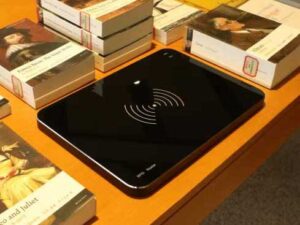
Desktop Reader

RF Reader

Internet of Vehicles Devices
PRODUCT SUPPORT
FAQ - ETSI UHF Integrated RFID Reader Antenna
An integrated RFID reader antenna is a device that combines an RFID reader and an antenna into a single unit. Unlike a traditional RFID setup that uses a separate reader and external antenna, this design reduces the number of individual components and simplifies system installation. It can be used in applications such as access control, inventory management, asset tracking, and automated identification. The exact functions depend on the reader’s communication interfaces, supported protocols, and system configuration.
An integrated UHF RFID reader antenna sends radio-frequency signals to detect nearby RFID tags. When a compatible passive UHF tag receives the signal, it uses the energy from the reader’s transmission to respond with its stored identification data. The integrated reader processes this response and makes the collected information available to the connected system. Reading performance depends on factors such as antenna characteristics, tag design, reader settings, and the surrounding environment.
RFID can help self-service checkout systems identify tagged products without requiring customers to scan each item individually. When products are placed within the reading area, the RFID system collects their tag IDs and sends the information to connected checkout software.
The software can match the detected items with product records and calculate the transaction total. Reliable operation depends on tag placement, product materials, reading area configuration, and software integration.
When installing an RFID antenna on a desktop counter, consider the counter material, antenna position, reading direction, and distance between the antenna and tagged items. Metal surfaces and nearby electronic equipment may affect RF performance, so the installation should be tested in its intended environment.
The antenna should also be positioned to provide convenient access to the reading area without obstructing normal counter operations.
Side mounting ears provide attachment points for securing an RFID antenna to a suitable panel, bracket, or equipment enclosure. They can make installation more stable and help maintain a consistent antenna position during operation.
Before installation, check the mounting dimensions, available clearance, fixing method, and compatibility with the equipment structure. The mounting ears should be used according to the actual mechanical design rather than assuming a particular installation method.
Yes. RFID can be integrated into self-service kiosks to identify tagged items, cards, or other compatible objects. For example, a kiosk may use RFID to retrieve product information, identify registered items, or support automated service workflows.
The RFID antenna provides the radio frequency link with the tags, while the connected reader and kiosk software process the identification data. The required interfaces and software functions depend on the kiosk design.
Please feel free to contact us by info@airpluxtec.com for more detailed info if you’re interested in this Antenna, or please check here for our more UHF RFID Desktop Integrated Reader Antenna products.
Contact
We are always ready to serve you.
Please feel free to contact us
for any antenna inquiry or requirement.
Leave us a message in the form below and
we will get back to you within 24 hours.