
9dBi UHF RFID Long Range Integrated Reader Antenna


Product Descriptions
The APRIA8009CSQ is a 9dBi circularly polarized UHF integrated RFID reader antenna designed for the 865–868 MHz band. Its 260×260×81mm white ABS radome delivers a beamwidth of 70° horizontal / 60° vertical, VSWR ≤1.5, and a front-to-back ratio ≥20. Featuring IP65 protection, 100W power handling, and DC grounding lightning protection, it is well-suited for RFID logistics tracking, warehouse management, door control systems, and parking lot management.
Descriptions
- 865-868MHz
- 9dBi
- Circular Polarization
- 260*260*81mm
Applications
- RFID logistics tracking
- Warehouse management
- Door control system
- Parking lot management
Product Specifications
Model: APRIA8009CSQ
Electrical Specifications
Frequency | 865-868MHz |
Gain | 9dBi |
Beam width | Hor:70° Ver:60° |
Polarization | Circular |
VSWR | ≤1.5 |
F/B Ratio | ≥20 |
Impedance | 50Ω |
Maximum power | 100W |
Lightning protection | DC Ground |
Connector | Customized |
Mechanical Specifications
Dimension | 260*260*81mm |
Net weight | 1.8kg |
Packing size | 40.5*30.5*10.5cm |
Gross weight | 2.0kg |
Radome material | ABS |
Radome color | White |
Operating temperature | -20-60℃ |
IP Rating | IP65 |
Antenna Pattern

H-Plane

E-Plane
Antenna Drawing

Applications

RFID Logistics Tracking

Warehouse Management
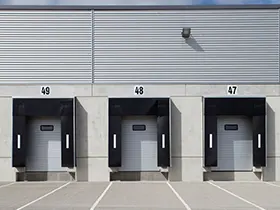
Door Control System
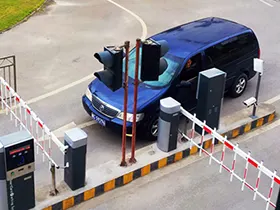
Parking Management
PRODUCT SUPPORT
FAQ - ETSI UHF Integrated RFID Reader Antenna
An integrated RFID reader antenna is a device that combines an RFID reader and an antenna into a single unit. Unlike a traditional RFID setup that uses a separate reader and external antenna, this design reduces the number of individual components and simplifies system installation. It can be used in applications such as access control, inventory management, asset tracking, and automated identification. The exact functions depend on the reader’s communication interfaces, supported protocols, and system configuration.
An integrated UHF RFID reader antenna sends radio-frequency signals to detect nearby RFID tags. When a compatible passive UHF tag receives the signal, it uses the energy from the reader’s transmission to respond with its stored identification data. The integrated reader processes this response and makes the collected information available to the connected system. Reading performance depends on factors such as antenna characteristics, tag design, reader settings, and the surrounding environment.
RFID can help logistics operators identify packages and shipments at different checkpoints throughout the transportation process. Tags attached to packages or containers can be detected by compatible RFID readers as goods pass through receiving, sorting, and dispatch areas. The collected data helps update shipment records and improve inventory visibility. Reading performance depends on tag placement, package materials, item density, and the configuration of each reading point.
UHF RFID can support automated parking management by identifying vehicles equipped with compatible RFID tags. Readers installed near parking entrances and exits capture tag information as vehicles approach designated checkpoints. The system can use this data to manage vehicle entry records, parking access, and transaction workflows. Reliable operation requires suitable tag placement, appropriate reader positioning, and integration with the parking management or access control platform.
No. A higher-gain antenna does not automatically provide better performance in every RFID application. Higher gain generally concentrates radiation more strongly in certain directions, while a lower-gain antenna may provide a wider radiation pattern depending on its design. The right choice depends on the required reading area, installation distance, tag orientation, reader output power, and surrounding environment. Both configurations should be evaluated under the intended operating conditions.
Missed reads during high-volume RFID operations can result from several factors, including high tag density, poor tag placement, RF interference, unsuitable reader settings, and overlapping reading zones. Metal objects and liquids can also affect signal propagation. In addition, the reader’s anti-collision capability and configuration influence how efficiently multiple tags are identified. System testing with realistic tag quantities and movement patterns helps identify the cause of missed reads.
Please feel free to contact us by info@airpluxtec.com for more detailed info if you’re interested in this Antenna, or please check here for our more UHF RFID Long Range Integrated Reader Antenna products.
Contact
We are always ready to serve you.
Please feel free to contact us
for any antenna inquiry or requirement.
Leave us a message in the form below and
we will get back to you within 24 hours.