
7dBi UHF RFID Access Control Integrated Reader Antenna


Product Descriptions
The APRIA8007CG is a 7dBi circularly polarized UHF integrated RFID reader antenna designed for the 865–868 MHz band. Housed in a 185×185×58mm white ABS radome, it delivers a balanced 70° × 70° beamwidth, VSWR ≤1.5, and a front-to-back ratio ≥13. With IP65 protection, 100W power handling, and DC grounding lightning protection, it is an excellent choice for RFID logistics tracking, warehouse management, door control systems, and parking lot management.
Descriptions
- 865-868MHz
- 7dBi
- Circular Polarization
- 185*185*58mm
Applications
- RFID logistics tracking
- Warehouse management
- Door control system
- Parking lot management
Product Specifications
Model: APRIA8007CG
Electrical Specifications
Frequency | 865-868MHz |
Gain | 7dBi |
Beam width | Hor:70° Ver:70° |
Polarization | Circular |
VSWR | ≤1.5 |
F/B Ratio | ≥13 |
Impedance | 50Ω |
Maximum power | 100W |
Lightning protection | DC Ground |
Connector | Customized |
Mechanical Specifications
Dimension | 185*185*58mm |
Net weight | 1.0kg |
Packing size | 25*25*8cm |
Radome material | ABS |
Radome color | White |
Gross weight | 1.1kg |
Operating temperature | -20-60℃ |
IP Rating | IP65 |
Antenna Pattern

H-Plane

E-Plane
Antenna Drawing

Applications

RFID Logistics Tracking

Warehouse Management
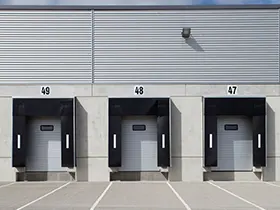
Door Control System
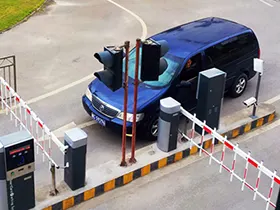
Parking Management
PRODUCT SUPPORT
FAQ - ETSI UHF Integrated RFID Reader Antenna
An integrated RFID reader antenna is a device that combines an RFID reader and an antenna into a single unit. Unlike a traditional RFID setup that uses a separate reader and external antenna, this design reduces the number of individual components and simplifies system installation. It can be used in applications such as access control, inventory management, asset tracking, and automated identification. The exact functions depend on the reader’s communication interfaces, supported protocols, and system configuration.
An integrated UHF RFID reader antenna sends radio-frequency signals to detect nearby RFID tags. When a compatible passive UHF tag receives the signal, it uses the energy from the reader’s transmission to respond with its stored identification data. The integrated reader processes this response and makes the collected information available to the connected system. Reading performance depends on factors such as antenna characteristics, tag design, reader settings, and the surrounding environment.
Yes. RFID can support visitor management by identifying RFID-enabled cards or badges at designated check-in points. When a visitor presents a credential, the reader collects its identification data and sends it to the connected access management system.
The software can then verify visitor permissions, record entry events, and manage access according to predefined rules. Credential verification and access decisions require appropriate software and access control integration.
An RFID identification system should protect both the communication process and the data collected from tagged items. Common measures include access permissions, encrypted data transmission where supported, secure database storage, and regular system updates.
Businesses should also define who can access identification records and how long those records are retained. The level of protection depends on the RFID reader, communication protocol, connected software, and overall system design.
The front-to-back ratio compares the antenna’s radiation strength in its forward direction with that in the opposite direction. A higher ratio generally indicates less radiation toward the rear relative to the main forward direction.
This characteristic can be useful when planning antenna placement near adjacent reading areas or unwanted detection zones. However, it does not define the exact reading boundary or guarantee that tags behind the antenna will never be detected.
When selecting an RFID antenna for an entrance, consider the width of the passage, the direction of item or visitor movement, tag placement, and the required detection area. The antenna’s gain and beamwidth should be evaluated together with the reader settings and installation position.
It is also important to consider nearby doors, metal structures, and other RFID equipment that may affect signal behavior. Testing with actual tags and normal traffic conditions helps determine whether the proposed setup meets the application’s requirements.
Please feel free to contact us by info@airpluxtec.com for more detailed info if you’re interested in this Antenna, or please check here for our more UHF RFID Access Control Integrated Reader Antenna products.
Contact
We are always ready to serve you.
Please feel free to contact us
for any antenna inquiry or requirement.
Leave us a message in the form below and
we will get back to you within 24 hours.