
RFID Supply Chain Visibility: How Real-Time Tracking Creates End-to-End Visibility
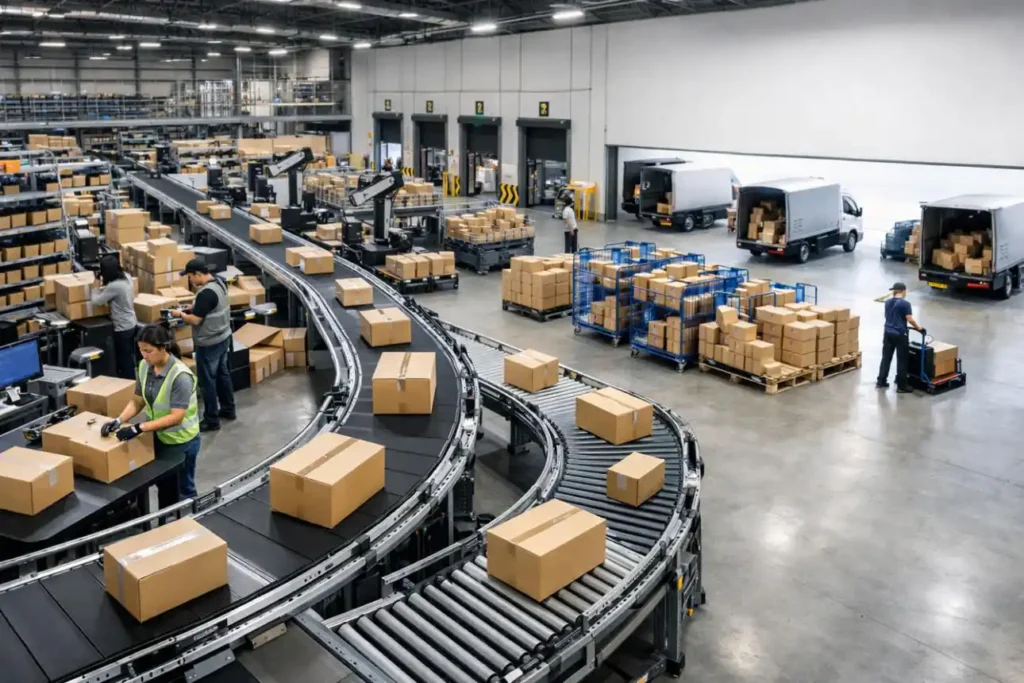
RFID Supply Chain Visibility:
How Real-Time Tracking Creates End-to-End Visibility
The truck has left. The warehouse says it’s shipped. The customer says it never arrived. What happened in between?
No read. No event. No visibility.
introduction
It’s 10 p.m. Do you know exactly where your inventory is?
However,For many supply chain teams, the answer is still “not really.” Products move between factories, warehouses, distribution centers, and transportation networks every day, yet critical information is often delayed, incomplete, or scattered across multiple systems.
In practice,Supply chain visibility is not just about tracking shipments. It’s about knowing where products are, where they’ve been, and what’s happening to them in real time. RFID can close that gap by capturing data automatically—but automatic doesn’t mean guaranteed. RFID supply chain visibility depends on reliable reads at every checkpoint, and that starts with the antenna. If a read point misses a tag, real-time tracking breaks, and end-to-end visibility becomes a dashboard full of gaps.
What Is Supply Chain Visibility?
Quick Definition: Supply chain visibility is the ability to know where goods are, what condition they are in, and whether they are moving through the supply chain as planned—using accurate, timely data from every stage of the journey.
Simply put,Supply chain visibility is the ability to access accurate, timely data about the location, status, and condition of goods as they move through the supply chain. It sounds simple, but it covers much more than a tracking screen.
Think of it in three layers:
• Location — where the item is: at the dock, in the warehouse, on the truck, or at the customer.
• Status — what stage it is in: received, stored, picked, loaded, delayed, or delivered.
• Condition — whether it remains within acceptable limits: temperature, humidity, shock, or light exposure.
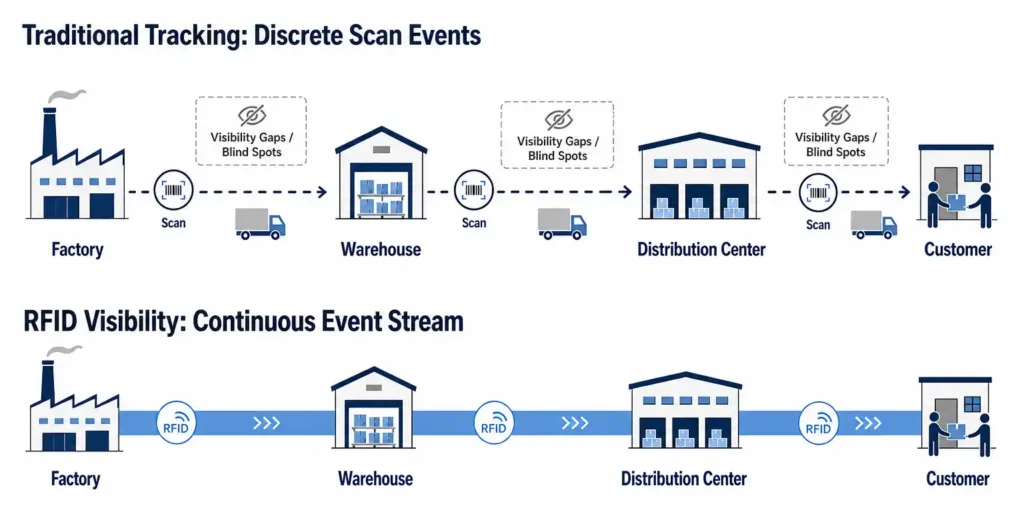
Traditional tracking methods often capture only part of that picture. A barcode scan tells you an item was at a specific location when someone scanned it. A GPS signal tells you where a truck is—but not necessarily what is inside it, whether the shipment has been unloaded, or if the goods are still in acceptable condition. The result is a series of isolated data points rather than a continuous view of the supply chain.
RFID helps close those gaps by capturing data automatically at key checkpoints. Each tag carries a unique identity, and every successful read becomes a record of movement—an arrival, a transfer, a departure, or an exception. Instead of relying entirely on manual scans, businesses gain a more complete picture of how products move through warehouses, distribution centers, and transportation networks.
However,
visibility is only as good as the data you capture If you don’t record a movement, part of the product’s journey disappears from the system. True end-to-end visibility depends on reliable data collection at every checkpoint, creating a connected chain of events that reflects what is actually happening in the physical world.
In practice, achieving that level of visibility is much harder than it sounds. Many supply chains still rely on tracking methods that capture only part of the journey—creating gaps between physical movement and digital information.
Why Traditional Tracking Methods Fall Short
However,Traditional tracking methods were built for a different problem: recording what happened at a specific point, not creating a continuous view of what’s happening now.
Take manual scanning. It works, but it depends on people. Every scan is a decision, and every missed scan becomes a gap. Inventory records drift because the data is only as current as the last person who remembered to scan.
Barcodes improved speed and accuracy, but they still need line of sight and a person to aim the scanner. You can’t read a whole pallet at once. You can’t read a tag hidden behind another box. And you can’t read anything automatically as goods move through a dock door.
GPS added location, but only for the vehicle or container. It tells you where the truck is, not what’s inside it, whether the load is complete, or whether someone has unloaded the goods. For real-time shipment tracking, GPS is useful. For item-level RFID supply chain visibility, it’s not enough.
The common thread is discontinuity. Each method captures data at a point in time, then stops. Between those points, the supply chain goes dark. That’s why end-to-end visibility breaks down: there’s no continuous event stream.
RFID approaches the problem differently. Instead of relying on a person to trigger every scan, RFID readers can read tags automatically as products move through key checkpoints in the supply chain. This creates a far more continuous stream of events, helping businesses build a clearer picture of inventory movements, shipments, and operational status.
The key advantage is not simply faster data collection—it is the ability to reduce the visibility gaps that traditional tracking methods leave behind.
How RFID Improves Visibility at the Read Point
RFID improves visibility differently at each read point.
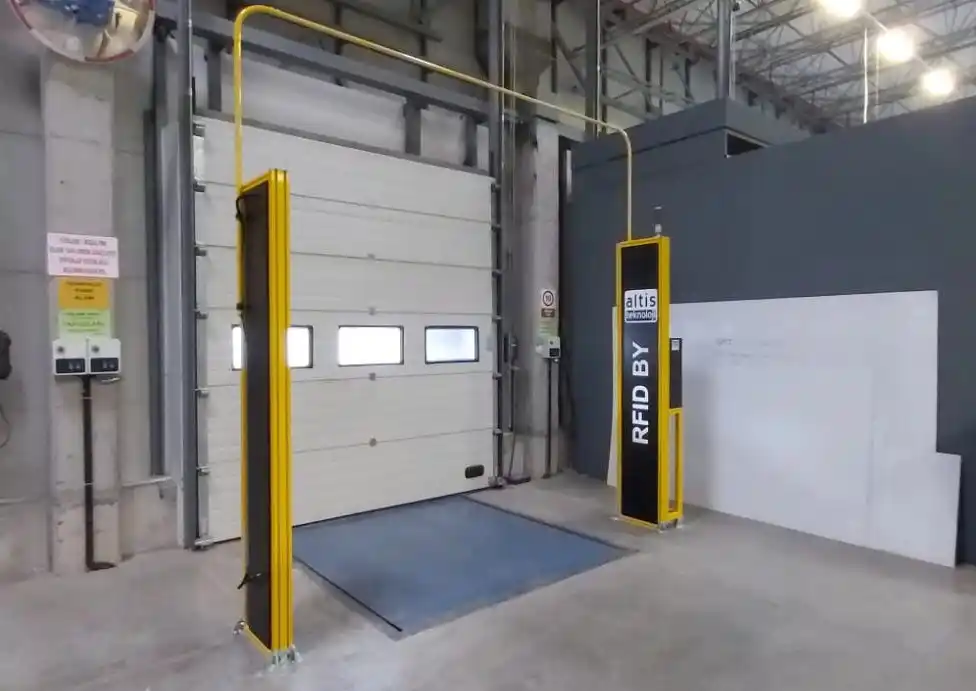
At the dock door, a portal system can identify an entire pallet as it moves through the loading area. Inventory records update automatically without stopping to scan individual items.
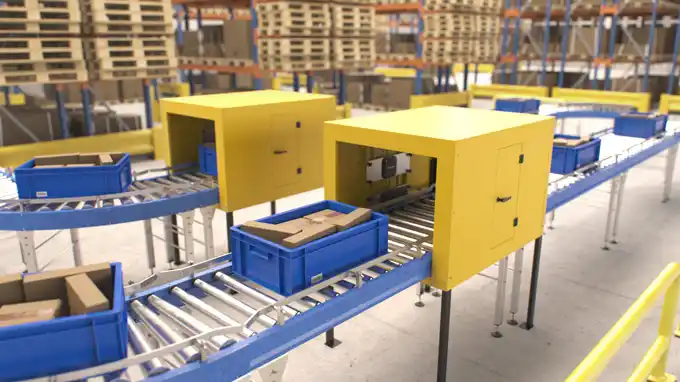
On conveyor lines, fixed RFID readers capture products as they move through sorting and distribution processes, creating a detailed record of item movements.
During transportation, GPS tracks vehicle location while RFID confirms what the team loaded or unloaded, helping build a more complete view of shipment movement.
With handheld readers, workers can perform inventory checks and locate missing items much faster than with traditional barcode scanning.
Across all of these scenarios, the principle is the same: every RFID read creates a new event.When you connect those events, they form a continuous record of how products move through the supply chain. The challenge is making sure those reads happen consistently—which is where antenna design becomes critical.
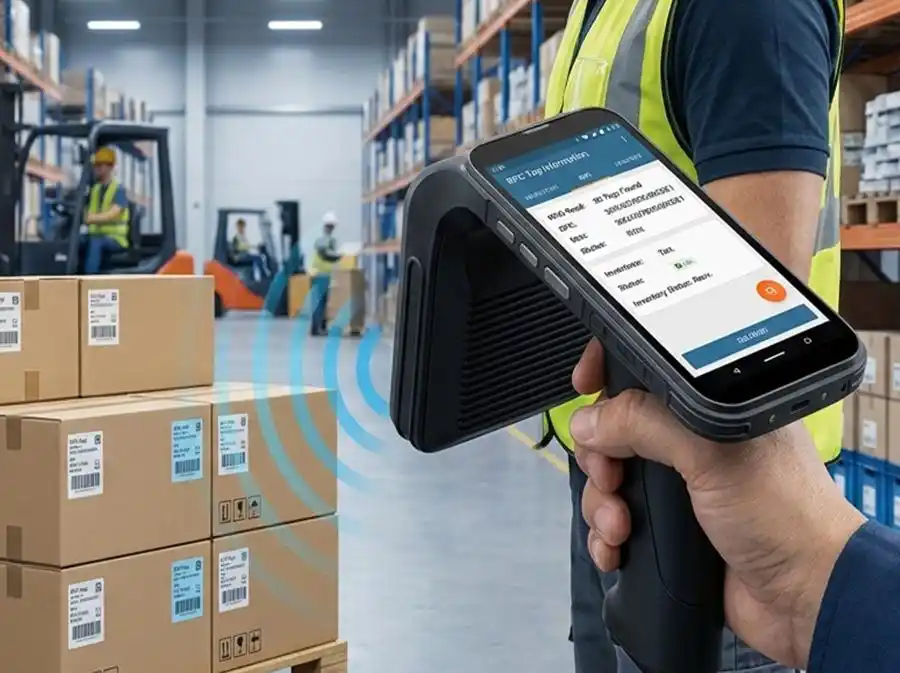
Why RFID Antennas Decide What Your System Sees
Two warehouses can run the same readers, tags, and WMS—and still see different results. The difference is the antenna layer.
Readers process data, but antennas decide what the system captures. Every visibility event starts with a successful read. If the antenna misses the tag, the event never exists, and RFID supply chain visibility stops at the read point.
Different environments need different read zones. A dock door needs full pallet coverage. A conveyor needs a controlled lane. A shelf may need short-range precision. Too narrow, and you miss tags. Too wide, and the system reads tags that aren’t part of the transaction.
Four factors shape the read zone:
• Polarization: circular for mixed tag orientation, linear for consistent orientation.
• Gain: higher gain focuses energy; lower gain covers more area.
• Beamwidth: narrow reduces stray reads; wide covers more space.
• Placement: height, angle, and nearby metal all change coverage.
The goal isn’t maximum range. It’s the right read zone for the application. Consistent reads matter more than distance in RFID supply chain tracking. When the antenna matches the environment, RFID logistics visibility and end-to-end visibility become more reliable—and any RFID traceability solution has a stronger foundation.
For UHF RFID portal antennas, GPS/GNSS antennas, or custom designs, the principle is the same: match the antenna to the read point.
Business Benefits of RFID Supply Chain Visibility
When read points are designed correctly, the benefits show up in specific, measurable ways.
Higher inventory accuracy.
Fewer missed reads mean fewer gaps between physical stock and system records. RFID inventory visibility improves because movements are captured automatically rather than relying on manual updates.
Faster exception handling.
A missed shipment, misplaced pallet, or delayed transfer becomes visible much sooner. Teams can identify and resolve issues before they create larger operational disruptions.
Lower asset loss.
Returnable containers, pallets, and reusable assets are easier to track throughout their lifecycle, reducing the likelihood of loss or unnecessary replacement.
Better audit readiness.
Historical read events create a digital record of product movements. Audits, cycle counts, and traceability investigations require less manual reconciliation.
More confident decisions.
When supply chain data is current and reliable, managers spend less time verifying information and more time responding to what is actually happening.
The common thread is visibility. The more consistently goods can be identified as they move through the supply chain, the easier it becomes to manage inventory, shipments, assets, and exceptions. The goal is not simply to collect more data—it is to reduce uncertainty and make better operational decisions.
Common Challenges in RFID Projects
Most RFID projects don’t fail because of software. They fail because the physical layer wasn’t designed for the environment. Below are the questions that come up most often—and what the antenna layer can do about them.
| Question | What you see | Why it happens | Antenna-layer fix | How to verify |
|---|---|---|---|---|
| Why do reads fail at the dock door? | Missed pallets, read rate stuck at 85–95%, no error in WMS | Beam doesn’t cover full door width; metal racks reflect signal; wrong polarization for mixed pallets | Use circular polarization for mixed loads; adjust height and angle; narrow beam to avoid adjacent lane; test with real pallets | Read rate per door; missed events per 1,000 passes |
| Why does inventory still drift after RFID? | Physical stock vs WMS mismatch; cycle count variance | Movements outside read zones; tags missed due to orientation; blind spots | Map every movement to a read point; add portal or low-profile antennas; close coverage gaps | Event completeness; inventory accuracy before and after |
| Why do cross-region deployments underperform? | Poor read range; tags not reading; compliance concerns | Wrong UHF band: 865–868 MHz in Europe, 902–928 MHz in North America; power limits; certifications | Select region-specific antennas; confirm EIRP and certifications; test locally | Regional compliance checklist; read rate by site |
| Why is integration harder than expected? | Reads don’t map to WMS/TMS; duplicate events; false exceptions | Event semantics unclear; reads not tied to business process; stray reads | Define event model; use edge filtering; control read zone so only intended tags are captured | Event-to-process mapping; exception rate |
| Why do metal and liquid environments cause dead zones? | Tags disappear near racks or liquids; inconsistent reads | Metal reflects UHF; liquids absorb; multipath | Choose antenna with right polarization and gain; adjust placement; avoid mounting directly on metal without spacing | Coverage map; read rate in worst-case locations |
- The pattern is consistent: most challenges trace back to the read point. Fix the antenna layer first, then tune software. For RFID supply chain visibility and end-to-end visibility, that’s where fixes start.
Choosing the Right RFID Solution
The best RFID solution is not necessarily the one with the longest read range or the most hardware. It is the one that creates reliable visibility for the specific environment and workflow.
Before selecting tags, readers, or antennas, it helps to start with a simpler question: What do you actually need to see?
Goal
What do you need to see?
Environment
Metal, liquids, movement
Read Point
Dock, shelf, conveyor
Hardware
Tags, readers, antennas
Visibility
Reliable tracking
· Define the Visibility Goal
Start with the business objective, not the hardware. Are you trying to track pallets through dock doors, improve inventory visibility, verify outbound shipments, or trace reusable assets? Different goals create different visibility requirements, which ultimately shape the entire RFID deployment.
· Understand the Environment
RFID performance is heavily influenced by the physical environment. Metal racks, liquid products, conveyor systems, and vehicle movement can all affect read reliability. A solution that works well in one facility may require a different approach in another.
· Design the Read Point
Visibility is created at read points. Before selecting hardware, define where RFID events should occur—at dock doors, on conveyors, in storage areas, or during handheld inspections. The location determines the read zone and system design.
· Match the Hardware
Once the workflow and read points are defined, the hardware becomes much easier to select. Tags, readers, and antennas should support the application and environment, helping create reliable visibility rather than simply maximizing read range.
Successful RFID projects rarely start with equipment specifications. They start with a clear understanding of what information needs to be captured and where that information is created. Once the visibility objective is defined, the technology becomes much easier to design.
The Future of RFID-Driven Supply Chains
The future of RFID-driven supply chains is not simply about collecting more data. It is about turning physical movements into more accurate, timely, and actionable information.
Sensor-enabled RFID tags are becoming increasingly practical. Temperature, humidity, and shock monitoring can now be integrated into the same tracking infrastructure, helping businesses monitor not only where goods are, but also what condition they are in.
Edge computing is moving decision-making closer to the read point. Instead of sending every read event to a central platform, local devices can filter data, trigger alerts, and respond faster to operational changes.
Digital twins are creating closer links between physical operations and digital systems. As RFID data becomes more reliable and widespread, organizations can build more accurate models of inventory movement, asset utilization, and supply chain performance.
The direction is clear: more automation, more visibility, and greater operational awareness. As RFID adoption continues to expand, the focus will shift from simply capturing events to using those events to make faster and better decisions across the supply chain.
About Airplux RFID Antenna Solutions
Airplux Technologies specializes in RFID antenna design and manufacturing, providing reliable RFID antenna solutions for various identification and tracking applications.
With professional antenna design capabilities and manufacturing experience, Airplux offers a wide range of RFID antennas, including UHF RFID antennas, near-field RFID antennas, ceramic RFID antennas, narrow beam antennas, and integrated RFID antenna solutions.
Our RFID antennas are designed to deliver stable signal performance, accurate tag reading, and reliable operation in different RFID environments. By supporting both standard products and customized antenna solutions, Airplux helps system integrators, enterprises, and manufacturers develop efficient RFID systems for inventory management, access control, logistics tracking, asset management, and other applications.
Explore RFID Antenna Solutions
Ready to Find the Right Antenna Solution?
Airplux provides customized antenna solutions for different applications and project requirements. Contact our antenna experts to discuss your next project.