
Walmart’s RFID Expansion Is Creating New Challenges for Suppliers

Walmart’s RFID Expansion Is Creating New Challenges for Suppliers
As Walmart expands RFID requirements beyond apparel and into a growing range of General Merchandise categories, suppliers face new challenges that go far beyond simply applying RFID tags. Products such as electronics, furniture, automotive components, and wireless devices introduce complex RF environments that can significantly impact RFID performance. Successful RFID deployment now depends on much more than tag compliance. Factors such as ARC specification selection, tag placement, packaging design, reader configuration, and antenna performance all play critical roles. This article explores the key challenges suppliers face and the best practices for achieving reliable RFID deployment across today’s increasingly complex retail supply chains.
Table of Contents
- Introduction
- I. RFID Is Moving Into More Difficult Product Categories
- II. The Wrong RFID Tag Is Not Always the Problem
- III. Why Tag Placement Has Become a Critical Design Decision
- IV. RFID Performance Depends on an Entire Ecosystem
- V. The Transition to New ARC Specifications Signals a Larger Industry Trend
- Looking Beyond Compliance
Introduction
For years, Walmart’s RFID program largely revolved around apparel. Clothing, footwear, and fashion accessories became some of the earliest categories to adopt item-level RFID at scale. Suppliers learned how to attach RFID labels to hang tags, retailers improved inventory accuracy, and the industry gradually developed a standardized implementation process.
That phase is ending.
Over the past few years, Walmart has expanded RFID requirements across a wide range of General Merchandise categories, including electronics, wireless devices, toys, sporting goods, furniture, automotive products, hardware, lawn and garden products, and home goods. According to Walmart’s latest General Merchandise RFID Playbook, suppliers must transition from legacy ARC specifications to the ARC specification assigned to their product category and packaging type. For many General Merchandise categories, this transition includes moving to Spec Y2.
At first glance, this may look like a simple extension of an existing RFID program. In reality, it represents a major shift in how suppliers must approach RFID deployment.
The reason is simple: a T-shirt and a wireless speaker do not behave the same way in an RF environment.
I. RFID Is Moving Into More Difficult Product Categories
When RFID programs focused primarily on apparel, implementation was relatively straightforward. Most clothing products contain fabric, paper hang tags, and packaging materials that allow UHF RFID signals to perform well. Suppliers could often achieve reliable read rates by following established tagging guidelines.
General Merchandise introduces a completely different set of challenges.
Consider some of the product categories now covered by Walmart’s RFID requirements: laptops, headphones, networking equipment, wireless accessories, power banks, drones, automotive batteries, tools, furniture, and home appliances.
Many of these products contain materials that can interfere with RFID performance. Metal reflects radio frequency signals. Liquids absorb RF energy. Batteries, electronic components, aluminum shielding, and dense packaging structures can all affect tag readability.
A supplier may successfully deploy RFID on a boxed toy and assume the same label design will work on a Bluetooth speaker. In practice, the results can be very different.
The RFID tag itself may remain unchanged, but the product environment has changed completely.
This is why Walmart no longer treats RFID as a simple labeling exercise.
Under Walmart’s current RFID program, suppliers are required to use EPC Gen2v2 compliant RFID tags encoded according to GS1 standards and matched to the appropriate Auburn RFID Lab ARC specification for the product category. Compliance now extends beyond tag selection and includes packaging design, tag placement, and RF performance validation.


Pictures from:Auburn University RFID Lab
II. The Wrong RFID Tag Is Not Always the Problem
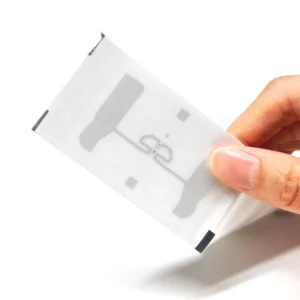
When RFID performance issues appear, many companies immediately suspect the RFID label.
Sometimes they are right. More often, the root cause lies elsewhere.
Walmart requires suppliers to use Auburn RFID Lab approved inlays and match products with the appropriate ARC specification. The goal is to help ensure consistent RFID performance across different retail environments.
However, even an approved inlay can produce disappointing results if engineers ignore packaging structure or product composition.
Imagine a boxed Wi-Fi router:
The RFID label may meet every specification requirement. The EPC data may be encoded correctly. The inlay may come from an approved supplier.
Yet if the tag sits directly above internal metal shielding or next to a large battery pack, read performance may suffer.
The problem is not the RFID tag. The problem is the RF environment surrounding the tag.
This distinction becomes increasingly important as RFID expands into electronics, hardware, automotive, and home improvement categories.
III. Why Tag Placement Has Become a Critical Design Decision
One of the most overlooked sections in Walmart’s RFID documentation concerns tag placement.
The Auburn RFID Lab maintains detailed placement guidelines for different product types because the location of a tag can significantly influence read performance. Walmart specifically directs suppliers to follow these placement recommendations and consult the lab whenever products fall outside existing guidelines.
Many suppliers expect a universal answer. They ask where the RFID tag should go.

Picture from:Auburn University RFID Lab
In reality, there is no universal answer.
A placement strategy that works perfectly on a furniture package may fail on a boxed electronic product. A tag attached to the front panel of a power tool package may perform differently from the same tag attached to a side panel.
Furniture offers a good example:
Large furniture packages often move through distribution centers on pallets, pass through dock doors, and spend time in warehouse storage. If packaging design blocks the tag or positions it where stacked products shield the signal, inventory visibility suffers long before the product reaches a retail shelf.
The same principle applies to electronics: A tag positioned away from batteries, metal components, and RF-sensitive areas often delivers better performance than one placed solely for packaging convenience.
Successful RFID projects treat tag placement as an engineering decision, not a packaging decision.
IV. RFID Performance Depends on an Entire Ecosystem
Another misconception is that RFID performance depends only on the tag.
In reality, every successful RFID deployment relies on multiple components working together: The RFID inlay, packaging material, encoding process, reader configuration, antenna coverage, and product characteristics all influence the final result.

This becomes especially visible during warehouse and distribution center operations.
A supplier may verify that every RFID tag functions correctly before shipment. However, if reader antennas cannot provide sufficient coverage at dock doors or portal entrances, the operation may still experience missed reads.
The opposite can also occur.
A well-designed RFID infrastructure may struggle if poorly positioned tags create inconsistent orientation patterns.
This is why leading retailers and logistics operators increasingly evaluate RFID systems as complete RF ecosystems rather than collections of individual hardware components. The conversation has moved beyond tag compliance. Today, the focus is read reliability.
V. The Transition to New ARC Specifications Signals a Larger Industry Trend
One detail in Walmart’s latest playbook deserves particular attention.
Many General Merchandise categories that previously used legacy ARC specifications such as W1, W3, W4, and Y are required to transition to newer ARC specifications. For a large portion of these categories, the designated replacement specification is Spec Y2, while other categories may require different ARC specifications based on product type and packaging characteristics.
Walmart has also encouraged suppliers to begin adopting the new specifications as early as possible rather than waiting for implementation deadlines.
This requirement reflects a broader industry trend:
Retailers are no longer deploying RFID only in easy environments. They are expanding into categories with more complex products, more demanding packaging structures, and greater operational expectations.
As adoption grows, performance standards must evolve as well.
For suppliers, compliance is only the starting point.
The companies that gain the greatest value from RFID will be those that understand how tags, packaging, antennas, readers, and product materials interact within a real-world RF environment.

Looking Beyond Compliance
Walmart’s RFID expansion marks an important turning point for the retail industry.
The conversation is shifting away from whether suppliers should adopt RFID. That decision has already been made.
The new challenge is how suppliers can deploy RFID successfully across increasingly complex product categories.
For apparel, success often meant selecting an approved label and following established tagging practices.
For electronics, furniture, automotive products, and many other General Merchandise categories, success requires a deeper understanding of RF behavior.
The suppliers that approach RFID as a complete system rather than a compliance checklist will be better positioned to improve inventory accuracy, strengthen supply chain visibility, and support future retail requirements.
As RFID continues to move beyond apparel, the most important question is no longer whether a product carries an RFID tag.
The more important question is whether the entire RFID ecosystem—including tags, packaging, readers, antennas, and product materials—can consistently deliver accurate, high-quality data throughout the retail and supply chain journey.
As Walmart and other retailers continue expanding RFID beyond apparel, long-term success will depend not only on compliance, but on engineering RFID systems for real-world RF performance.