
RFID Inventory Management System
1. introduction
• Brief introduction to RFID technology
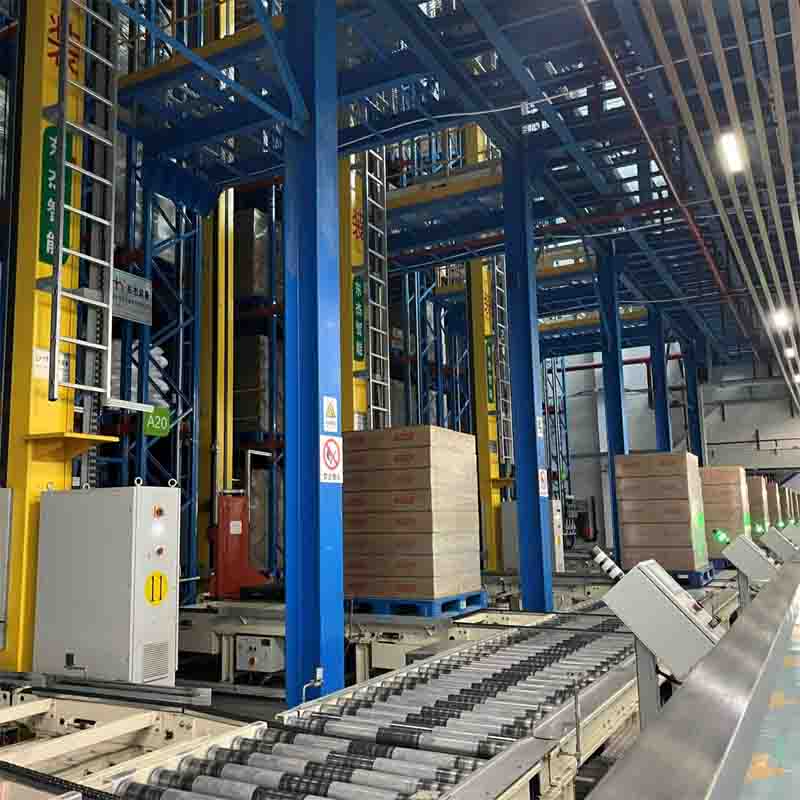
RFID (Radio Frequency Identification) technology is an automatic identification technology that uses radio waves to identify, read, and transfer data stored in RFID tags. These tags can be attached to products, assets, or inventory items, allowing businesses to collect information automatically without direct contact or manual scanning. By integrating RFID technology into inventory management processes, companies can achieve faster data collection, improved inventory accuracy, real-time visibility, and more efficient operations.

• Importance of inventory management systems
cost control: Maintain balanced stock levels and reduce unnecessary storage costs.
Customer satisfaction: Maintain balanced stock levels and reduce unnecessary storage costs.
supply chain efficiency: Enable better production planning and faster material movement.
Loss Prevention: Reduce inventory shrinkage, theft, and operational waste.
• What You'll Learn in This Guide
This guide explains how RFID inventory management systems work and how they help businesses improve inventory visibility, accuracy, and operational efficiency.
2. What is RFID Inventory Management?
• Explanation of RFID (Radio Frequency Identification)
RFID (Radio Frequency Identification) is a technology that enables businesses to identify and track items using radio waves. Each item is equipped with an RFID tag containing a unique identifier, which can be detected by RFID readers without requiring direct line-of-sight scanning.
In inventory environments, RFID technology allows information to be captured automatically as products move through warehouses, production lines, and distribution centers, providing faster and more accurate visibility than manual data collection methods.
• How RFID technology is used in inventory management
o Faster Inventory Counting: RFID readers can identify multiple tagged items simultaneously, reducing the time required for inventory counting.
o Improved Inventory Visibility: Inventory data is updated automatically, helping businesses understand stock levels and item locations in real time.
o Better Warehouse Accuracy: Automated identification minimizes manual entry errors and improves inventory accuracy.
3. How RFID Inventory Management Works
RFID inventory management systems automate the process of identifying, tracking, and updating inventory information. By combining RFID tags, readers, antennas, and software, inventory data can be captured automatically and synchronized with management systems in real time.
Tagging Inventory Items:
RFID tags are attached to products, cartons, pallets, or assets. Each tag contains a unique identifier that allows the system to distinguish one item from another throughout the inventory process.
Automated Data Capture:
When tagged items enter the reading zone, RFID readers and antennas automatically capture tag information through radio frequency communication. Unlike barcode systems, multiple tags can be identified simultaneously without requiring line-of-sight scanning.
Real-Time Inventory Updates:
Captured RFID data is transferred to inventory management software, where inventory records are updated automatically. Businesses can track stock levels, item locations, and inventory movements in real time, improving visibility and decision-making.
Asset / Item
Unique ID Data
+ Antenna
Management Software
Inventory Visibility
4. Key Components of RFID Inventory Management Systems
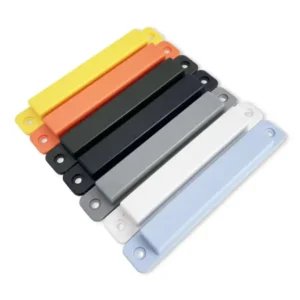
• RFID tags
RFID tags serve as the digital identity of inventory items. Each tag contains a unique identifier that allows products, cartons, pallets, or assets to be automatically recognized throughout warehouse and supply chain operations.
By eliminating manual identification, RFID tags help improve inventory accuracy and provide the foundation for real-time inventory visibility.
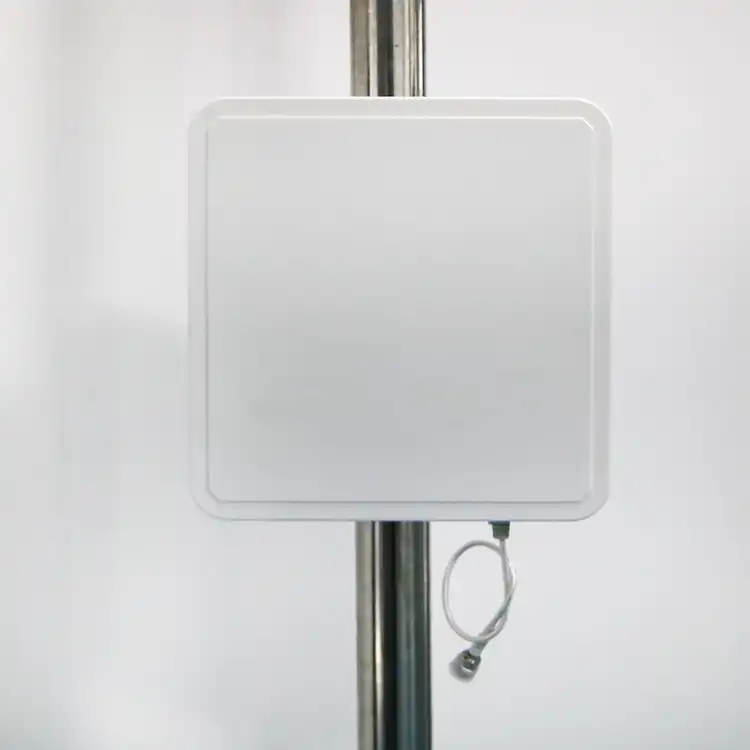
• RFID antennas
RFID antennas create the communication zone between RFID readers and tags. Their design directly affects read range, coverage area, and overall system reliability.
Proper antenna selection helps ensure consistent tag detection in warehouses, retail stores, production facilities, and other inventory environments.
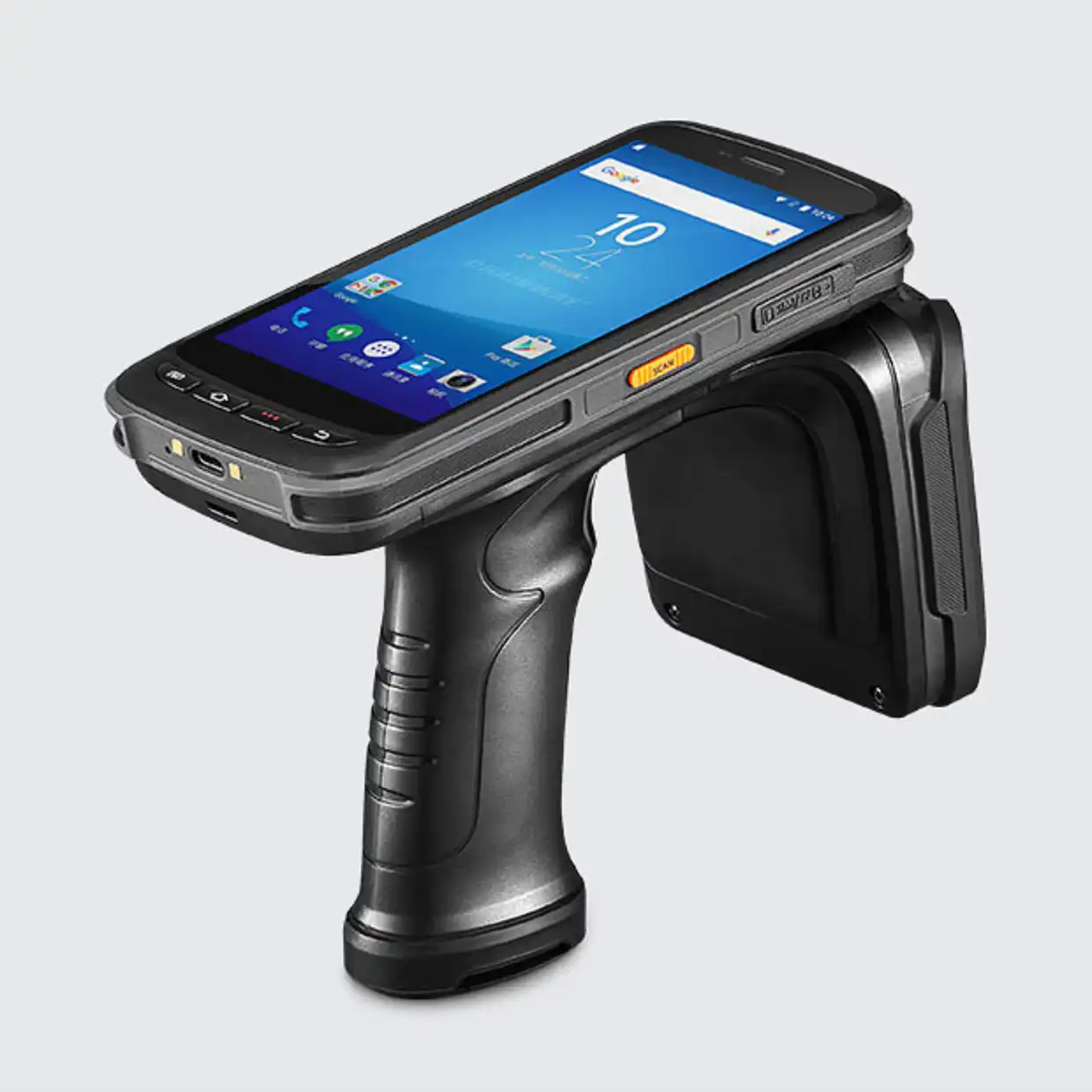
• RFID readers
RFID readers collect information from tagged inventory and convert it into usable business data. Depending on operational requirements, readers can be deployed as fixed devices, handheld terminals, or integrated systems.
By automatically identifying multiple items at the same time, RFID readers significantly reduce manual scanning effort and improve inventory efficiency.
• Inventory management software
Inventory management software transforms RFID data into actionable insights. It provides real-time visibility into stock levels, item locations, inventory movements, and operational performance.
With centralized inventory data, businesses can make faster decisions, improve replenishment planning, and reduce inventory discrepancies.
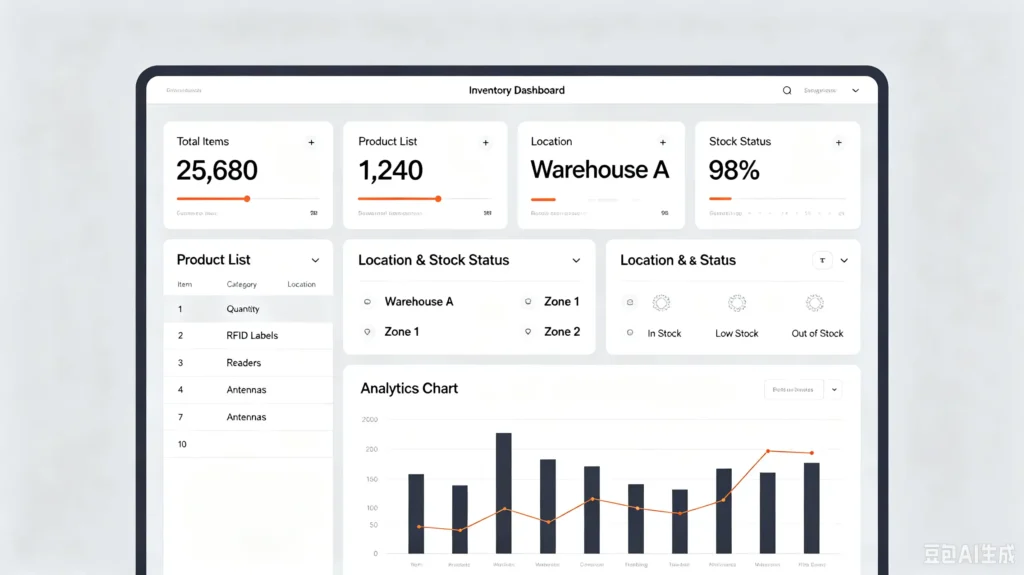
• System Integration
RFID inventory management systems can be integrated with ERP, WMS, and other enterprise platforms, allowing inventory information to flow seamlessly across business operations.
This integration helps eliminate data silos, improve workflow efficiency, and create a single source of truth for inventory management.
5. RFID vs Barcode in Inventory Management
Understanding the key differences between RFID and traditional barcode-based inventory systems.
feature
line of sight
reading speed
data capacity
durability
data updates
real-time visibility
automation level
RFID
Not Required
Multiple Items Simultaneously
High
Resistant to Dirt and Wear
Rewritable
Supported
High
barcode
Required
One Item at a Time
Limited
Easily Damaged
Fixed After Printing
Limited
medium
Both RFID and barcode technologies play important roles in inventory management. Barcode systems remain a cost-effective option for basic identification tasks, while RFID technology provides greater automation, faster data collection, and improved inventory visibility. For businesses managing large inventories or requiring real-time tracking, RFID often delivers significant operational advantages.
6. business Benefits of RFID Inventory Management Systems
1. Improve Inventory Accuracy: RFID technology improves inventory accuracy by automatically identifying and tracking tagged items throughout warehouse and supply chain operations. Real-time visibility helps reduce inventory discrepancies, stock shortages, and overstock situations.
2. Gain Real-Time Inventory Visibility: RFID systems provide instant access to inventory information, allowing businesses to monitor stock levels, item locations, and inventory movements without relying on manual updates.
3. Reduce Labor Costs and Manual Work: RFID readers can identify multiple items simultaneously, reducing the time required for receiving, inventory counting, and warehouse operations. This helps lower labor costs while improving productivity.
4. Minimize Inventory Loss and Shrinkage:Continuous inventory monitoring makes it easier to identify missing items, unauthorized movements, and inventory discrepancies, helping businesses improve security and reduce losses.
5. Deliver Better Customer Service: Accurate inventory information enables faster order fulfillment and improved product availability, helping businesses provide a more reliable customer experience.
- By combining automated identification, real-time visibility, and data-driven decision-making, RFID inventory management systems help businesses improve operational efficiency, strengthen inventory control, and build more responsive supply chains.
7. RFID Inventory Management Applications
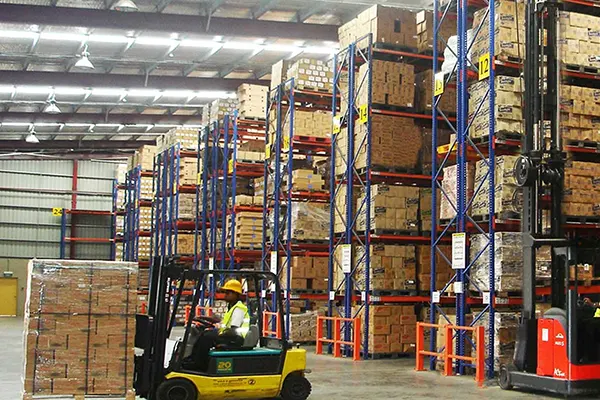
Logistics & Warehousing
RFID enables faster inventory counting and real-time asset visibility, helping logistics providers improve operational efficiency.
• Warehouse inventory management
• Pallet tracking
• Shipment verification

Retail
Retailers use RFID to improve stock visibility, accelerate inventory counts, and enhance product availability across stores.
• Inventory accuracy
• Shelf replenishment
• Loss prevention

Manufacturing
RFID technology provides real-time visibility throughout the production process, helping manufacturers reduce inventory discrepancies and improve production planning.
• Raw material tracking
• Work-in-process tracking
• Finished goods management
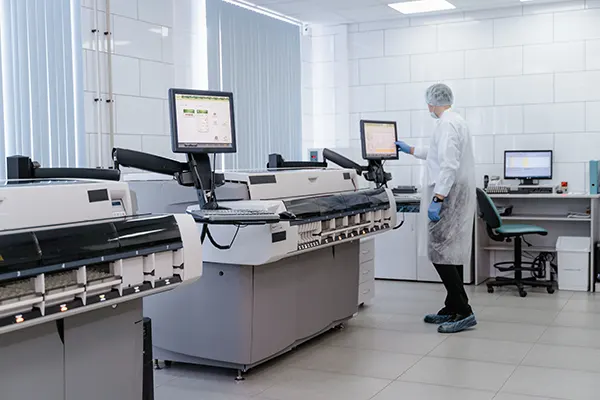
Healthcare
RFID helps healthcare organizations improve inventory accuracy while ensuring critical equipment and supplies remain available when needed.
• Medical equipment tracking
• Pharmaceutical inventory management
• Patient asset tracking
8. Case Studies and Success Stories
RFID inventory management systems have been successfully adopted by leading companies worldwide to improve inventory accuracy, automate operations, and enhance supply chain visibility. The following examples demonstrate how RFID technology helps businesses optimize inventory management in real-world applications.
· Walmart:
Challenge:Managing inventory visibility across thousands of stores.
RFID Solution:Item-level RFID tracking and automated inventory verification.
Result:Improved inventory accuracy, faster shelf audits, and enhanced supply chain visibility.
· METRO:
Challenge:Slow pallet processing and manual warehouse verification.
RFID Solution:RFID-enabled pallet tracking and automated shipment confirmation.
Result:Reduced receiving time and improved warehouse efficiency.
9. How to Choose the Right RFID Inventory Management System
1. Understand Your Inventory Management Requirements:
o Before implementing an RFID inventory management system, businesses should first identify their specific requirements.
• Warehouse size and layout
• Types of items being managed
• Required inventory processes, including receiving, storage, picking, shipping, and counting.
• Required level of automation and real-time visibility
2. Choose a Solution Based on Your Business Process:
oRFID solutions should be designed around actual business workflows rather than only focusing on individual components.
Different industries have different inventory challenges. A manufacturing facility may focus on production tracking, while warehouses may prioritize goods movement and shipment management.
Therefore, the RFID system should match the company’s operational processes and management objectives.
3. Meet today’s needs and support tomorrow’s growth:
o Consider the scalability of the system. Choose a system that meets your current needs and supports your business in the future. Don’t just look for low costs, think about the long-term value of your investment.
4. Choose the right solution provider:
o There are many RFID solution providers in the market, but the capabilities of integrated solutions are not necessarily mature.
o Choose a supplier with experience and wisdom to ensure the stability of the system’s architecture, hardware equipment and software functions.
10. Frequently Asked Questions About RFID Inventory Management Systems
RFID in inventory management refers to the use of RFID tags, readers, antennas, and software to automatically identify, track, and manage inventory items. Unlike barcode systems, RFID does not require line-of-sight scanning and can read multiple items simultaneously.
By providing real-time inventory visibility, RFID helps businesses improve inventory accuracy, reduce manual labor, and streamline warehouse operations. RFID inventory management systems are widely used in retail, logistics, manufacturing, healthcare, and asset tracking applications.
RFID inventory tracking uses radio frequency technology to monitor the location, movement, and status of inventory items throughout the supply chain. Each RFID-tagged item can be automatically identified by RFID readers without direct contact or visual scanning.
Compared with traditional barcode systems, RFID inventory tracking enables faster stock counts, real-time visibility, and improved inventory accuracy, especially in environments with large volumes of inventory.
The cost of an RFID inventory management system depends on system size, tag type, reader infrastructure, software integration, and deployment requirements.
Typical costs include:
- Passive RFID Tags: $0.10–$1.00 per tag
- RFID Readers: $500–$2,000+ per reader
- Fixed RFID Portals: $1,000–$5,000+
- RFID Software & Integration: varies by project
While RFID requires a higher initial investment than barcode systems, many businesses achieve ROI through labor savings, improved inventory accuracy, and reduced inventory shrinkage.
RFID helps prevent inventory loss and theft by providing real-time visibility of tagged items. RFID readers installed at warehouse exits, retail entrances, or distribution checkpoints can automatically detect unauthorized movement of inventory.
Businesses can receive alerts when tagged products leave designated areas without proper authorization, helping reduce shrinkage, improve security, and maintain accurate inventory records.
Although RFID offers significant operational benefits, there are several considerations:
- Higher implementation costs than barcode systems
- RFID readers, antennas, and software require infrastructure investment
- Metal and liquid environments may affect read performance
- System integration can be more complex than barcode solutions
- Large-scale deployments require careful planning and testing
For businesses with high inventory volumes and frequent stock counts, the long-term efficiency gains often outweigh the initial investment.
The two main types of RFID technology are:
Passive RFID
Passive RFID tags do not contain a battery and are powered by the RFID reader’s signal. They are cost-effective and commonly used for inventory management, retail, logistics, and asset tracking.
Active RFID
Active RFID tags contain an internal battery and can transmit signals over longer distances. They are typically used for vehicle tracking, large asset monitoring, and real-time location systems (RTLS).
For most RFID inventory management applications, passive UHF RFID is the preferred solution due to its lower cost and scalability.
RFID readers are more complex than barcode scanners because they must generate RF signals, communicate with multiple RFID tags simultaneously, process large amounts of data, and integrate with inventory management software.
Reader costs may also include:
- RF modules
- Antennas
- Communication interfaces
- Middleware integration
- Industrial-grade durability
While RFID readers have a higher upfront cost, they can significantly reduce labor requirements and improve inventory visibility in high-volume operations.
It depends on the RFID technology being used.
Most smartphones with NFC functionality can read certain HF RFID and NFC tags operating at 13.56 MHz. However, smartphones generally cannot read UHF RFID inventory tags used in warehouses and supply chain applications because UHF RFID requires specialized readers and antennas.
For UHF RFID inventory management systems, dedicated RFID readers are typically required
Generally, barcode systems have a lower initial cost than RFID systems. Barcode labels are inexpensive and can be scanned using low-cost scanners or mobile devices.
However, RFID can deliver greater long-term value by:
- Reducing labor costs
- Accelerating inventory counts
- Improving inventory accuracy
- Supporting real-time inventory visibility
- Reading multiple items simultaneously
For businesses with large inventories and frequent stock audits, RFID often provides a stronger return on investment despite higher upfront costs.
About Airplux RFID Antenna
Solutions
Airplux Technologies specializes in RFID antenna design and manufacturing, providing reliable RFID antenna solutions for various identification and tracking applications.
With professional antenna design capabilities and manufacturing experience, Airplux offers a wide range of RFID antennas, including UHF RFID antennas, near-field RFID antennas, ceramic RFID antennas, narrow beam antennas, and integrated RFID antenna solutions.
Our RFID antennas are designed to deliver stable signal performance, accurate tag reading, and reliable operation in different RFID environments. By supporting both standard products and customized antenna solutions, Airplux helps system integrators, enterprises, and manufacturers develop efficient RFID systems for inventory management, access control, logistics tracking, asset management, and other applications.
Explore Antenna Solutions
Ready to Find the Right Antenna Solution?
Airplux provides customized antenna solutions for different applications and project requirements. Contact our antenna experts to discuss your next project.