
6dBi Ultra-Slim UHF RFID Antenna – 815x34x5mm

Ultra-Slim UHF RFID Antenna
Model: APRIA9006LX
Frequency Range: 902-928MHz
Polarization: Linear
Gain: 6dBi
Product Descriptions
Designed with an extended, ultra-slim PCB profile, the APRIA9006LX provides higher gain and a narrow vertical beam for applications that require coverage to be directed across a defined zone. Its low-profile construction allows discreet integration into suitable fixtures or equipment, supporting production line management, garment management, access control systems, and smart inventory applications.
Descriptions
- 902-928MHz
- 6dBi
- Linear Polarization
- 815*34*5mm
Applications
- Production line management
- Garment management
- Access control system
- Smart inventory
Product Specifications
Electrical Specifications
Frequency | 902-928MHz |
Gain | 6dBi |
Beam width | Hor:200° Ver:20° |
Polarization | Linear |
VSWR | ≤1.5 |
Impedance | 50Ω |
Maximum power | 100W |
Lightning protection | DC Ground |
Connector | SMA-Female |
Mechanical Specifications
Antenna dimensions | 815*34*5mm |
Net weight | 0.28kg |
Packing size | 84*5*3cm |
Gross weight | 0.5kg |
Antenna material | PCB |
Antenna color | Black |
Operating temperature | -20-60℃ |
Antenna Pattern


H-Plane
E-Plane
Antenna Drawing

Applications

Production Line Management

Garment management

Access control system

Smart inventory
PRODUCT SUPPORT
FAQ - 902–928MHz UHF RFID Antenna
902–928MHz UHF RFID antennas are commonly used in applications that require wireless identification and tracking of tagged items. Typical examples include:
- Warehouse management: Identifying goods during storage, inventory checks, and movement.
- Logistics tracking: Supporting identification at shipping, receiving, and distribution checkpoints.
- Retail inventory: Tracking tagged products and improving stock visibility.
- Industrial automation: Identifying components and work-in-progress items along production processes.
- Asset management: Tracking tools, equipment, and other valuable assets.
The antenna design should match the application’s reading area, tag orientation, installation environment, and required coverage.
RFID reading performance depends on several factors working together. These include antenna gain, polarization, tag sensitivity, reader output power, antenna positioning, and the distance between the antenna and tags.
The surrounding environment also matters. Metal structures, liquid-filled objects, and nearby reflective surfaces can affect RF propagation and create areas with weaker or inconsistent tag detection. To improve reading reliability, position the antenna carefully, check tag placement, and test the system under actual operating conditions.
For an extended installation area, consider the available mounting length, antenna dimensions, reading-zone requirements, and cable routing. A long, narrow antenna may fit along fixtures, counters, or equipment where a conventional square antenna is difficult to install. The Airplux APRIA9006LX measures 815 × 34 × 5mm, making it suitable for consideration in installations that require a slim, elongated form factor. The supporting surface and nearby materials should be evaluated because they can affect RF performance.
RFID can help garment businesses identify tagged clothing during receiving, sorting, storage, stocktaking, and dispatch. Antennas installed near workstations or designated reading areas communicate with garment tags through RFID readers. The collected information can then be used by inventory software to update item records and support stock visibility. Reliable reading depends on how garments are arranged, where tags are attached, antenna positioning, and reader configuration.
A narrow vertical beam concentrates the antenna’s main radiation pattern within a smaller vertical angle. This can be useful when planning coverage for a defined reading area, especially where tags are presented at relatively consistent heights. The Airplux APRIA9006LX specifies a horizontal beamwidth of 200° and a vertical beamwidth of 20°. These values describe the antenna’s radiation pattern, but they do not directly establish its actual reading distance or guarantee that tags outside the intended area will not be detected. Installation testing is still necessary.
A linear polarized RFID antenna is worth considering when tag orientation is predictable or can be controlled within the reading area. It generally performs best when the tag antenna’s polarization is aligned with the reader antenna’s polarization direction. This can suit fixed reading points in production lines, garment handling areas, and equipment-based inventory systems. If tags may rotate or move in different orientations, test the system with representative tags before selecting the antenna.
You may also like
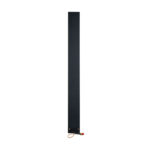
Model: APRIA9002LX
Gain: 2.5dBi
Dimension: 300*34*5mm
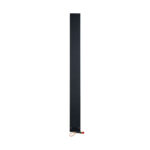
Model: APRIA9002LX-360
Gain: 2.5dBi
Dimension: 360*34*5mm
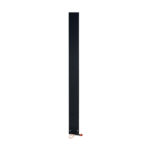
Model: APRIA9005LX-670
Gain: 5.5dBi
Dimension: 670*34*5mm
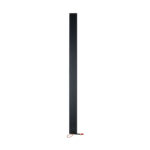
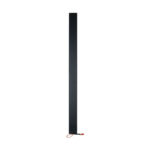
Model: APRIA9006LX-960
Gain: 6dBi
Dimension: 960*34*5mm
Please feel free to contact us by info@airpluxtec.com for more detailed info if you’re interested in this Antenna, or please check here for our more Ultra-Slim UHF RFID Antenna products, or here for more RFID Products.
Contact
We are always ready to serve you.
Please feel free to contact us
for any antenna inquiry or requirement.
Leave us a message in the form below and
we will get back to you within 24 hours.