
4dBi Ultra-Slim UHF RFID Antenna – 400x34x5mm

Ultra-Slim UHF RFID Antenna
Model: APRIA9004LX
Frequency Range: 902-928MHz
Polarization: Linear
Gain: 4dBi
Product Descriptions
The APRIA9004LX combines a low-profile PCB design with a higher gain than the 2.5 dBi models, making it a practical option when a concealed RFID installation requires more focused coverage. Its slim construction supports integration into cabinets, fixtures, and equipment used for production line management, garment tracking, access control, and smart inventory.
Descriptions
- 902-928MHz
- 4dBi
- Linear Polarization
- 400*34*5mm
Applications
- Production line management
- Garment management
- Access control system
- Smart inventory
Product Specifications
Electrical Specifications
Frequency | 902-928MHz |
Gain | 4dBi |
Beam width | Hor:175° Ver:55° |
Polarization | Linear |
VSWR | ≤1.5 |
Impedance | 50Ω |
Maximum power | 100W |
Lightning protection | DC Ground |
Connector | SMA-Female |
Mechanical Specifications
Antenna dimensions | 400*34*5mm |
Net weight | 0.2kg |
Packing size | 45*5*3cm |
Gross weight | 0.3kg |
Antenna material | PCB |
Antenna color | Black |
Operating temperature | -20-60℃ |
Antenna Pattern


H-Plane
E-Plane
Antenna Drawing

Applications

Production Line Management

Garment management

Access control system

Smart inventory
PRODUCT SUPPORT
FAQ - 902–928MHz UHF RFID Antenna
902–928MHz UHF RFID antennas are commonly used in applications that require wireless identification and tracking of tagged items. Typical examples include:
- Warehouse management: Identifying goods during storage, inventory checks, and movement.
- Logistics tracking: Supporting identification at shipping, receiving, and distribution checkpoints.
- Retail inventory: Tracking tagged products and improving stock visibility.
- Industrial automation: Identifying components and work-in-progress items along production processes.
- Asset management: Tracking tools, equipment, and other valuable assets.
The antenna design should match the application’s reading area, tag orientation, installation environment, and required coverage.
RFID reading performance depends on several factors working together. These include antenna gain, polarization, tag sensitivity, reader output power, antenna positioning, and the distance between the antenna and tags.
The surrounding environment also matters. Metal structures, liquid-filled objects, and nearby reflective surfaces can affect RF propagation and create areas with weaker or inconsistent tag detection. To improve reading reliability, position the antenna carefully, check tag placement, and test the system under actual operating conditions.
Low-profile RFID antennas can be installed inside cabinets, fixtures, or equipment to create designated reading areas without taking up much space. When connected to an RFID reader, they communicate with tags attached to stored items, tools, or components. This can support inventory checks, item identification, and movement records. Before installation, check the available space, cabinet materials, tag positions, and cable routing to ensure the antenna can operate effectively in the intended location.
RFID helps manufacturers identify and track tagged components, tools, and work-in-progress items throughout production and storage processes. Antennas installed at selected workstations, storage areas, or inventory checkpoints collect tag information through RFID readers. The data can then be used by inventory or manufacturing software to record item movement and improve stock visibility. The reading zones should be planned around the production workflow and tested with the actual tags and materials.
For narrow installation spaces, consider the antenna’s dimensions, mounting position, cable access, and required reading area. An elongated PCB antenna may fit along the inside of a cabinet, equipment panel, or fixture where a conventional square antenna is impractical. The Airplux APRIA9004LX measures 400 × 34 × 5mm and has a low-profile structure for this type of installation. Nearby metal surfaces and other materials should be evaluated because they may affect RF performance.
A linearly polarized RFID antenna has a defined polarization direction and generally performs best when aligned with the tag antenna’s polarization. If the tag is rotated relative to the antenna, reading performance may decrease. Linear polarization can be suitable for fixed reading points where tag orientation is predictable or can be controlled, such as selected production stations or equipment compartments. Actual performance should be checked using the intended tags and their normal operating positions.
You may also like
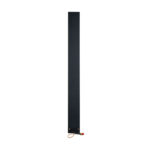
Model: APRIA9002LX
Gain: 2.5dBi
Dimension: 300*34*5mm
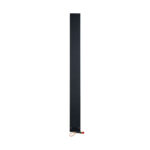
Model: APRIA9002LX-360
Gain: 2.5dBi
Dimension: 360*34*5mm
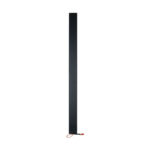
Model: APRIA9005LX-670
Gain: 5.5dBi
Dimension: 670*34*5mm
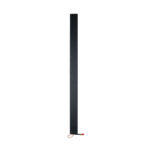
Model: APRIA9006LX
Gain: 6dBi
Dimension: 815*34*5mm
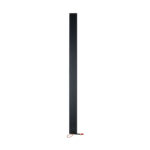
Model: APRIA9006LX-960
Gain: 6dBi
Dimension: 960*34*5mm
Please feel free to contact us by info@airpluxtec.com for more detailed info if you’re interested in this Antenna, or please check here for our more Ultra-Slim UHF RFID Antenna products, or here for more RFID Products.
Contact
We are always ready to serve you.
Please feel free to contact us
for any antenna inquiry or requirement.
Leave us a message in the form below and
we will get back to you within 24 hours.