
UHF RFID Ceramic Antenna Portfolio
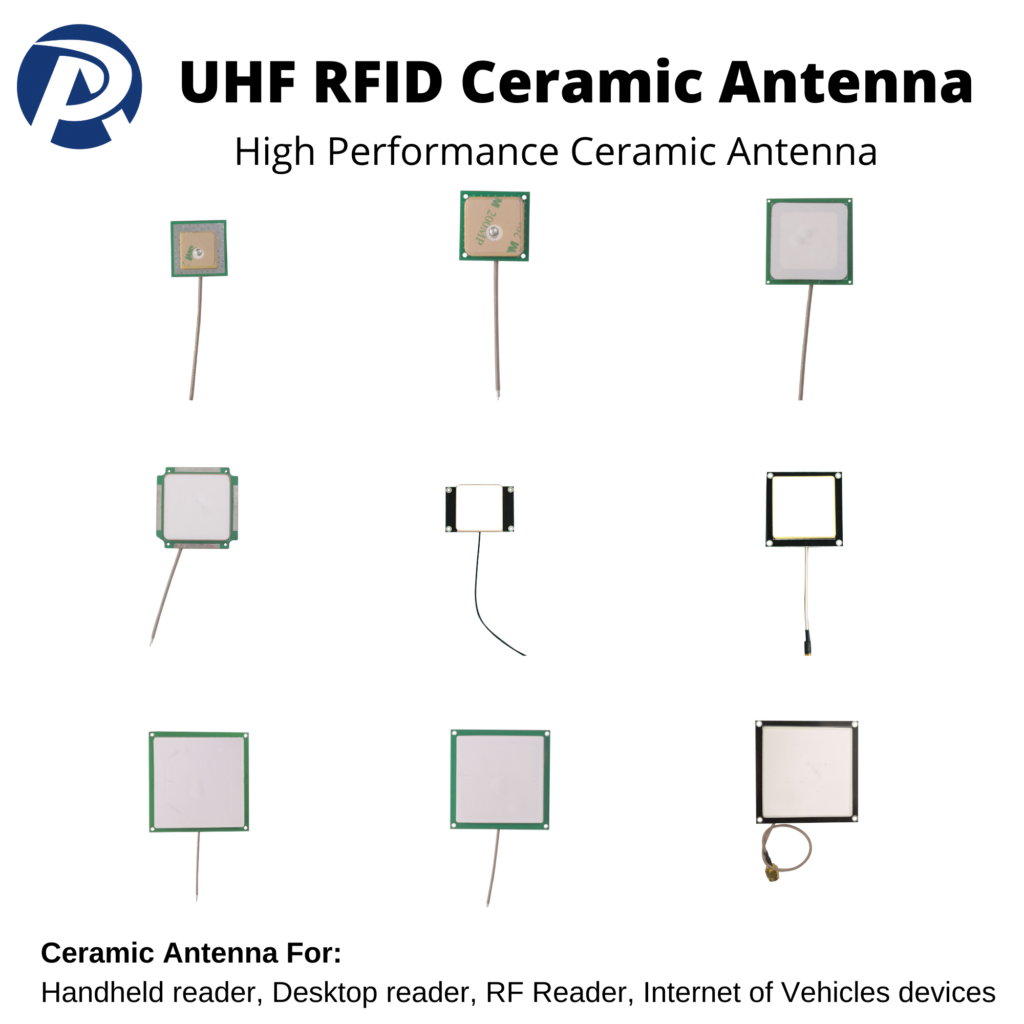
UHF RFID Ceramic Antenna Portfolio
Airplux UHF RFID Ceramic Antennas are designed for embedded RFID reader applications where space, stability, and reliable performance are critical. Available in multiple sizes and polarization options, these antennas support FCC and ETSI frequency bands and can be integrated into handheld readers, desktop readers, smart devices, and industrial RFID equipment.
Table of Contents
- Overview
- What Is a UHF RFID Ceramic Antenna
- How UHF RFID Ceramic Antennas Work
- Why ceramic antennas are commonly used in RFID readers
- Ceramic Antenna vs External RFID Antenna
- common applications of UHF RFID ceramic antennas
- UHF RFID Ceramic Antenna Models
- Frequently Asked Questions
OVERVIEW:Why Ceramic Antennas Have Become Popular in RFID Devices
As RFID readers become smaller, lighter, and more integrated into portable devices, antenna design plays a critical role in overall system performance. Traditional external antennas are suitable for fixed installations, but many RFID applications require a more compact solution that can be built directly into the device.
This is where UHF RFID ceramic antennas are commonly used. By combining compact dimensions with stable RF characteristics, ceramic antennas allow RFID readers to maintain reliable communication while reducing the space required inside the device.
Today, ceramic RFID antennas are widely integrated into handheld readers, desktop readers, smart cabinets, industrial terminals, and IoT devices where installation space is limited but consistent RFID performance is still required.
What Is a UHF RFID Ceramic Antenna?
UHF RFID ceramic antennas are the core components tucked inside handheld readers, desktop readers, smart cabinets, and other embedded RFID equipment where space is at a premium. Unlike the bulky antennas used in fixed installations, these compact modules deliver reliable tag communication without hogging valuable design space.
The magic lies in the ceramic substrate, which keeps RF performance stable even in a tiny footprint—making it the standard choice for embedded designs.
Depending on your reader’s specific requirements, you can choose from a wide range of sizes, gain levels, and polarization options to dial in the perfect fit.
How UHF RFID Ceramic Antennas Work?
Ceramic antennas aren’t the brains behind RFID operations. They don’t store data or identify tags. Their only job is to act as the RF bridge between the reader and the tagged object.
Here’s how it works: The reader fires off a signal, and the ceramic antenna shoots it out into the field. Once a tag walks into that reading zone, it collects that RF energy to wake up its chip, then instantly bounces its data straight back through the exact same antenna.
Since these antennas are usually tucked inside handhelds or desktop terminals, they have to pull off a balancing act: keeping the signal rock solid, while taking up as little physical space as possible. That’s why they work so well in compact, tight-quarters equipment.
Why Ceramic Antennas Are Commonly Used in RFID Readers?
Every RFID reader is designed around a balance of size, performance, and installation constraints. In many embedded reader designs, available antenna space is limited, yet the device still needs to deliver stable tag reading performance.
This is one of the main reasons ceramic antennas are widely used in RFID readers. Their compact structure allows manufacturers to integrate RFID functionality into handheld devices, desktop terminals, smart cabinets, and other space-constrained equipment without relying on larger external antennas.
Compact Footprint
Ceramic antennas occupy very little space, making them suitable for reader designs where every millimeter matters.
Stable RF Behaviour
The ceramic substrate helps maintain consistent RF characteristics across different device designs and operating conditions.
Easy Device Integration
They can be embedded directly into handheld readers, desktop readers, smart cabinets, and other RFID devices without requiring large external antenna structures.
Flexible Design Options
Available in multiple sizes, gain levels, and polarization configurations to support different reader architectures.
- Ceramic antennas are often selected because they help address these common design constraints without significantly increasing the size of the reader.
Ceramic Antenna vs External UHF RFID Antenna
Ceramic and external RFID antennas both serve UHF systems, but they’re engineered for completely different scenarios. The right choice isn’t a question of which is superior; it’s simply a matter of your installation space, target reading distance, and device architecture.
For system integrators and hardware manufacturers, recognizing these core distinctions provides a clear roadmap for antenna selection.
| Factor | Ceramic Antenna | External RFID Antenna |
|---|---|---|
| Size | Compact | Larger |
| Installation | Embedded | External Mounting |
| Reading Distance | Short to Medium | Medium to Long |
| Device Type | Handheld / Embedded | Fixed Readers |
| Coverage Area | Controlled | Wider Coverage |
| Typical Use | Reader Integration | Portal & Gate Systems |
Common Applications of UHF RFID Ceramic Antennas
UHF RFID ceramic antennas are most commonly found in RFID devices where space is limited but stable reading performance is still required. Their compact size and integration flexibility make them a practical choice for handheld readers, desktop terminals, smart cabinets, and embedded RFID equipment. While the antenna itself remains hidden inside the device, it plays a critical role in enabling reliable communication between the reader and RFID tags.
Handheld RFID Readers:Handheld readers require compact antenna solutions that fit within limited device space while maintaining reliable tag reading performance.
Desktop RFID Readers:Desktop readers used for tag encoding, item registration, and RFID testing often integrate ceramic antennas to achieve stable performance without large external antenna structures.
Smart Cabinets & Smart Shelves:Smart cabinets and RFID-enabled shelves rely on compact antennas to create controlled reading zones and accurately identify tagged items within enclosed spaces.
Industrial & Embedded RFID Devices:Industrial terminals, IoT devices, and embedded RFID equipment often use ceramic antennas when RFID functionality must be integrated into compact hardware designs.
UHF RFID Ceramic Antenna Models
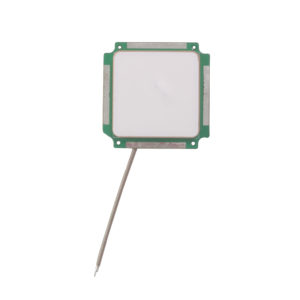
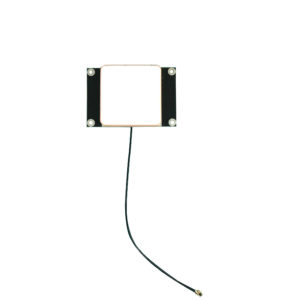
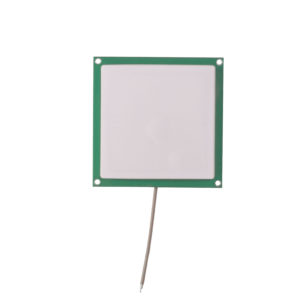
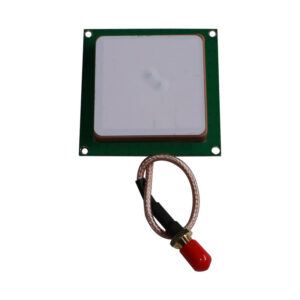
Different RFID reader designs require different antenna sizes and performance characteristics. Airplux offers a range of UHF RFID ceramic antennas to support handheld readers, desktop readers, embedded devices, and industrial RFID equipment. The models below are available in multiple dimensions and specifications to match different integration requirements.

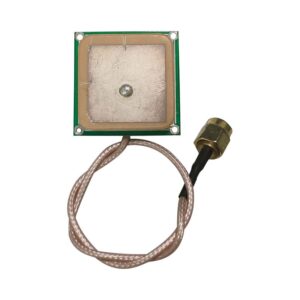
2dBi UHF RFID Ceramic Antenna
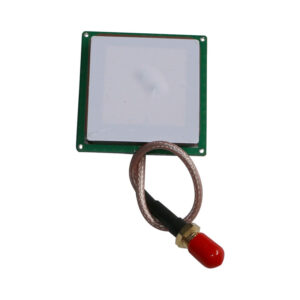
3dBi UHF RFID Ceramic Antenna
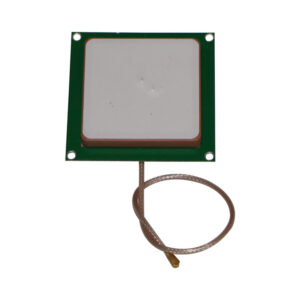
4dBi UHF RFID Ceramic Antenna
Model: APCA1828
Frequency Range: 915MHz/866.5MHz
Polarization: Circular
Gain: 2dBi
Dimensions: 18*18*4mm
Model: APCA2528
Frequency Range: 915MHz/866.5MHz
Polarization: Circular
Gain: 2dBi
Dimensions: 25*25*4mm
Model: APCA3540S
Frequency Range: 915MHz/866.5MHz
Polarization: Circular
Gain: 3dBi
Dimensions: 35*35*4mm
4dBi UHF RFID Ceramic Antenna
5dBi UHF RFID Ceramic Antenna
5dBi UHF RFID Ceramic Antenna
Model: APCA4050S
Frequency Range: 915MHz/866.5MHz
Polarization: Circular
Gain: 4dBi
Dimensions: 40*40*5mm
Model: APCA4050S1
Frequency Range: 915MHz/866.5MHz
Polarization: Circular
Gain: 5dBi±1
Dimensions: 40*40*5mm
Model: APCA4060SD
Frequency Range: 915MHz/866.5MHz
Polarization: Circular
Gain: 5dBi±1
Dimensions: 40*40*5mm
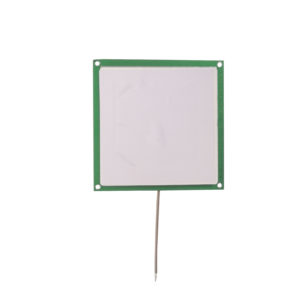
4dBi UHF RFID Ceramic Antenna
6dBi UHF RFID Ceramic Antenna
4dBi UHF RFID Ceramic Antenna
Model: APCA6070
Frequency Range: 915MHz/866.5MHz
Polarization: Circular
Gain: 4dBi±1
Dimensions: 60*60*4mm
Model: APCA6070S
Frequency Range: 915MHz/866.5MHz
Polarization: Circular
Gain: 5dBi
Dimensions: 60*60*5mm
Model: APCA8090
Frequency Range: 915MHz/866.5MHz
Polarization: Circular
Gain: 5dBi
Dimensions: 80*80*5mm
Frequently Asked Questions About UHF RFID Ceramic Antenna
A UHF RFID ceramic antenna is a compact antenna element designed for RFID readers, embedded devices, and IoT applications operating in the UHF RFID frequency band. Using ceramic dielectric materials, these antennas can achieve stable RF performance while maintaining a smaller physical size compared to conventional antenna structures.
UHF RFID ceramic antennas are commonly integrated into handheld readers, embedded RFID devices, smart cabinets, kiosks, and industrial automation equipment where space is limited.
UHF RFID ceramic antennas offer several advantages for RFID system designers:
- Compact size for space-constrained devices
- Stable electrical performance
- Good frequency consistency
- Easy integration into embedded equipment
- Suitable for industrial and commercial RFID applications
Their small footprint makes them particularly useful for portable RFID readers, embedded systems, and smart devices requiring reliable UHF RFID communication.
UHF RFID ceramic antennas are widely used in applications where compact antenna design is required.
Typical applications include:
- Handheld RFID readers
- Embedded RFID terminals
- Smart cabinets
- Self-service kiosks
- Asset management systems
- Industrial automation equipment
- IoT and smart device integration
Their compact structure allows RFID functionality to be integrated into equipment without requiring large external antennas.
When selecting a UHF RFID ceramic antenna, several factors should be considered:
- Operating frequency range
- Antenna dimensions
- Required reading distance
- Polarization type
- Installation environment
- Device enclosure materials
- Reader power level
The antenna should be selected according to the available installation space and the performance requirements of the RFID application.
The primary difference lies in their design purpose and application.
Ceramic RFID antennas are compact antenna components typically integrated inside RFID devices and embedded systems where space is limited.
Panel RFID antennas are larger external antennas designed to provide wider coverage areas and longer reading distances in applications such as warehouse management, logistics tracking, and access control systems.
Ceramic antennas prioritize integration and compactness, while panel antennas prioritize coverage and reading performance.
Yes. The antenna is one of the most important components in an RFID system and directly influences communication efficiency, reading stability, and tag detection performance.
Factors such as antenna design, impedance matching, installation environment, and device integration all affect overall RFID performance. A properly selected ceramic antenna helps ensure reliable RFID communication and consistent tag reading in embedded applications.
About Airplux RFID Antenna
Solutions
Airplux Technologies specializes in RFID antenna design and manufacturing, providing reliable RFID antenna solutions for various identification and tracking applications.
With professional antenna design capabilities and manufacturing experience, Airplux offers a wide range of RFID antennas, including UHF RFID antennas, near-field RFID antennas, ceramic RFID antennas, narrow beam antennas, and integrated RFID antenna solutions.
Our RFID antennas are designed to deliver stable signal performance, accurate tag reading, and reliable operation in different RFID environments. By supporting both standard products and customized antenna solutions, Airplux helps system integrators, enterprises, and manufacturers develop efficient RFID systems for inventory management, access control, logistics tracking, asset management, and other applications.
Please contact us for more detailed info or any inquiry: info@airpluxtec.com
Explore RFID Antenna Solutions
need the right antenna solution?
From standard antenna products to customized designs,Airplux provides professional antenna solutions for
different wireless communication requirements.