
UNIQLO RFID Self-Checkout Solution
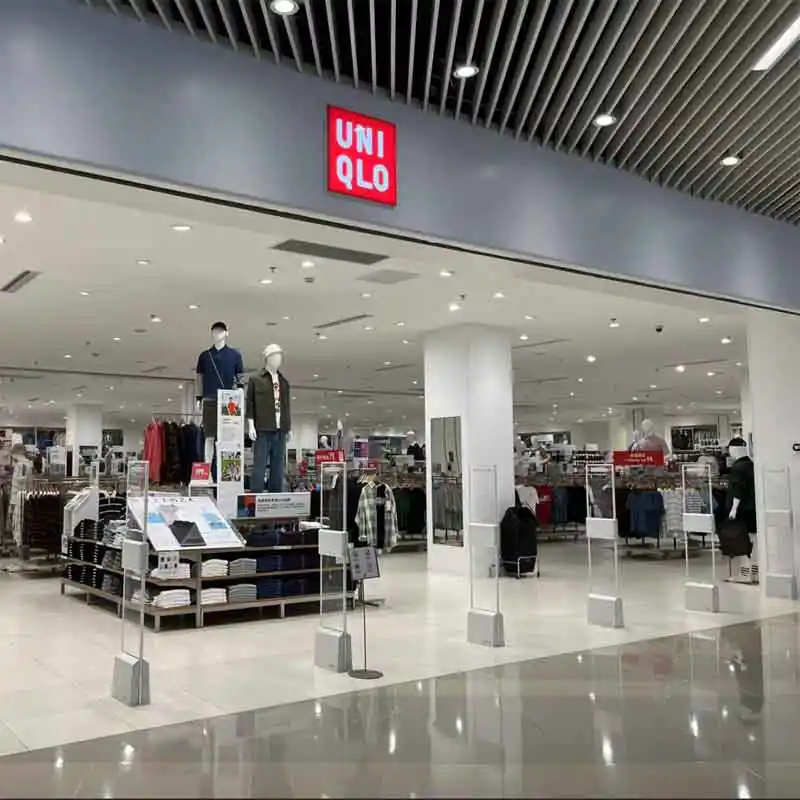
UNIQLO RFID Self-Checkout Solution: How RFID Technology Transforms Retail Checkout Experience
UNIQLO RFID self-checkout solution demonstrates how RFID technology improves the retail checkout experience. By integrating RFID tags, readers, and antennas, the system enables automatic product identification, faster checkout, and more efficient store operations.
Table of Contents
ⅠIntroduction
In busy clothing stores, scanning every item individually can slow down checkout, especially during peak shopping periods. RFID offers another approach by allowing tagged products to be identified through radio-frequency communication.
UNIQLO is a well-known example of this technology in retail. Its RFID-enabled self-checkout stations allow customers to place multiple garments in a designated area for automatic product identification, without scanning each barcode separately.
This article explains how RFID self-checkout works, what retailers can learn from UNIQLO’s application, and which technical factors matter when deploying a similar solution.
ⅡWhat is RFID Self-Checkout Solution
An RFID self-checkout solution is a retail checkout system that uses radio-frequency identification to recognize products automatically. Instead of scanning the barcode on each item, customers place their selected products in a designated reading area. The system reads the RFID tags attached to those items and retrieves the corresponding product information.
In clothing retail, this is particularly useful because shoppers often purchase several garments at once. A single reading operation can identify multiple tagged items, reducing the need for repeated manual scanning.
A typical system connects four main functions: product identification through RFID tags, wireless communication through readers and antennas, data processing through retail software, and transaction handling through the POS system.
It is important to understand that the RFID reader identifies the tag, while the retail database provides the corresponding product details and price. The reader does not independently calculate the purchase total.
Product Information
RF Signal Capture
Data Processing
Product & Price Management
Checkout Completion
- The RFID reader collects tag IDs through the antenna, while the connected software matches them with product records before sending the order information to the POS system.
III RFID vs. Barcode Checkout
Comparison | Barcode Checkout | RFID Self-Checkout |
|---|---|---|
Identification Method | Uses optical scanning to read printed barcodes. | Uses radio-frequency signals to identify electronic RFID tags. |
Reading Process | Each item’s barcode generally needs to be presented to a scanner individually. | Multiple tagged items can be identified within a suitable reading area. |
Line of Sight | Requires the barcode to be visible to the scanner. | Does not require direct visual contact with the tag. |
Product Information | The barcode number is used to retrieve product details from a database. | The RFID tag ID is matched with product records in the connected system. |
Typical Applications | Commonly used for individual item scanning at traditional checkout counters. | Suitable for multi-item checkout, inventory management, and retail automation. |
The main difference is how products are identified. Barcode systems rely on optical scanning, while RFID uses radio waves to communicate with tagged products. However, actual checkout performance depends on tag design, product arrangement, antenna configuration, and system integration.
IV How UNIQLO Implements RFID Self-Checkout
UNIQLO’s 3-step quick checkout process simplifies the retail checkout experience by combining RFID technology with a familiar and convenient payment workflow.
• RFID Tags Used in UNIQLO's Self-Checkout Solution
RFID identification starts with the tag attached to each product. In apparel retail, RFID inlays are commonly incorporated into hangtags or product labels, allowing individual garments to carry an electronic identity throughout the retail process.
For UNIQLO, this means that products can be identified not only at checkout but also during inventory handling and store operations. The same item-level identification approach helps connect physical merchandise with the retailer’s inventory records.
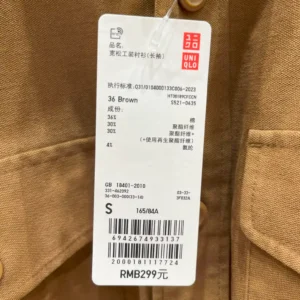
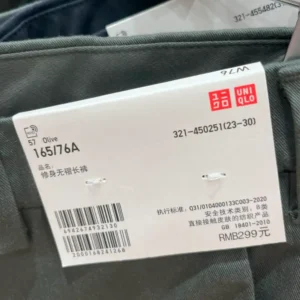

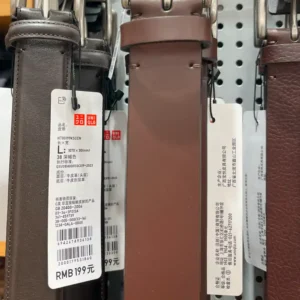
• Uniqlo's "3-step quick checkout" - RFID Self-Checkout Solution
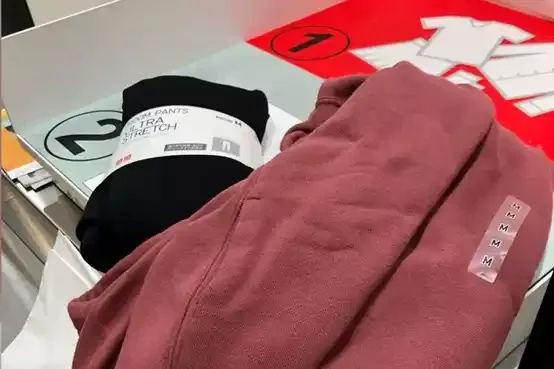
Step 1: Place RFID-Tagged Items in the Checkout Area
Customers place their selected garments in the designated RFID checkout area. Each product carries an RFID tag containing a unique identification code linked to its product information. This means customers do not need to locate and scan the barcode on every item individually.
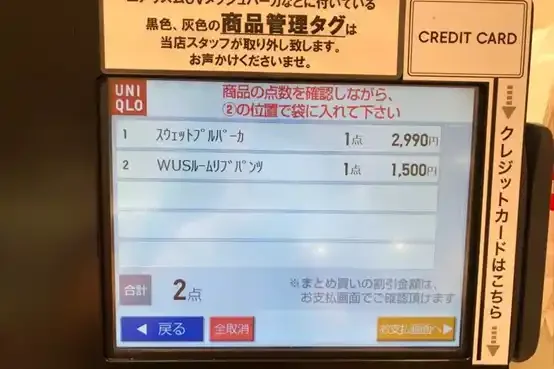
Step 2 : Identify Multiple Products Automatically
The RFID reader and antenna detect the tags within the checkout area. The system collects their identification data and matches it with the corresponding product records. The detected items and prices are then displayed on the screen for the customer to review.
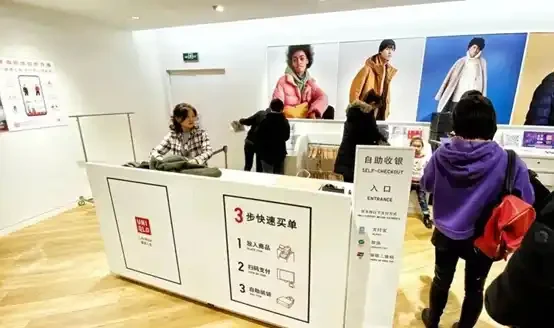
Step 3 : Confirm the Order and Complete Payment
After checking the product list and total amount, customers proceed with payment through the checkout terminal. Once the transaction is completed, the retailer’s system can record the sale and update the relevant inventory information.
- Through RFID-enabled identification and automated checkout processes, UNIQLO provides customers with a faster and more convenient shopping experience.
V Benefits of RFID Self-Checkout in Retail
RFID self-checkout solutions bring significant improvements to both customers and retailers by combining automated identification technology with modern retail systems. By eliminating manual scanning processes, RFID enables faster transactions, smoother shopping experiences, and more efficient store operations.
Faster Checkout
Customers can place multiple tagged items in the reading area instead of scanning each barcode individually. This can simplify the checkout process, particularly when shoppers purchase several garments at once.
More Efficient Store Operations
Automated product identification reduces repetitive manual scanning tasks. Store employees can spend less time handling routine checkout activities and focus more on customer assistance and store operations.
Better Inventory Visibility
Item-level RFID identification helps retailers track products across store operations. The same product identity can support checkout, stocktaking, replenishment, and inventory management.
VI Key Considerations When Deploying RFID Self-Checkout
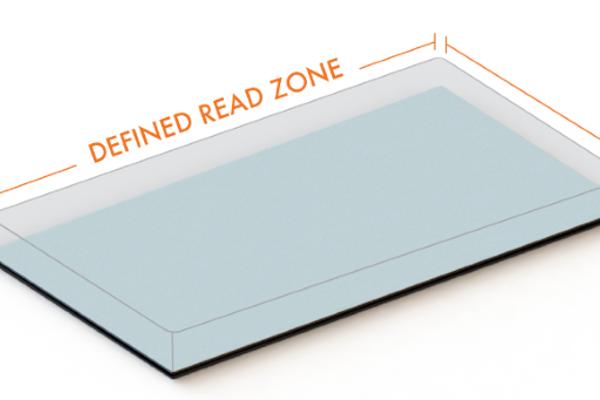
An RFID self-checkout station needs to identify the products a customer intends to purchase while avoiding reads from merchandise outside the checkout area. This requires careful coordination between antenna placement, tag selection, reader settings, and software integration.
Before deployment, the system should be tested with actual products and realistic checkout conditions. The following factors are important for achieving reliable reading performance and a smooth checkout process.
01 Reading Zone and Antenna Placement
Ensure the RF field covers the checkout area without extending into adjacent shelves. Test the center, edges, corners, and surrounding boundaries. Adjust antenna angles, reader power, shielding, or software filters to reduce unwanted reads.
02 Tag Performance and Product Arrangement
Test tags on actual garments in folded, stacked, and mixed arrangements. Products containing metal, liquid, or foil materials may require specially designed tags or additional testing. Check tag orientation and attachment positions.
03 Multiple-Tag Reading and Interference
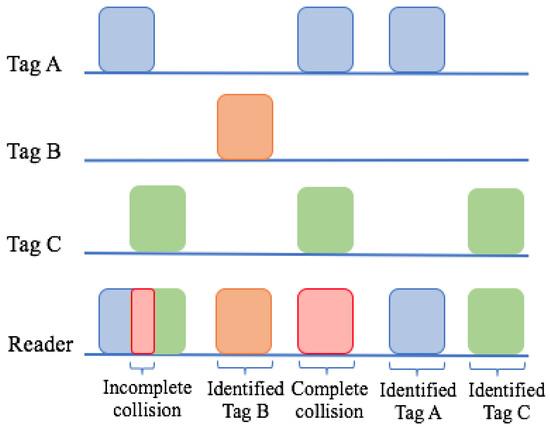
Test the maximum expected number of items per transaction. Measure read completeness, duplicate item entries, and reading time. Check for interference between nearby checkout stations and review reader settings, such as session and Q parameters where supported.
04 Software and POS Integration
Verify accurate EPC-to-SKU matching and product pricing. Define procedures for unknown tags, duplicate reads, missing items, and connection failures. Test normal purchases, returns, and system recovery.
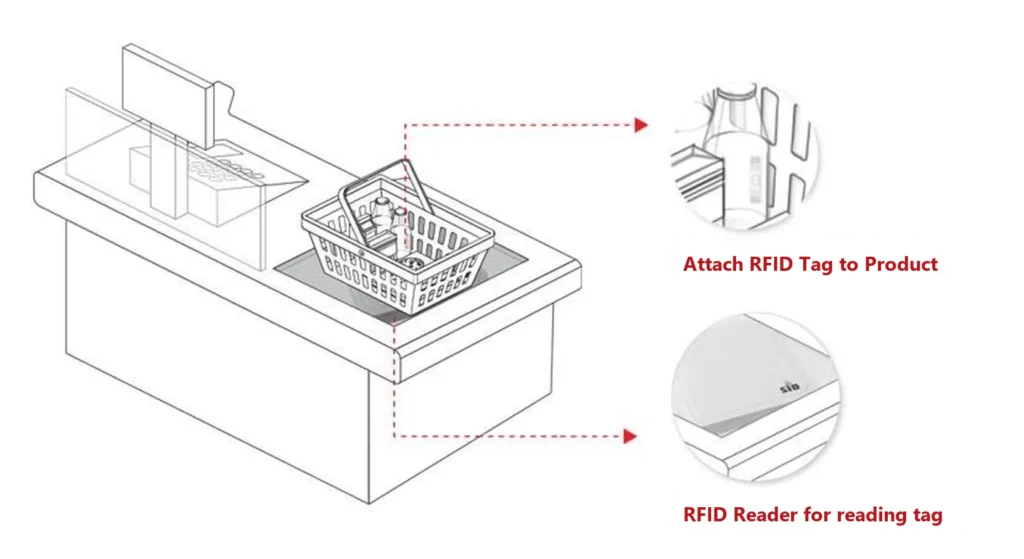
VII RFID Components Used in Retail Self-Checkout
A complete RFID self-checkout solution requires reliable hardware components to ensure accurate product identification and smooth data communication. Airplux provides RFID antennas, readers, and tags designed for retail automation applications, helping system integrators build efficient and scalable RFID solutions.
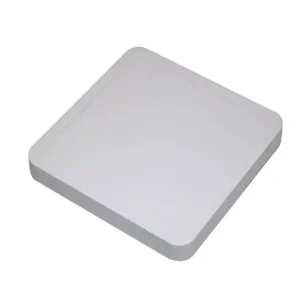
RFID antennas provide reliable signal transmission and reception between RFID tags and readers, ensuring accurate product identification in retail environments.
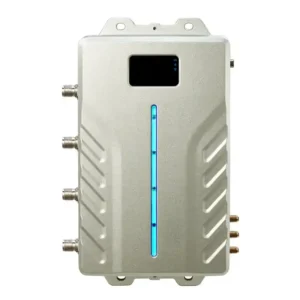
RFID readers process tag information and enable fast, automated product recognition for self-checkout and inventory management applications.

RFID tags store unique product information and allow individual items to be identified throughout the retail process.
Ready to Find the Right Antenna Solution?
Airplux provides customized antenna solutions for different applications and project requirements. Contact our antenna experts to discuss your next project.