
UHF PCB RFID Antenna – 100x100mm

UHF PCB RFID Antenna
Model: APRIA9001010CX
Frequency Range: 902-928MHz
Polarization: Circular
Gain: 10dBi
Product Descriptions
The APRIA9001010CX is a circularly polarized PCB antenna operating at 902–928 MHz, designed for short-range and wide-coverage RFID applications. Its compact 100×100×2mm black PCB design offers a broad beamwidth (101° horizontal / 103° vertical) and reliable performance with VSWR ≤2.0. With a front-to-back ratio ≥6 and 100W power handling, it is perfect for RFID logistics tracking, warehouse management, door control systems, and file cabinet management.
Descriptions
- 902-928MHz
- 10dBi
- Circular Polarization
- 100*100*2mm
Applications
- RFID logistics tracking
- Warehouse management
- Door control system
- File cabinet management
Product Specifications
Electrical Specifications
Frequency | 902-928MHz |
Gain | 10dBi |
Beam width | Hor:101° Ver:103° |
Polarization | Circular |
VSWR | ≤2.0 |
F/B Ratio | ≥6 |
Impedance | 50Ω |
Maximum power | 100W |
Lightning protection | DC Ground |
Connector | SMA-Female |
Mechanical Specifications
Antenna dimensions | 100*100*2mm |
Net weight | 0.2kg |
Gross weight | 0.3kg |
Antenna material | PCB |
Antenna color | Black |
Operating temperature | -20-60℃ |
Antenna Pattern


H-Plane
E-Plane
Antenna Drawing

Applications

RFID Logistics Tracking

Warehouse Management
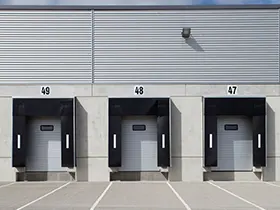
Door Control System

Filing Cabinet Management
PRODUCT SUPPORT
FAQ - 902–928MHz UHF RFID Antenna
902–928MHz UHF RFID antennas are commonly used in applications that require wireless identification and tracking of tagged items. Typical examples include:
- Warehouse management: Identifying goods during storage, inventory checks, and movement.
- Logistics tracking: Supporting identification at shipping, receiving, and distribution checkpoints.
- Retail inventory: Tracking tagged products and improving stock visibility.
- Industrial automation: Identifying components and work-in-progress items along production processes.
- Asset management: Tracking tools, equipment, and other valuable assets.
The antenna design should match the application’s reading area, tag orientation, installation environment, and required coverage.
RFID reading performance depends on several factors working together. These include antenna gain, polarization, tag sensitivity, reader output power, antenna positioning, and the distance between the antenna and tags.
The surrounding environment also matters. Metal structures, liquid-filled objects, and nearby reflective surfaces can affect RF propagation and create areas with weaker or inconsistent tag detection. To improve reading reliability, position the antenna carefully, check tag placement, and test the system under actual operating conditions.
RFID systems can support warehouse inventory management by identifying tagged products, cartons, containers, and other stored assets. Antennas positioned near shelves, storage areas, or designated reading points help detect tags within the configured reading zone. The collected information can then be used to update inventory records and support stock checks. The antenna arrangement should match the warehouse layout, tag locations, and required identification points to help reduce missed reads and unintended detections.
RFID can help organizations identify and track tagged files, folders, and documents stored in cabinets. Antennas integrated into a cabinet or positioned near designated storage areas communicate with the tags, allowing the reader and management software to record item information. This can support document locating, storage records, and inventory checks. For reliable identification, consider how files are arranged, where tags are attached, and whether the cabinet’s materials or closely spaced items affect RF communication.
Yes. RFID antennas can be integrated into access control equipment to communicate with RFID cards, badges, or other compatible credentials. When a credential is presented within the intended reading area, the reader processes its information and sends it to the access control system for verification. Compact PCB antennas may be considered when the device enclosure has limited internal space. The antenna, reader, credential type, and enclosure should be tested together to verify reliable operation.
A circular-polarized RFID antenna can help accommodate changes in tag orientation because it is less dependent on a single linear alignment direction than a linearly polarized antenna. This can be useful in logistics, warehouse, and cabinet applications where tagged items may not always face the antenna in the same direction. However, circular polarization does not guarantee reading at every angle. Tag design, antenna placement, distance, reader settings, and surrounding materials still influence actual performance.
Please feel free to contact us by info@airpluxtec.com for more detailed info if you’re interested in this Antenna, or please check here for our more UHF PCB RFID Antenna products, or here for more RFID Products.
Contact
We are always ready to serve you.
Please feel free to contact us
for any antenna inquiry or requirement.
Leave us a message in the form below and
we will get back to you within 24 hours.
About Us
Airplux Technologies Limited is one professional Antenna Solution Provider which is integrating R&D, production and sales of antennas. Airplux manufactures superior quality DAS/Small Cell antennas, WiFi antennas, IOT/RFID/M2M/GPS antennas, Base Station antennas and customized antennas from 100MHz to 80GHz. We specializes in the production of custom antennas and related accessories.
Working Hours
- Monday - Friday: 8:00 - 18:00
- Saturday: 8:00 - 12:00
We are always ready to serve you.
Please send email to info@airpluxtec.com,
we will get back to you within 24 hours.