GNSS Antenna Types Explained: A Guide to Choosing the Right Antenna

GNSS Antenna Types Explained: A Guide to Choosing the Right Antenna

What is a GNSS antenna? Selecting the right GNSS antenna type is the first step in building any positioning system. GNSS antennas are responsible for receiving signals from satellites, and the choice of different GNSS antennas types directly affects the accuracy, reliability, and cost of the system. This article will take an in-depth look at different GNSS antenna types to help you make the best choice for your application.
What are GNSS antennas?

GNSS (Global Navigation Satellite System) refers to a group of satellite navigation systems that provide positioning, navigation, and timing information worldwide. These systems include major constellations such as GPS from the United States, GLONASS from Russia, Galileo from Europe, and BeiDou (BDS) from China, as well as regional augmentation systems including WAAS, EGNOS, and MSAS.

A GNSS antenna is a precision-engineered component designed to receive extremely weak signals transmitted by navigation satellites located thousands of kilometers above the Earth. After capturing satellite signals, the antenna filters unwanted noise and, in the case of active GNSS antennas, uses a Low Noise Amplifier (LNA) to enhance signal strength before delivering the data to the GNSS receiver.

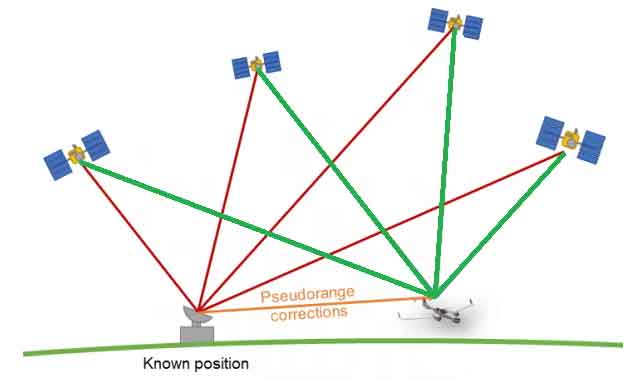
The receiver then analyzes timing information from multiple satellites to calculate the distance between the receiver and each satellite. By combining signals from at least four satellites, the system determines an accurate position through a process known as trilateration. Therefore, antenna performance factors such as gain, polarization, and phase center stability play a critical role in achieving reliable positioning accuracy.

GNSS Antenna Types Explained: A Guide to Choosing the Right Antenna

Frequency bands used by GNSS antennas

GNSS antennas are designed to receive signals transmitted across specific frequency bands used by different satellite navigation systems, including GPS, GLONASS, Galileo, and BeiDou.

Each frequency band carries different navigation signals, allowing GNSS receivers to obtain timing information, positioning data, and correction information for different levels of accuracy.

· Key GNSS frequency bands include:

BDS (China's Beidou Satellite Navigation System)

B1 frequency: 1561.098 MHz, similar to GPS L1 and Galileo E1 frequencies.

B2 frequency: 1207.14 MHz, same as Galileo E5b frequency.

B3 frequency: 1268.52 MHz, used for civilian purposes.

There are also other frequencies such as E5 and E6.

Galileo (European Global Navigation Satellite System)

E1 frequency: 1575.42 MHz, the same as GPS’s L1 frequency, used for civilian purposes.

E5a frequency: 1176.45 MHz, identical to GPS’s L5 frequency, used for civil aviation.

E5b frequency: 1207.14 MHz, used for security applications.

E6 frequency: 1278.75 MHz, used for future civil and commercial services.

GLONASS (Russian Global Navigation Satellite System)

L1 frequency: 1602 MHz, using FDMA (Frequency Division Multiple Access) technology.

L2 frequency: 1246 MHz, also using FDMA technology.

L3 frequency: 1207.14 MHz, used for military signals.

GPS (Global Positioning System)

L1 frequency: 1575.42 MHz, used for both civilian and military applications.

L2 frequency: 1227.6 MHz, primarily used for military applications but also provides civilian signals.

L5 frequency: 1176.45 MHz, used for civilian aviation and other safety-critical applications.

· Some may ask, does frequency overlap have any impact?


Frequency overlap between different GNSS systems does not negatively affect antenna performance. In fact, many satellite navigation systems use similar frequency ranges to improve compatibility and allow receivers to process signals from multiple constellations simultaneously.

Multi-frequency and multi-constellation GNSS antennas can receive signals from GPS, GLONASS, Galileo, and BeiDou at the same time, improving positioning accuracy, reducing signal errors, and enhancing reliability in challenging environments where satellite signals may be weakened or obstructed.

GNSS Antenna Types

GNSS antennas are available in different designs and configurations to meet the requirements of various positioning applications. The selection of a suitable GNSS antenna depends on factors such as signal environment, positioning accuracy requirements, power consumption, and system integration needs.

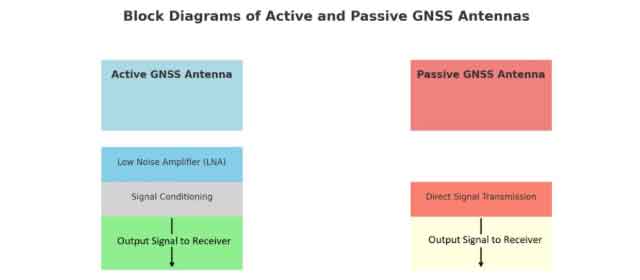
GNSS antennas can be classified in two main ways. The first classification is based on signal amplification capability, including active GNSS antennas and passive GNSS antennas. The second classification focuses on antenna structure and design, such as patch antennas, helical antennas, and ceramic antennas, each offering different performance characteristics for specific applications.

· Based on signal amplification:

1.Active Antenna

Active GNSS antennas integrate a built-in Low Noise Amplifier (LNA) to amplify weak satellite signals before they are transmitted to the receiver. The LNA improves signal strength and compensates for signal loss caused by longer cable connections.

Due to their enhanced signal processing capability, active antennas are commonly used in environments where satellite signals may be weakened by obstacles or interference, such as urban areas, vehicles, and high-precision positioning systems.

These antennas are widely applied in fixed installations, surveying equipment, and applications requiring stable positioning performance under challenging conditions.

2.Passive GNSS Antenna

Passive GNSS antennas receive satellite signals directly and transmit them to the receiver without integrated amplification components.

With a simpler structure and lower power consumption, passive antennas are suitable for applications where satellite signal conditions are stable, such as open outdoor environments, portable devices, and compact positioning equipment.

Although passive antennas do not provide signal amplification, they offer advantages including smaller size, lower cost, and easier integration.

GNSS Antenna Types Explained: A Guide to Choosing the Right Antenna

· Based on antenna structure:

1.Patch Antenna

  • Patch antennas are compact, flat, rectangular, or circular antennas.
  • They are directional antennas that typically support RHCP (right-hand circular polarization) to match the polarization of GNSS satellite signals, thereby enhancing reception performance.However, if not installed correctly, they are often susceptible to multipath interference.
  • Patch antennas rely on a ground plane to reflect signals, making them suitable for both fixed and portable devices.They are ideal for fixed installations such as vehicle navigation, drones, and fixed sensors.
Patch Antennas
Helical Antennas

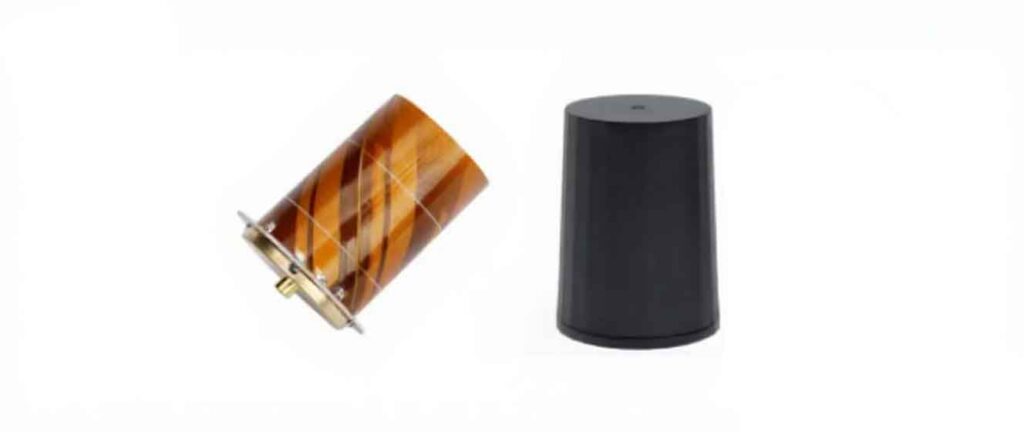
2.Helical Antennas

  • Helical antennas use helical coils to enable omnidirectional reception even without a large ground plane, making them highly versatile.
  • They provide high gain through circular polarization and help suppress multipath signals. They perform well in challenging environments but may be larger than patch antennas.
  • Helical antennas are suitable for low-profile applications such as handheld devices, portable GNSS devices, and wearable devices.

3.Choke Ring Antenna

  • Choke ring antennas feature a ring around the central radiating element, which helps mitigate multipath interference by suppressing ground reflections.
  • These antennas offer high multipath suppression, stable phase center, and robust performance, making them particularly suitable for professional high-precision applications.
  • They are typically used in high-precision applications, including geodesy, meteorology, and static GNSS stations.
Choke Ring Antennas ​
Chip antennas

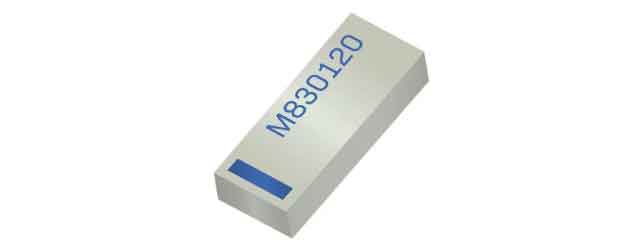
4.Chip antenna

  • Chip antennas are miniaturized, low-profile antennas designed to fit into constrained form factors.
  • Chip antennas have low gain and are more susceptible to interference, making them primarily suitable for devices where size is the primary constraint.
  • These antennas are primarily used in small, lightweight devices such as wearable devices and IoT sensors. They are best suited for applications where size and cost take precedence over high-precision signal accuracy.

5.Multi-element and Cross-Dipole Arrays

  • Multi-element arrays and cross-dipole antennas provide enhanced directional capability and stronger signal suppression for unwanted polarization.
  • They offer high gain, excellent multipath suppression, and support for multiple GNSS frequency bands.
  • These antennas are used in advanced applications requiring multi-frequency or high-precision GNSS, such as drones or automotive applications with real-time kinematic (RTK) functionality. 
Multi-element and Cross-Dipole Arrays
  • Each of these antennas has unique advantages, making them suitable for a wide range of GNSS applications, from handheld devices to high-precision measurement instruments.

Key Characteristics of GNSS Antenna and Their Impact on Performance

The performance of a GNSS antenna depends on multiple technical characteristics, including frequency coverage, gain, polarization, and interference resistance. Understanding these parameters helps engineers select the right antenna for different positioning requirements, from standard navigation to high-precision applications.

· Frequency Coverage Range

GNSS antennas must cover the frequency ranges of multiple satellite navigation systems, such as the L1, L2, and L5 bands of GPS, the L1 and L2 bands of GLONASS, and the corresponding bands of systems like Beidou and Galileo. These bands span the frequency ranges of 1559–1606 MHz (L1 band) and 1166–1187 MHz (L5 band). The coverage of the operating frequency range directly affects the antenna’s ability to receive signals.

· Gain

The gain of a GNSS antenna represents its ability to receive signals effectively from a specific direction. Higher gain enhances the antenna’s signal reception capability, improving positioning accuracy and stability. For example, some GNSS antennas can achieve a gain of up to 5 dBi.

· Circular polarization

GNSS antennas must have circular polarization functionality. Antennas with circular polarization can receive signals from satellites regardless of their direction. This feature helps improve signal integrity and reduce the impact of multipath interference, which is critical in urban and densely populated environments.

· Multipath Suppression

This attribute involves techniques to minimize the impact of reflected signals, which can distort received signals. Effective multipath suppression is critical for improving accuracy and reliability, especially in complex environments.

· Axis Ratio

The axis ratio is a metric for evaluating an antenna’s circular polarization performance, describing its ability to receive signals in different directions. A lower axis ratio indicates better circular polarization performance and stronger suppression of cross-polarized signals, thereby providing higher accuracy.

· Impact on Receiver Sensitivity

The design and characteristics of an antenna directly influence the sensitivity of a GNSS receiver. Antennas with high gain and low noise characteristics enhance receiver sensitivity, enabling better performance under challenging conditions.

· Interference handling

The antenna’s ability to manage and mitigate interference from other electronic devices is critical for maintaining signal quality. Robust interference handling capabilities ensure that GNSS systems can operate reliably in various environments. Understanding these characteristics is essential for selecting the appropriate GNSS antenna for specific applications, ensuring optimal performance and accuracy. GNSS plays a critical role in modern positioning and navigation systems, impacting a wide range of applications from precision agriculture to autonomous vehicles.

About Airplux Antenna
Solutions

Airplux Technologies is a specialized antenna manufacturer integrating antenna design, research and development, production, and sales. We provide reliable antenna solutions covering RFID antennas, WiFi antennas, DAS antennas, IoT antennas, base station antennas, and customized antenna products from 350MHz to 6GHz.

With professional antenna design capabilities and flexible manufacturing experience, Airplux supports customers with both standard antenna products and customized solutions for different project requirements. Our antennas are widely used in various wireless communication and identification systems worldwide, serving system integrators, enterprises, and manufacturers with stable performance and reliable quality.

Ready to Find the Right Antenna Solution?

Airplux provides customized antenna solutions for different applications and project requirements. Contact our antenna experts to discuss your next project.

Close Menu