
7dBi UHF RFID Reader Antenna
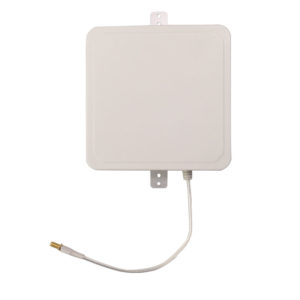
UHF RFID Reader Antenna
Model: APRIA9007CA
Frequency Range: 902-928MHz
Polarization: Circular
Gain: 7Bi
Product Descriptions
The APRIA9007CA is a 7dBi circularly polarized UHF RFID panel antenna operating at 902–928MHz. Its 80° horizontal and 70° vertical beamwidth provides a suitable coverage area for RFID reading in retail environments, storage facilities, and asset management systems. Featuring a compact 165 × 165 × 25mm design, white ABS radome, and IP65 protection, it supports flexible installation in indoor environments, including smart retail shelves, freezers, and file cabinets.
Descriptions
- 902-928MHz
- 7dBi
- Circular Polarization
- 165*165*25mm
Applications
- RFID logistics tracking
- Warehouse management
- Door control system
- Parking management
Product Specifications
Electrical Specifications
Frequency | 902-928MHz |
Gain | 7dBi |
Beam width | Hor:80° Ver:70° |
Polarization | Circular |
VSWR | ≤1.4 |
F/B Ratio | ≥20 |
Impedance | 50Ω |
Maximum power | 100W |
Lightning protection | DC Ground |
Connector | SMA-Female |
Mechanical Specifications
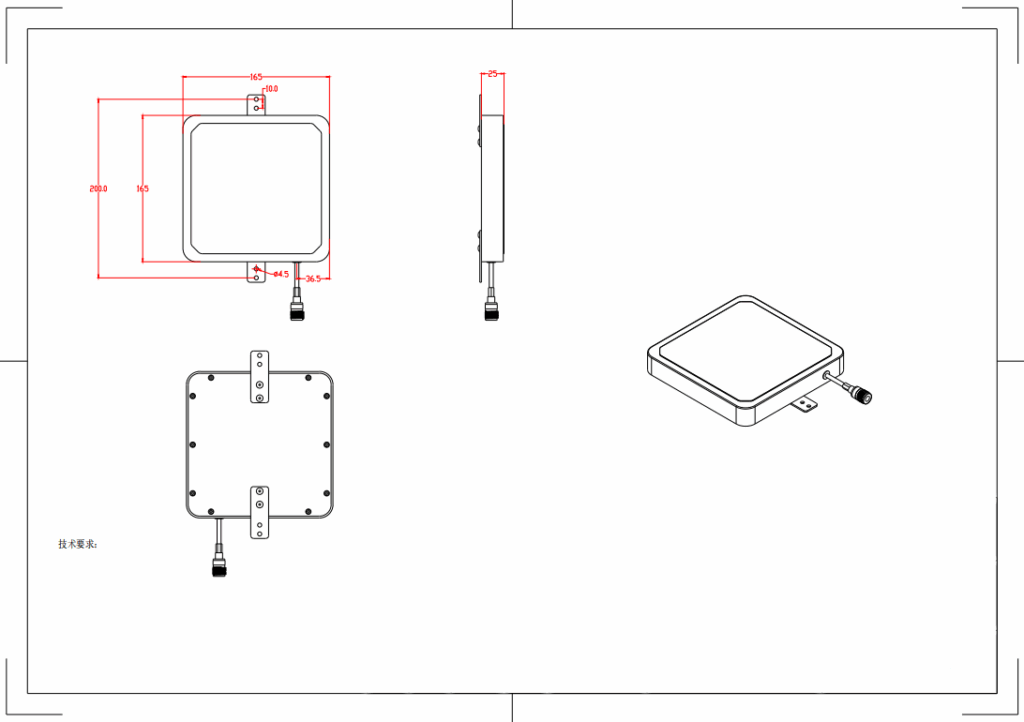
Antenna dimensions | 165*165*25mm |
Net weight | 0.5kg |
Packing size | 24*21*4cm |
Gross weight | 0.6kg |
Radome material | ABS |
Radome color | White |
Installation method | Hang mount |
Operating temperature | -20-60℃ |
IP Rating | IP65 |
Antenna Pattern
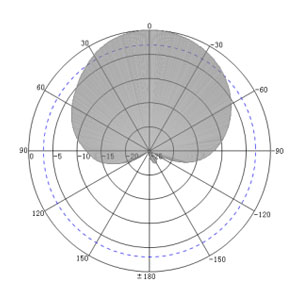
H-Plane
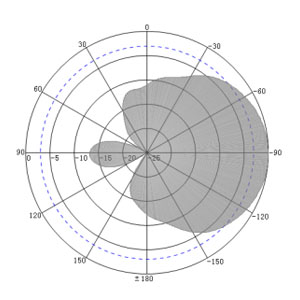
E-Plane
Antenna Drawing
Applications

Smart Retail

Freezer Management

Asset Management

Filing Cabinet Management
PRODUCT SUPPORT
FAQ - 902–928MHz UHF RFID Antenna
Not necessarily. A higher-gain UHF RFID antenna generally concentrates more RF energy in certain directions, which may help extend the reading distance in a suitably designed system. However, gain alone does not determine actual performance. Beamwidth, antenna orientation, reader power, tag characteristics, cable loss, and environmental conditions all influence the effective reading range. The best antenna should be selected according to the required reading area rather than gain alone.
The choice between linear and circular polarization depends mainly on how RFID tags are positioned during identification. A linearly polarized antenna works best when its polarization direction is aligned with the tag antenna, making it suitable for applications where tag orientation is controlled. A circularly polarized antenna offers greater flexibility when tags may be presented at different angles. However, neither polarization guarantees successful reading in every orientation. The application, tag placement, and required reading area should all be considered when selecting an antenna.
A UHF RFID panel antenna can be installed at designated warehouse checkpoints, such as receiving areas, storage zones, sorting stations, and dispatch points. The installation position should match the movement of tagged goods and the intended reading area. Antenna height, orientation, tag placement, and nearby metal structures can all affect identification performance. Testing the setup with actual products and tags helps determine the most suitable mounting position.
Yes. UHF RFID antennas can support vehicle identification in parking systems when compatible RFID tags are attached to vehicles. An antenna installed near an entrance or exit can communicate with tags as vehicles approach the designated reading point. Reliable operation depends on tag placement, antenna orientation, vehicle speed, reader configuration, and the surrounding environment. The reading zone should be tested to help reduce missed identification and unintended reads from adjacent lanes.
An IP65-rated RFID antenna may be considered for freezer applications when its operating temperature range is suitable for the installation environment. However, the protection rating alone does not establish low-temperature suitability. The antenna’s operating temperature, cable and connector performance, condensation risks, and the temperature limits of the RFID reader and tags should also be checked. Testing under actual freezer conditions helps verify reliable system operation.
An RFID panel antenna generally directs RF energy toward a particular area, while an omni-directional antenna is designed to radiate across 360° in the horizontal plane. A panel antenna can be useful when a reading zone needs to be focused on a specific checkpoint, shelf, doorway, or storage area. An omni-directional antenna may be more suitable when coverage is needed around the installation point. The choice depends on the layout, tag movement, and required reading area.
Please feel free to contact us by info@airpluxtec.com for more detailed info if you’re interested in this Antenna, or please check here for our more RFID Antenna products, or here for more RFID Products.
Contact
We are always ready to serve you.
Please feel free to contact us
for any antenna inquiry or requirement.
Leave us a message in the form below and
we will get back to you within 24 hours.