
7dBi UHF RFID Race Timing Flexible Mat Antenna

7dBi UHF RFID Personnel Tracking Ground Mat Antenna
Model: APRIA9007LJS
Frequency Range: 902-928MHz
Polarization: Linear
Gain: 7dBi
Product Descriptions
The APRIA9007LJS 7dBi UHF RFID Race Timing Flexible Mat Antenna is a stable Antenna designed for reliable UHF RFID applications in the 902-928MHz range. With 7dBi gain, circular polarization, and a 73° × 90° beamwidth, it provides stable tag detection and coverage. Its IP65-rated ABS radome makes it suitable for Applications, RFID Logistics tracking, Warehouse applications, Access control system, Marathon track management or semi-outdoor RFID applications.
Descriptions
- 902-928MHz
- 7dBi
- Linear Polarization
- 2000*300*10mm
Applications
- RFID Logistics tracking
- Warehouse applications
- Access control system
- Marathon track management
Product Photos
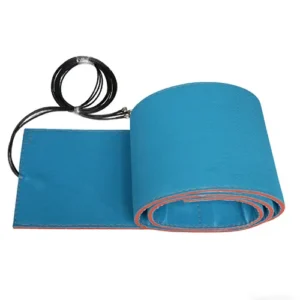
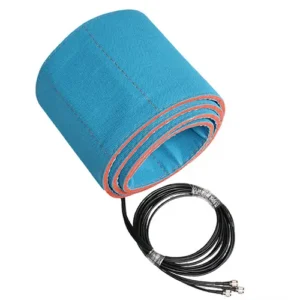
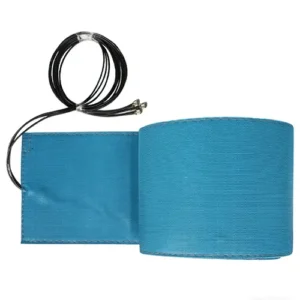
Product Specifications
Electrical Specifications
Frequency | 902-928MHz |
Gain | 7dBi |
Beam width | Hor:73° Ver:90° |
Polarization | Linear |
VSWR | ≤2.0 |
F/B Ratio | ≥20 |
Impedance | 50Ω |
Maximum power | 100W |
Lightning protection | DC Ground |
Connector | 2xSMA-Female |
Mechanical Specifications
Antenna dimensions | 2000*300*10mm |
Net weight | 7.6kg |
Packing size | 35*35*32cm |
Gross weight | 7.8kg |
Radome material | Rubber |
Radome color | Blue |
Operating temperature | -20-60℃ |
Antenna Pattern


H-Plane
E-Plane
Antenna Drawing

Applications

RFID logistics tracking

Warehouse Management

Access control system

Marathon track management
You may also like
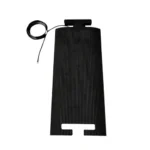
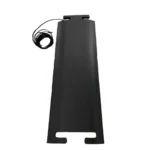
Please feel free to contact us by info@airpluxtec.com for more detailed info if you’re interested in this Antenna, or please check here for our more 9dBi UHF RFID Personnel Tracking Ground Mat Antenna products, or here for more RFID Products.
PRODUCT SUPPORT
FAQ - 7dBi UHF RFID Race Timing Flexible Mat Antenna
The main difference is the operating frequency band and the regions where each band is commonly used. The 865–868MHz band is widely used in many European and other international markets, while the 902–928MHz band is commonly used in the United States and some other regions.
Both bands are used in UHF RFID systems for applications such as inventory management, asset tracking, and logistics. However, the antenna, RFID reader, and tags must support compatible frequencies, and the system must comply with local radio regulations. When choosing an RFID antenna, always confirm the required frequency band for your application and installation location.
An RFID race timing mat antenna is used to detect RFID-tagged participants as they cross a designated timing point. It can be integrated into race timing setups for events such as marathons and other races where participants pass over or near a defined detection zone. The Airplux APRIA9007LJS operates in the 902–928MHz UHF RFID band and is designed for race timing and other RFID applications.
The Airplux APRIA9007LJS is described for marathon track management and semi-outdoor RFID applications, and its IP65-rated ABS radome provides dust and water-jet protection under specified conditions. Its suitability for a particular outdoor event also depends on how the antenna is installed, the weather exposure, cable and connector protection, and the reader setup. Test the complete timing system in the intended environment before the event.
A 7dBi UHF RFID antenna can be suitable for warehouse and logistics systems when its coverage pattern matches the required reading area. The Airplux APRIA9007LJS is specified for logistics tracking, warehouse applications, and access control as well as race timing. Actual performance depends on the layout, tag placement, reader configuration, and surrounding materials, so the antenna should be selected according to the intended application.
IP65 means an enclosure is rated as dust-tight and protected against water jets under specified test conditions. The Airplux APRIA9007LJS has an IP65-rated ABS radome, making it suitable for consideration in environments where dust and water exposure are relevant. However, IP65 does not mean the antenna can be submerged in water, and the connectors and cable interfaces should be installed and protected appropriately.
To reduce missed reads, ensure that participants’ tags are positioned consistently, the antenna covers the intended crossing area, and the RFID reader is configured correctly. Tag orientation, participant spacing, cable losses, and interference or reflections from nearby objects can also affect detection. Testing the complete setup with the expected tag type and participant flow helps identify coverage gaps before the race begins.
Contact
We are always ready to serve you.
Please feel free to contact us
for any antenna inquiry or requirement.
Leave us a message in the form below and
we will get back to you within 24 hours.