
5dBi RFID Race Timing Antenna

RFID Race Timing Antenna
Model: APRIA9005LP
Frequency Range: 902-928MHz
Polarization: Linear
Gain: 5dBi
Product Descriptions
The APRIA9005LP 5dBi Linear Panel Antenna is a RFID Race Timing Antenna engineered for reliable performance in the 902-928MHz band. Featuring 5dBi linear gain with a 90° × 35° beamwidth, it delivers focused, horizontally polarized coverage ideal for conveyor portals, dock doors, and warehouse aisles. Its robust aluminum construction and DC-ground lightning protection ensure durability in indoor and protected outdoor environments. With low VSWR (≤1.5) and SMA-Female connectivity, this antenna is a practical choice for RFID logistics, asset management, and vehicle tracking applications.
Descriptions
- 902-928MHz
- 5dBi
- Linear Polarization
- 457*88*20mm
Applications
- RFID logistic tracking
- Warehouse applications
- Asset management
- Parking Management
Product Specifications
Electrical Specifications
Frequency | 902-928MHz |
Gain | 5dBi |
Beam width | Hor:90° Ver:35° |
Polarization | Linear |
VSWR | ≤1.5 |
F/B Ratio | ≥20 |
Impedance | 50Ω |
Maximum power | 100W |
Lightning protection | DC Ground |
Connector | SMA-Female |
Mechanical Specifications
Antenna dimensions | 457*88*20mm |
Net weight | 0.65kg |
Packing size | 51*11*2.5cm |
Gross weight | 0.7kg |
Antenna material | Aluminum |
Antenna color | Black |
Installation method | Hang mount |
Operating temperature | -20-60℃ |
Product Photos


Applications

RFID Logistics Tracking

Warehouse Management

Asset Management
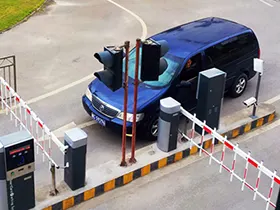
Parking Management
PRODUCT SUPPORT
FAQ - 902–928MHz UHF RFID Antenna
Choosing the right 902–928MHz RFID antenna involves more than checking its frequency range. Consider the following factors:
- Gain: Determines how RF energy is distributed in the antenna’s radiation pattern.
- Beamwidth: Helps define the intended horizontal and vertical coverage.
- Polarization: Circular polarization can accommodate variations in tag orientation, while linear polarization can work well when tag alignment is predictable.
- Installation: Consider the available mounting space, antenna orientation, and surrounding materials.
- Compatibility: Check the reader’s frequency range, impedance, connector interface, and supported RF power.
The best antenna depends on the reading area, tag placement, and operating requirements of the application.
The 902–928MHz band is shared by different types of wireless devices, so interference may occur when multiple systems operate nearby. In RFID installations, nearby readers and other RF sources may affect reading consistency, particularly in environments with several wireless systems.
Interference management usually involves suitable reader configuration, frequency planning, transmit power control, and frequency-hopping techniques where supported by the system. Antenna selection also matters: an appropriate radiation pattern and polarization can help control the intended reading area. Proper impedance matching supports efficient power transfer, but it does not eliminate interference from other devices.
RFID antennas are an important part of electronic race timing systems. They detect RFID tags carried by participants as they pass designated timing points, such as start lines, checkpoints, and finish lines. The antenna communicates with the tags through an RFID reader, which records identification data and sends it to the timing software. This allows organizers to track participant progress and calculate race times without relying entirely on manual timing.
UHF RFID race timing systems commonly use passive RFID tags attached to race bibs, shoes, or other suitable positions, depending on the event and timing system design. These tags respond to signals from nearby antennas without requiring their own batteries. Tag placement, orientation, reader configuration, and the timing system’s antenna layout all affect identification reliability. The selected tags must be compatible with the operating frequency and RFID reader.
Antenna positioning depends on the checkpoint layout, participant movement, tag location, and required reading area. Antennas may be installed near the ground, along a timing mat structure, or at other designated positions supported by the timing system design. Their orientation should be considered in relation to the tags carried by participants. Practical testing with the actual tags, reader settings, and participant movement is important to check reading consistency and avoid missed or unwanted reads
.
Yes. UHF RFID systems support multi-tag identification, allowing readers to process responses from multiple RFID tags within a reading area. This is useful in running events where several participants may cross a timing point close together. However, actual performance depends on reader anti-collision capabilities, tag design, antenna configuration, participant spacing, and the surrounding RF environment. The complete timing system should be tested under realistic event conditions.
Contact
We are always ready to serve you.
Please feel free to contact us
for any antenna inquiry or requirement.
Leave us a message in the form below and
we will get back to you within 24 hours.
Please feel free to contact us by info@airpluxtec.com for more detailed info if you’re interested in this Antenna, or please check here for our more RFID Race Timing Antenna products, or here for more RFID Products.