
4G/5G Low PIM DAS Antenna

4G/5G Low PIM DAS Antenna
Airplux Technologies 4G/5G Low PIM DAS Antenna is designed to deliver superior indoor coverage with excellent isolation, wide bandwidth, and ultra-low PIM performance.
Compact and easy to install, the 4G/5G Low PIM DAS Antenna ensures reliable signal transmission for high-capacity networks in commercial and enterprise buildings.
Featuring durable construction and refined appearance, Airplux 4G/5G Low PIM DAS Antenna provides stable, long-lasting performance for next-generation wireless communication systems.
Table of Contents
01 what is Low PIM DAS Antenna
02 why low PIM Matters in 4G/5G Networks
03 applications
04 features
05 omni vs panel das antennas
06 how to choose the right low pim das antenna
07antenna portfolio
08 FAQ
What Is a Low PIM DAS Antenna?
Most DAS antennas can distribute indoor cellular signals, but not all are built for high-capacity 4G and 5G networks. With more frequency bands, carriers, and MIMO layers packed into buildings, operators now treat Passive Intermodulation (PIM) as a critical metric. That’s why Low PIM DAS antennas have become standard in modern indoor coverage projects.
· Understanding Low PIM in Simple Terms
PIM is unwanted RF interference created when multiple high-power signals hit a non-linear junction in a passive component — like an antenna, connector, or even a slightly oxidized contact point. Those new interference signals can land in the uplink band and choke network performance. A Low PIM DAS antenna is designed to suppress this effect, delivering cleaner signal rather than just stronger signal.
· So What Makes a DAS Antenna "Low PIM"?
It comes down to manufacturing. Low PIM DAS antennas use tighter tolerances, better conductive materials, and carefully controlled RF contact surfaces. Every joint and connection point is treated as a potential PIM source. In multi-band 4G/5G deployments, that level of control directly improves uplink sensitivity, network capacity, and user experience — which is why PIM ratings (typically -150 dBc or better) matter more than gain specs alone.
Why Low PIM Matters in 4G/5G Networks
As 4G LTE and 5G networks continue adding more carriers, wider bandwidths, and heavier traffic loads, interference inside the RF path becomes a growing concern. While users never see Passive Intermodulation (PIM) directly, they often experience its impact through unstable coverage, reduced uplink performance, and inconsistent data speeds. That’s why Low PIM DAS antennas have become a standard choice for modern in-building wireless systems.
In practical deployments, a Low PIM antenna helps keep the RF environment cleaner and more predictable. It reduces the risk of self-generated interference, supports multi-carrier operation, and helps maintain stable coverage in busy indoor environments such as office buildings, airports, shopping malls, hospitals, and stadiums. The result is simple: more reliable network performance and a better user experience.
Applications:
- Office buildings& shopping malls
- Indoor DAS for 4G/5G coverage
- Areas requiring strong and stable mobile signals
Features:
- Low PIM design
- Wideband performance
- Uniform coverage, MIMO supported
Omni vs Panel DAS Antennas
Most indoor DAS projects eventually come down to one question: should you use an omni-directional antenna or a directional panel antenna? Both play important roles in distributed antenna systems, but they solve different coverage challenges. Understanding where each antenna performs best can help improve signal quality while reducing the number of antennas required.
| Omni DAS Antenna | Panel DAS Antenna |
|---|---|
| 360° coverage | Directional coverage |
| Ideal for open areas | Ideal for corridors & focused coverage |
| Ceiling mounted | Wall mounted |
| Uniform signal distribution | Extended reach in one direction |
| Offices, malls, lobbies | Hallways, tunnels, large aisles |
How to Choose the Right Low PIM DAS Antenna
Choosing a Low PIM DAS antenna is not simply about selecting the highest gain or the lowest PIM rating. The right antenna depends on your coverage objectives, building layout, supported frequency bands, and deployment environment. A well-matched antenna can improve indoor coverage efficiency, while the wrong choice may create unnecessary overlap, weak spots, or wasted infrastructure.
Step 1 :Verify Frequency Band Support
Start with the coverage objective. Omni antennas are commonly used in open indoor spaces such as offices, shopping malls, and hotel lobbies, while panel antennas are better suited for corridors, parking garages, and other areas that require focused coverage.
Step 2 :Verify Frequency Band Support
Modern DAS projects often support multiple operators and technologies simultaneously. Before selecting an antenna, verify that it covers all required frequency bands, including LTE and 5G bands used in your region. Wideband antennas simplify deployment and reduce the need for multiple antenna types.
Step 3 :Check the PIM Rating
For most commercial 4G and 5G DAS deployments, a PIM rating of -150 dBc or better is typically preferred. However, the test conditions behind the specification are just as important as the number itself. Always compare antennas using equivalent test standards.
Step 4 :Consider Installation Environment
Ceiling height, mounting location, cable routing, user density, and aesthetic requirements all influence antenna selection. In many projects, a combination of omni and panel antennas provides the most effective coverage solution.
Explore Our Low PIM DAS Antenna Portfolio
Every indoor coverage project is different. Some require wide, uniform coverage across open spaces, while others need focused signal delivery in corridors, tunnels, or high-density environments. Our Low PIM DAS antenna portfolio includes omni-directional, panel, and MIMO solutions designed to support reliable 4G and 5G indoor networks.
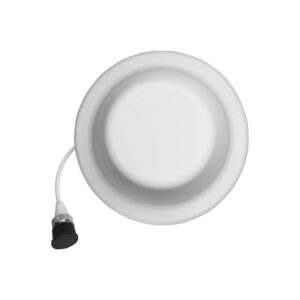
Omni Ceiling Antenna
Model: APOCA692725LP
Freq range (MHz): 698-800 / 800-960 / 1710-2700
Gain (dBi): 1.5 / 1.5 / 5
VSWR: ≤1.8 / ≤1.5 / ≤1.5
Beam width (°): 360
Polarization: Vertical
Connector: N-Female
Antenna Size (mm): Φ186×85
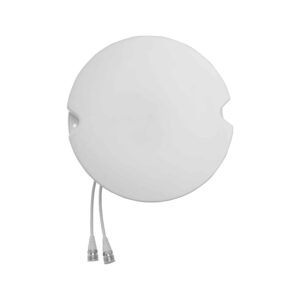
MIMO Omni Ceiling Antenna
Model: APMOCA692734LP
Freq range (MHz): 698-800 / 800-960 / 1710-2700
Gain (dBi): 2.5 / 2.5 / 4.5
VSWR: ≤1.8 / ≤1.5 / ≤1.5
Beam width (°): 360
Polarization: Linear
Connector: 2×N-Female
Antenna Size (mm): Φ215×42
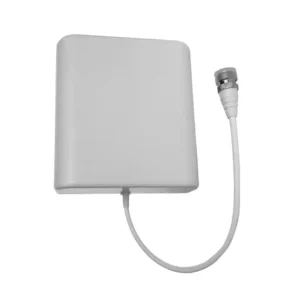
Indoor Panel Antenna
Model: APIPA692768LP
Freqrange (MHz): 698-800 / 800-960 / 1710-2700
Gain (dBi): 6 / 7 / 8
VSWR: ≤1.8 / ≤1.5 / ≤1.5
Beam width (°): Hor:90 Ver:75 / Hor:90 Ver:70 / Hor:65 Ver:60
Polarization: Vertical
Connector: N-Female
Antenna Size (mm): 165×155×45
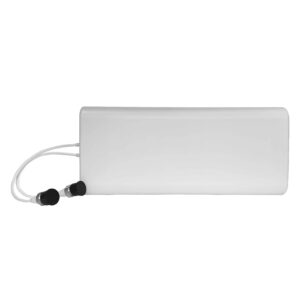
MIMO Indoor Panel Antenna
Model: APMIPA692778LP
Freq range (MHz): 698-800 / 800-960 / 1710-2700
Gain (dBi): 7 / 7.5 / 7.5
VSWR: ≤1.8 / ≤1.5 / ≤1.5
Beam width (°): Hor:75±15 Ver:70 / Hor:70±15 Ver:70 / Hor:65±15 Ver:60
Polarization: ±45°
Connector: 2×N-Female
Antenna Size (mm): 310×200×75
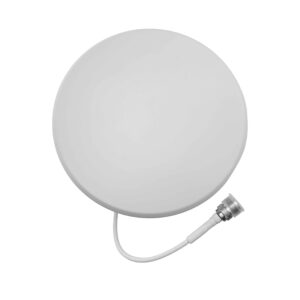
Thin Omni Antenna
Model: APTOA693824LP
Freq range (MHz): 698-800 / 800-960 / 1710-2700 / 3300-3800
Gain (dBi): 2.5 / 2.5 / 4 / 4
VSWR: ≤1.8 / ≤1.5 / ≤1.5 / ≤1.5
Beam width (°): 360
Polarization: Linear
Connector: N-Female
Antenna Size (mm): Φ186×15
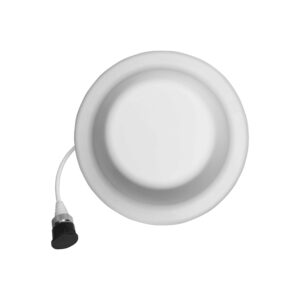
Indoor Omni Antenna
Model: APOCA693825LP
Freq range (MHz): 698-800 / 800-960 / 1710-2700 / 3300-3800
Gain (dBi): 1.5 / 2 / 5 / 5
VSWR: ≤1.8 / ≤1.5 / ≤1.5 / ≤1.8
Beam width (°): 360
Polarization: Vertical
Connector: N-Female
Antenna Size (mm): Φ186×85
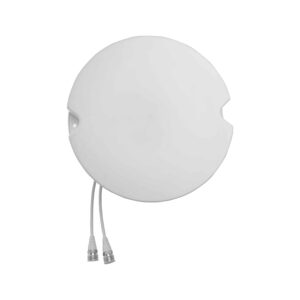
MIMO Omni Ceiling Antenna
Model: APMOCA693834LP
Freq range (MHz): 698-800 / 800-960 / 1710-2700 / 3300-3800
Gain (dBi): 2.5 / 4.5 / 4.5 / 4
VSWR: ≤1.8 / ≤1.5 / ≤1.5 / ≤1.8
Beam width (°): 360
Polarization: Linear
Connector: 2×N-Female
Antenna Size (mm): Φ215×42
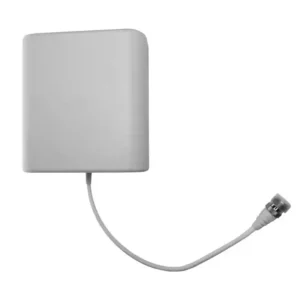
Indoor Panel Antenna
Model: APIPA693868LP
Freq range (MHz): 698-800 / 800-960 / 1710-2700 / 3300-3800
Gain (dBi): 6 / 6.5 / 7.5 / 7.5
VSWR: ≤1.8 / ≤1.8 / ≤1.8 / ≤1.8
Beam width (°): Hor:90±20 Ver:85 / Hor:85±20 Ver:75 / Hor:60±20 Ver:55 / Hor:50±20 Ver:40
Polarization: Vertical
Connector: N-Female
Antenna Size (mm): 165×155×52
Omni Ceiling Antenna
Model: APOCA694025LP4
Freq range (MHz): 698-800 / 800-960 / 1710-2700 / 3300-3800
Gain (dBi): 1.5 / 2 / 5 / 5
VSWR: ≤1.8 / ≤1.5 / ≤1.5 / ≤1.8
Beam width (°): 360
Polarization: Vertical
Connector: 4.3-10 Female
Antenna Size (mm): Φ186×85
MIMO Omni Ceiling Antenna
Model: APMOCA694034LP4
Freq range (MHz): 698-800 / 800-960 / 1710-2700 / 3300-3800
Gain (dBi): 2.5 / 4.5 / 4.5 / 4
VSWR: ≤1.8 / ≤1.5 / ≤1.5 / ≤1.8
Beam width (°): 360
Polarization: Linear
Connector: 4.3-10 Female
Antenna Size (mm): Φ215×42
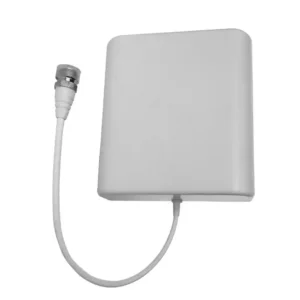
Indoor Panel Antenna
Model: APIPA694068LP4
Freq range (MHz): 698-800 / 800-960 / 1710-2700 / 3300-3800
Gain (dBi): 6 / 6.5 / 7.5 / 7.5
VSWR: ≤1.8 / ≤1.5 / ≤1.5 / ≤1.8
Beam width (°): Hor:90±20 Ver:85 / Hor:85±20 Ver:75 / Hor:60±20 Ver:55 / Hor:50±20 Ver:40
Polarization: Vertical
Connector: 4.3-10 Female
Antenna Size (mm): 165×155×45
MIMO Indoor Panel Antenna
Model: APIPA694068LP4
Freq range (MHz): 698-800 / 800-960 / 1710-2700 / 3300-3800
Gain (dBi): 7 / 7 / 7.5 / 7.5
VSWR: ≤1.8 / ≤1.8 / ≤1.8 / ≤1.8
Beam width (°): Hor:75±15 Ver:70 / Hor:70±15 Ver:70 / Hor:65±15 Ver:60 / Hor:60±15 Ver:55
Polarization: ±45°
Connector: 4.3-10 Female
Antenna Size (mm): 310×200×75
Frequently Asked Questions About RFID Inventory Management Systems
A Low PIM DAS antenna is a distributed antenna system (DAS) antenna designed to minimize Passive Intermodulation (PIM), an unwanted form of RF interference that can occur when multiple signals pass through passive components. Low PIM antennas help maintain cleaner signal transmission and are widely used in 4G LTE and 5G indoor coverage systems.
As modern networks support multiple carriers, wider bandwidths, and higher traffic loads, PIM can create interference that falls into uplink frequency bands. This may reduce network capacity, increase dropped calls, and impact data performance. Low PIM antennas help reduce this risk and support more reliable indoor wireless coverage.
Most professional Low PIM DAS antennas are rated between -150 dBc and -155 dBc under standard testing conditions. Higher-performance antennas may achieve even lower PIM levels. The required specification depends on network requirements, operator standards, and deployment environments.
A standard DAS antenna focuses on signal coverage, while a Low PIM DAS antenna is specifically engineered to minimize passive intermodulation. In multi-band and multi-operator environments, Low PIM antennas help reduce RF interference and maintain better uplink performance, making them the preferred choice for modern 4G and 5G deployments.
Yes. Many modern Low PIM DAS antennas are designed as wideband antennas that support multiple cellular frequency bands simultaneously. This allows a single antenna to serve multiple operators and technologies, including 4G LTE and 5G, within the same indoor coverage system.
Key factors include:
- Frequency range
- Coverage pattern (Omni or Panel)
- Gain
- PIM rating
- Polarization
- Connector type
- Installation environment
For open indoor areas such as offices and shopping malls, omni-directional ceiling antennas are often preferred. For corridors, parking garages, and focused coverage zones, directional panel antennas may provide better performance.
Ready to Find the Right Antenna Solution?
Airplux provides customized antenna solutions for different applications and project requirements. Contact our antenna experts to discuss your next project.