
3dBi UHF RFID Ultra-Thin Antenna – 250x110x1mm
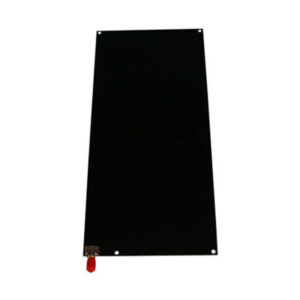
UHF RFID Ultra-Thin Antenna
Model: APRIA9003CB
Frequency Range: 902-928MHz
Polarization: Circular
Gain: 3dBi
Product Descriptions
The APRIA9003CB features an ultra-thin 1 mm PCB design, making it easy to integrate into space-constrained RFID equipment, furniture, and fixtures. Its circular polarization helps accommodate different tag orientations, making it suitable for logistics tracking, warehouse management, access control, and clothing management applications where a discreet antenna profile is preferred.
Descriptions
- 902-928MHz
- 3dBi
- Circular Polarization
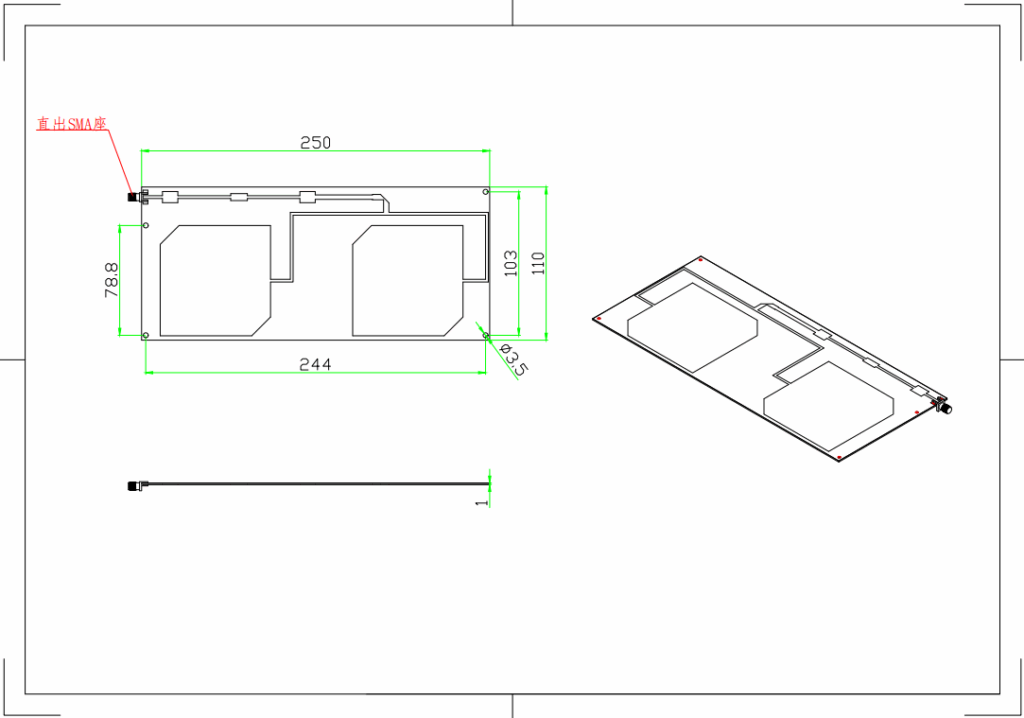
- 250*110*1mm
Applications
- RFIDLogistics tracking
- Warehouse applications
- Access control system
- Clothing management
Product Specifications
Electrical Specifications
Frequency | 902-928MHz |
Gain | 3dBi |
Beam width | Hor:110°Ver:70° |
Polarization | Circular |
VSWR | ≤1.5 |
Impedance | 50Ω |
Maximum power | 100W |
Lightning protection | DC Ground |
Connector | SMA-Female |
Mechanical Specifications
Antenna dimensions | 250*110*1mm |
Net weight | 0.2kg |
Gross weight | 0.5kg |
Radome material | PCB |
Radome color | Black |
Operating temperature | -20-60℃ |
Antenna Pattern
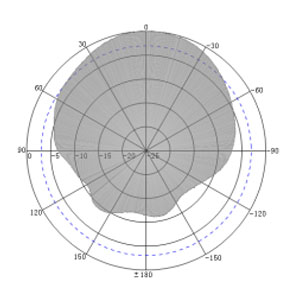
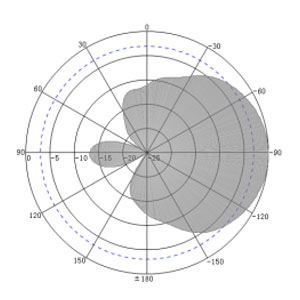
H-Plane
E-Plane
Antenna Drawing
Applications

RFID Logistics Tracking

Warehouse Management

Access Control System

Clothing Management
PRODUCT SUPPORT
FAQ - 902–928MHz UHF RFID Antenna
The 902–928MHz range is a UHF frequency band commonly used by RFID systems in the United States and certain other regions. It is also used by other license-exempt wireless devices, subject to applicable local regulations. Its sub-1GHz operating frequency offers a practical balance between antenna size and radio propagation characteristics, making it suitable for applications such as warehouse inventory, logistics tracking, asset management, and industrial identification.
Airplux offers UHF RFID antennas designed for the 902–928MHz band. When selecting an antenna, make sure its frequency range is compatible with the RFID reader, tags, and regulations in the intended market.
Choosing the right 902–928MHz RFID antenna involves more than checking its frequency range. Consider the following factors:
Gain: Determines how RF energy is distributed in the antenna’s radiation pattern.
Beamwidth: Helps define the intended horizontal and vertical coverage.
Polarization: Circular polarization can accommodate variations in tag orientation, while linear polarization can work well when tag alignment is predictable.
Installation: Consider the available mounting space, antenna orientation, and surrounding materials.
Compatibility: Check the reader’s frequency range, impedance, connector interface, and supported RF power.
The best antenna depends on the reading area, tag placement, and operating requirements of the application.
The APRIA9003CB has a thickness of just 1mm and measures 250 × 110mm. Its ultra-thin PCB construction can help when an RFID installation has limited space or requires a slim antenna component. This form factor may be useful for compact equipment, retail fixtures, and customized RFID assemblies. Before integration, check the available mounting surface, cable routing, connector clearance, and the protection needed for the PCB in its intended operating environment.
A 3dBi circular polarized antenna can be considered for warehouse and logistics applications that require identification within a relatively localized reading area. Circular polarization helps accommodate variations in tag orientation, while the lower gain may suit installations where highly concentrated RF coverage is not required. The Airplux APRIA9003CB can be evaluated for designated inventory checkpoints, storage areas, and goods identification points. Actual reading performance depends on tag placement, reader configuration, antenna positioning, and nearby materials.
When installing the Airplux APRIA9003CB near metal surfaces, consider how the mounting structure may affect antenna performance. Metal can alter RF propagation and may affect an antenna’s impedance or radiation characteristics, depending on the antenna design and installation arrangement. Do not assume that the PCB antenna can be mounted directly against any metal surface without performance changes. Check the manufacturer’s mounting recommendations and test the antenna in its intended position before completing the installation.
The Airplux APRIA9003CB has a 50Ω impedance and an SMA-Female connector. Before connecting it to an RFID reader, confirm that the reader or connecting cable has a compatible connector interface and supports the 902–928MHz frequency range. The antenna specifies a maximum rated input power of 100W, so the reader’s RF output power should remain within this limit. Also consider cable losses, connector quality, and the antenna’s mounting environment when integrating the complete system.
Please feel free to contact us by info@airpluxtec.com for more detailed info if you’re interested in this Antenna, or please check here for our more UHF RFID Ultra-Thin Antenna products, or here for more RFID Products.
Contact
We are always ready to serve you.
Please feel free to contact us
for any antenna inquiry or requirement.
Leave us a message in the form below and
we will get back to you within 24 hours.