
3dBi UHF PCB RFID Antenna

UHF PCB RFID Antenna
Model: APRIA9003CX
Frequency Range: 902-928MHz
Polarization: Circular
Gain: 3dBi
Product Descriptions
The APRIA9003CX is a versatile 3dBi circularly polarized PCB antenna operating at 902–928 MHz. Featuring a slim 100×90×1mm black PCB design, it offers a wide beamwidth (100° horizontal / 85° vertical) and robust power handling up to 100W. With VSWR ≤1.5 and a lightweight 0.3kg build, it is an ideal solution for RFID logistics tracking, warehouse management, door control systems, and production line applications.
Descriptions
- 902-928MHz
- 3dBi
- Circular Polarization
- 100*90*1mm
Applications
- RFID logistics tracking
- Warehouse management
- Door control system
- Production line management
Product Specifications
Electrical Specifications
Frequency | 902-928MHz |
Gain | 3dBi |
Beam width | Hor:100° Ver:85° |
Polarization | Circular |
VSWR | ≤1.5 |
Impedance | 50Ω |
Maximum power | 100W |
Lightning protection | DC Ground |
Connector | SMA-Female |
Mechanical Specifications
Antenna dimensions | 100*90*1mm |
Net weight | 0.3kg |
Packing size | 12*11*1cm |
Gross weight | 0.5kg |
Antenna material | PCB |
Antenna color | Black |
Operating temperature | -20-60℃ |
Antenna Pattern

H-Plane

E-Plane
Antenna Drawing

Applications

RFID Logistics Tracking

Warehouse Management
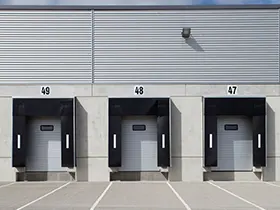
Door Control System

Production Line Management
PRODUCT SUPPORT
FAQ - 902–928MHz UHF RFID Antenna
Not necessarily. A higher-gain UHF RFID antenna generally concentrates more RF energy in certain directions, which may help extend the reading distance in a suitably designed system. However, gain alone does not determine actual performance. Beamwidth, antenna orientation, reader power, tag characteristics, cable loss, and environmental conditions all influence the effective reading range. The best antenna should be selected according to the required reading area rather than gain alone.
The choice between linear and circular polarization depends mainly on how RFID tags are positioned during identification. A linearly polarized antenna works best when its polarization direction is aligned with the tag antenna, making it suitable for applications where tag orientation is controlled. A circularly polarized antenna offers greater flexibility when tags may be presented at different angles. However, neither polarization guarantees successful reading in every orientation. The application, tag placement, and required reading area should all be considered when selecting an antenna.
A PCB RFID antenna offers a compact structure that can be integrated into equipment with limited installation space. Its thin profile is useful for applications such as RFID-enabled devices, production fixtures, access control equipment, and compact reading stations. When selecting a PCB antenna, consider its dimensions, mounting position, operating frequency, and connection requirements. The surrounding materials and available installation space should also be evaluated to ensure reliable RFID communication.
Yes. A compact UHF RFID antenna can be integrated into designated warehouse reading points to identify tagged goods during receiving, sorting, storage, or dispatch. It may be suitable where the installation area is restricted or where the antenna needs to be incorporated into existing equipment. The reading setup should be planned around product movement, tag placement, and the required identification area. Testing with actual goods and tags helps verify system performance.
Yes. A PCB RFID antenna can be integrated into compact access control equipment designed to identify UHF RFID tags at designated entry or exit points. Its small dimensions can be useful when the available installation space is limited. Before integration, check the reader’s frequency compatibility, antenna connection, tag type, and intended reading area. The complete system should be tested to help reduce missed reads and unintended identification.
Metal surfaces can reflect RF signals and affect antenna performance, particularly when a PCB antenna is installed very close to a metal panel or enclosure. Before installation, check the antenna’s mounting requirements and the distance between the antenna and nearby metal structures. The use of suitable spacing or an appropriate mounting arrangement may help improve performance. Testing the antenna in its final equipment enclosure is important because the surrounding structure can change its radiation characteristics.
Please feel free to contact us by info@airpluxtec.com for more detailed info if you’re interested in this Antenna, or please check here for our more RFID Antenna products.
Contact
We are always ready to serve you.
Please feel free to contact us
for any antenna inquiry or requirement.
Leave us a message in the form below and
we will get back to you within 24 hours.