
Dock Door Logistics Gantry Frame UHF RFID Portal

Dock Door Logistics Gantry Frame UHF RFID Portal
Model: AP360320
Frequency Range: 865-868MHz/902-928MHz
Polarization: Circular
Gain: 12dBi
Product Descriptions
The AP360320 is a 12dBi circularly polarized RFID portal covering the 865–868 MHz / 902–928 MHz bands. Its large 3600×3200×100mm natural-color aluminum frame delivers a focused beamwidth (40° horizontal / 40° vertical), VSWR ≤1.3, and a strong front-to-back ratio ≥25. With 50W maximum power, DC grounding lightning protection, and an N-Female connector, it is ideal for RFID logistics tracking, warehouse management, door control systems, and parking lot management.
Descriptions
- 865-868MHz/902-928MHz
- 12dBi
- Circular Polarization
- 3600*3200*100mm
Applications
- RFID logistics tracking
- Warehouse management
- Door control system
- Parking lot management
Product Specifications
Electrical Specifications
Frequency | 865-868MHz/902-928MHz |
Gain | 12dBi |
Beam width | Hor:40° Ver:40° |
Polarization | Circular |
VSWR | ≤1.3 |
F/B Ratio | ≥25 |
Impedance | 50Ω |
Maximum power | 100W |
Lightning protection | DC Ground |
Connector | N-Female |
Mechanical Specifications
Antenna dimensions | 3600*3200*100mm |
Antenna material | Aluminum |
Radome color | Natural color |
Operating temperature | -20-60℃ |
Antenna Pattern


H-Plane
E-Plane
Antenna Drawing

Applications

RFID Logistics Tracking

Warehouse Management
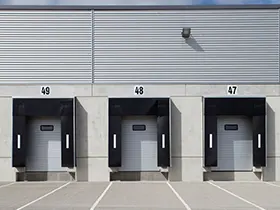
Door Control System

Parking Management
PRODUCT SUPPORT
FAQ - Integrated UHF RFID Antenna
The main difference is the operating frequency range and the regional regulations associated with each band. The 865–868MHz range is commonly used for UHF RFID applications in Europe, while 902–928MHz is used in the United States and certain other markets. These frequency ranges are not universally interchangeable. The appropriate version should be selected according to the regulations of the country where the RFID system will operate.
An integrated UHF RFID antenna is designed as part of an RFID device or assembly to transmit and receive radio-frequency signals between an RFID reader and tagged items. When the reader sends out a signal, a passive RFID tag uses the received energy to respond with its stored identification data. The antenna helps establish the communication link and supports automatic identification in applications such as inventory management, asset tracking, and access control.
Yes. UHF RFID systems support reading multiple tags within the same reading process, making them suitable for identifying groups of tagged items such as cartons or pallets. This is particularly useful in warehouse and logistics operations where goods move through a portal in batches. Actual reading performance depends on tag placement, item density, reader configuration, antenna positioning, and the materials surrounding the tagged products.
An RFID portal uses antennas and RFID readers installed around a designated passage to identify tagged goods as they move through. When pallets, cartons, or other tagged items pass through the portal, the antennas communicate with their RFID tags and send the collected data to the reader. The system can then update inventory records and track goods during receiving, dispatch, and internal transfers. This helps reduce manual scanning and improves visibility across warehouse operations.
Circular polarization helps RFID portals identify tags that may be positioned at different angles as goods move through a passage. In logistics operations, cartons and pallets may carry tags in different orientations, making consistent tag alignment difficult. Circularly polarized antennas reduce the dependence on tag orientation compared with linear polarization. However, reliable identification still depends on tag placement, reading distance, and the overall portal configuration.
When selecting an RFID portal, consider the width and height of the passage, the size and movement speed of goods, the number of tags to be identified, and the required reading area. The operating frequency must also comply with local regulations and match the RFID reader and tags. In addition, antenna placement and reader settings should be tested under actual loading and unloading conditions to reduce missed reads and unwanted reads from nearby areas.
Please feel free to contact us by info@airpluxtec.com for more detailed info if you’re interested in this Antenna, or please check here for our more Dock Door Logistics Gantry Frame UHF RFID Portal products, or here for more RFID Products.
Contact
We are always ready to serve you.
Please feel free to contact us
for any antenna inquiry or requirement.
Leave us a message in the form below and
we will get back to you within 24 hours.