
8dBi UHF RFID Vehicle Tracking Integrated Reader Antenna


Product Descriptions
The APRIA8008CG is an 8dBi circularly polarized UHF integrated RFID reader antenna designed for the 865–868 MHz band. Its 220×220×58mm white ABS radome offers a beamwidth of 80° horizontal / 60° vertical, VSWR ≤1.4, and a front-to-back ratio ≥20. Featuring IP65 protection, 100W power handling, and DC grounding lightning protection, it is ideal for RFID logistics tracking, warehouse management, door control systems, and parking lot management.
Descriptions
- 865-868MHz
- 8dBi
- Circular Polarization
- 220*220*58mm
Applications
- RFID logistics tracking
- Warehouse management
- Door control system
- Parking lot management
Product Specifications
Model: APRIA8008CG
Electrical Specifications
Frequency | 865-868MHz |
Gain | 8dBi |
Beam width | Hor:80° Ver:60° |
Polarization | Circular |
VSWR | ≤1.4 |
F/B Ratio | ≥20 |
Impedance | 50Ω |
Maximum power | 100W |
Lightning protection | DC Ground |
Connector | Customized |
Mechanical Specifications
Dimension | 220*220*58mm |
Net weight | 0.65kg |
Packing size | 29*29*8cm |
Radome material | ABS |
Radome color | White |
Gross weight | 0.8kg |
Operating temperature | -20-60℃ |
IP Rating | IP65 |
Antenna Pattern

H-Plane

E-Plane
Antenna Drawing

Applications

RFID Logistics Tracking

Warehouse Management
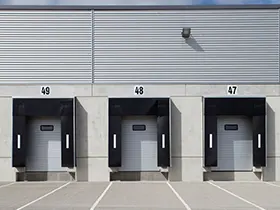
Door Control System
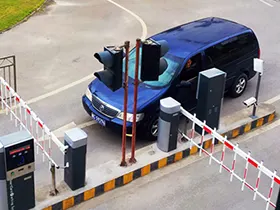
Parking Management
PRODUCT SUPPORT
FAQ - ETSI UHF Integrated RFID Reader Antenna
An integrated RFID reader antenna is a device that combines an RFID reader and an antenna into a single unit. Unlike a traditional RFID setup that uses a separate reader and external antenna, this design reduces the number of individual components and simplifies system installation. It can be used in applications such as access control, inventory management, asset tracking, and automated identification. The exact functions depend on the reader’s communication interfaces, supported protocols, and system configuration.
An integrated UHF RFID reader antenna sends radio-frequency signals to detect nearby RFID tags. When a compatible passive UHF tag receives the signal, it uses the energy from the reader’s transmission to respond with its stored identification data. The integrated reader processes this response and makes the collected information available to the connected system. Reading performance depends on factors such as antenna characteristics, tag design, reader settings, and the surrounding environment.
The mounting position of an RFID antenna affects how radio signals reach tagged items. Before installation, consider the direction of item movement, the height and angle of the antenna, nearby metal structures, and possible obstructions.
A suitable position should provide a clear path toward the intended reading area while reducing unwanted reads from nearby locations. On-site testing is important because the actual RF environment may differ from the initial installation plan.
Circularly polarized antennas can receive signals from linearly polarized RFID tags in different orientations more consistently than a linearly polarized antenna in many practical situations. This is useful when tagged items do not always maintain the same position as they pass through a reading area.
However, circular polarization does not guarantee successful reading at every tag angle. Tag orientation, distance, surrounding materials, and signal reflections can still affect performance.
A multi-site RFID deployment should consider operating frequency regulations, reader compatibility, network connectivity, tag selection, installation conditions, and software integration.
Businesses should also establish consistent device configurations and data management procedures across locations. A pilot installation at one site can help identify technical and operational issues before expanding the system to additional facilities.
An RFID system can compare newly detected tag IDs with existing records in its database. When a tag is read, the software checks whether its ID is already registered and evaluates the associated event, location, or timestamp.
This helps businesses identify new arrivals, track repeated movements, and maintain item history. The accuracy of these records depends on reliable tag identification and properly configured event-processing rules.
Please feel free to contact us by info@airpluxtec.com for more detailed info if you’re interested in this Antenna, or please check here for our more UHF RFID Vehicle Tracking Integrated Reader Antenna products.
Contact
We are always ready to serve you.
Please feel free to contact us
for any antenna inquiry or requirement.
Leave us a message in the form below and
we will get back to you within 24 hours.