
RFID Waste Management: How It Works in Waste Collection
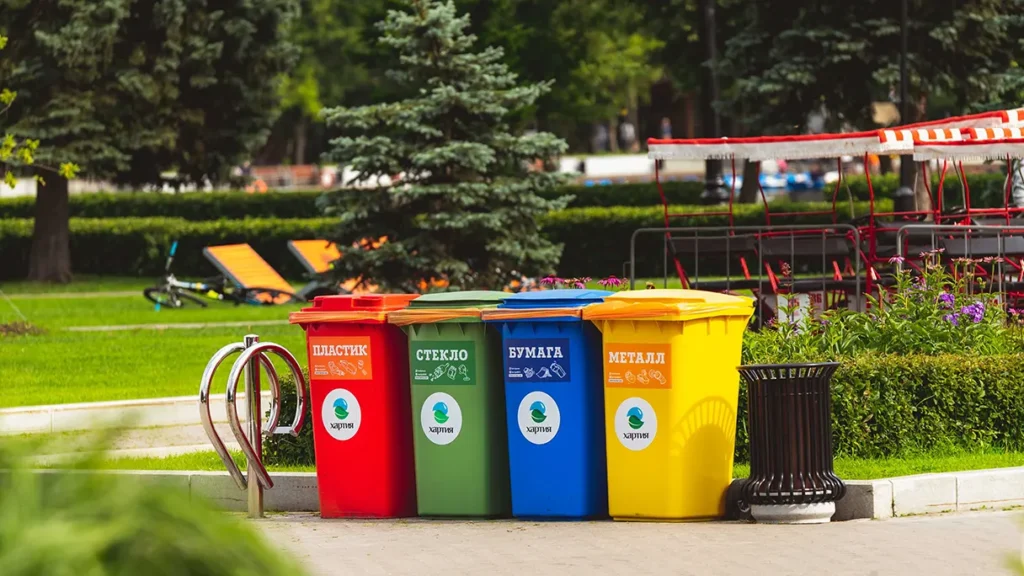
RFID Waste Management: How It Works in Waste Collection
Introduction
Municipal waste collection involves thousands of households, collection points, waste containers, and vehicles operating across different routes every day. Despite its routine nature, managing these activities accurately remains a challenge for many waste management operators.
Traditional collection systems often rely on fixed schedules, manual records, and vehicle operators’ reports. These methods can create several operational problems:
- Inaccurate collection records: Manual reporting makes it difficult to verify exactly which households or containers have received service.
- Unverified missed collections: When a collection point is skipped, managers may have limited evidence to determine whether the vehicle actually visited the location.
- Rigid collection routes: Fixed schedules do not always reflect actual waste generation, resulting in unnecessary trips or overflowing containers.
- Limited billing transparency: Without reliable records of collection frequency or waste quantities, operators may struggle to support usage-based charging.
Radio Frequency Identification (RFID) offers a practical way to address these problems. By assigning a unique electronic identity to each waste bag, container, or participating household, an RFID system can automatically record collection events and connect them with operational data.
Rather than replacing the entire collection process, RFID adds an identification and data-recording layer to existing operations. It helps operators establish a traceable connection between the waste collected, the collection vehicle, and the location where the service takes place.
1.Technical Architecture of an RFID Waste Management System
1.1 Overall System Architecture
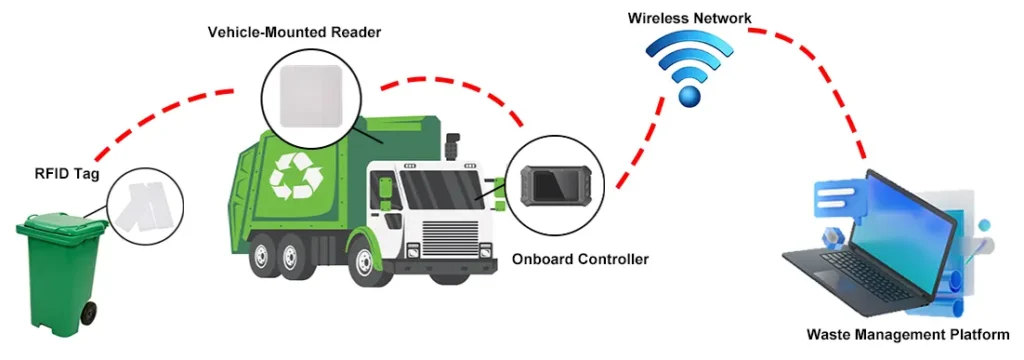
RFID Waste Management System
An RFID waste collection system connects identification devices at collection points with reading equipment on vehicles and a centralized management platform.
The basic data flow follows this sequence:
RFID Tag → Vehicle-Mounted Reader → Onboard Controller → Wireless Network → Waste Management Platform
At the collection point, an RFID tag carries a unique identifier associated with a registered household, waste bag, or container. When the collection vehicle approaches or lifts the waste container, its reader captures the tag information.
An onboard controller processes the reading and combines it with other operational data, such as collection time, vehicle location, and weight measurements. The system then transfers the resulting record to a central platform through a cellular connection.
The management platform uses these records to verify collection activities, identify irregularities, and generate operational reports.
Each layer performs a specific function, but the system only works reliably when identification, collection confirmation, and data transmission operate together.
1.2 Tag Layer: Identifying Waste Bags and Containers
The RFID tag serves as the identity carrier of the collection system. Its primary purpose is to distinguish one waste bag or container from another and connect each collection event with the correct registered record.
Choosing between UHF and HF
UHF and HF RFID technologies serve different collection scenarios.
Feature | UHF RFID | HF RFID |
Frequency | 860–960 MHz, depending on region | 13.56 MHz |
Typical reading range | Longer, depending on the system | Shorter, proximity-based |
Multiple-tag reading | Suitable for bulk identification | More commonly used for controlled individual reading |
Typical application | Tagged bins, bags, vehicle-mounted readers | User cards, access-controlled disposal points |
Main advantage | Fast identification without precise tag positioning | Controlled reading at close range |
UHF RFID is generally suitable for automated waste collection because the reader can identify tags without requiring workers to scan each item individually. This is particularly useful when a vehicle collects several tagged containers or bags during one operation.
HF RFID is more appropriate when users need to present a card or other identifier to a reader at a designated disposal point. For example, an apartment building may use an HF or other contactless card system to identify a household before opening a food waste disposal unit.
The choice depends on the reading distance, collection method, tag environment, and required identification accuracy.
1.2.1 Installation and environmental requirements
Waste containers operate outdoors and encounter rain, dust, sunlight, impacts, vibration, and repeated mechanical handling. Consequently, tag construction and installation are just as important as the RFID chip itself.
Common installation options include:
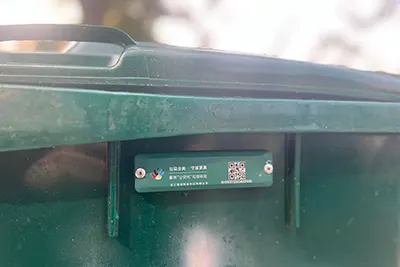
- Embedded installation: The tag sits inside a dedicated cavity or molded section of the container, reducing exposure to impacts and unauthorized removal.
- Mechanical mounting: Rivets, screws, or dedicated holders secure the tag to the container body.
- Surface mounting: Adhesive-backed tags provide a simpler installation option, although the adhesive and enclosure must withstand outdoor conditions.
- Bag-integrated identification: Tags or RFID-enabled labels are attached to individual waste bags before collection.
Metal containers require particular attention because metal can detune conventional RFID antennas and interfere with radio-frequency communication. An on-metal tag or a suitable mounting arrangement with sufficient separation from the metal surface can help maintain reading performance.
For plastic containers, the mounting method should also account for the material’s surface characteristics and repeated mechanical stress.

RFID tag on Australian garbage bins
1.2.2 What information does a tag contain?
In most deployments, the tag stores a unique identifier rather than a complete household record.
The backend database associates that identifier with information such as:
- Household or customer account
- Waste container identification number
- Collection address or service area
- Container type and waste category
- Registration and maintenance status
1.3 Vehicle-Mounted Reading Layer: Capturing Collection Events
The collection vehicle is where RFID identification becomes part of the actual waste collection operation.
A typical vehicle-mounted system includes:
- UHF RFID reader
- One or more RFID antennas
- Onboard controller or industrial computer
- GPS receiver
- Optional weighing equipment and position sensors
- Wireless communication module
1.3.1 Reader and antenna installation
The reader and antennas usually sit near the vehicle’s lifting mechanism, rear loading area, or container-handling assembly.
Antenna placement determines which tags enter the reading zone. For example, antennas positioned near the lifting arm can capture a container’s tag as the arm approaches and lifts it.
The installation must provide sufficient coverage while avoiding unnecessary reads from nearby containers, passing vehicles, or unrelated tagged objects.
The antenna arrangement depends on the vehicle structure and collection method. A single antenna may be sufficient for a controlled reading zone, while multiple antennas can improve coverage when containers approach from different angles.
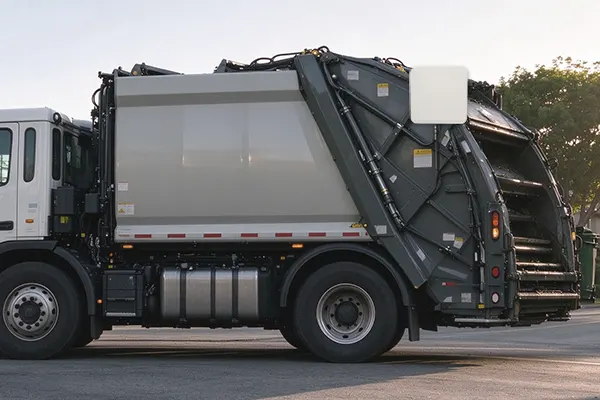
Reader and antenna mounted near the rear lifting mechanism.
1.3.2 Reading triggers and collection confirmation
A vehicle-mounted reader does not necessarily need to operate continuously at full power.
Instead, the controller can activate RFID reading when the vehicle reaches a designated collection position or when the lifting mechanism begins its operating cycle.
Possible trigger signals include:
- Hydraulic lifting mechanism activation
- Vehicle stopping or parking status
- Container lifting arm position
- Operator-controlled collection command
Once the trigger occurs, the reader interrogates nearby tags and captures their identifiers. Anti-collision protocols allow the reader to inventory multiple tags within its reading field.
However, successful tag identification alone does not prove that the waste has been collected. A tag may be detected even if the container is not emptied.
For more reliable verification, the system can combine RFID readings with lifting-arm position, tilt sensors, weight measurements, or other vehicle signals.
1.3.3 Integrating weighing and positioning equipment
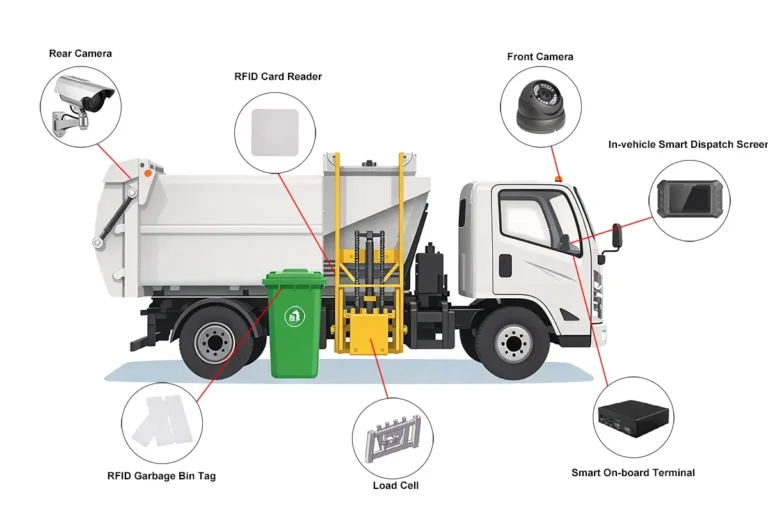
RFID becomes more valuable when the system connects identification with independent measurements.
A weighing module can record the weight of a container before and after emptying. The controller then associates the difference with the corresponding tag ID.
For example:
W(collected)=W(before)−W(after)
This method requires a suitable weighing arrangement and a consistent measurement procedure. Dynamic weighing systems may use different measurement methods and calibration requirements.
GPS adds the geographical context to each collection event. The platform can then determine where and when the vehicle collected a particular container.
Together, RFID, weighing equipment, and GPS provide a more complete operational record than any of these technologies can produce independently.
1.4 Communication and Backend Management
The collection vehicle is where RFID identification becomes part of the actual waste collection operation.
A typical vehicle-mounted system includes:
- UHF RFID reader
- One or more RFID antennas
- Onboard controller or industrial computer
- GPS receiver
- Optional weighing equipment and position sensors
- Wireless communication module
1.4.1 Edge-side data processing
The onboard controller performs initial processing before uploading the data.
It can filter duplicate readings, associate tag IDs with collection events, and combine RFID information with GPS and sensor measurements.
For example, a reader may detect the same tag several times while a container moves through the reading zone. The controller can consolidate these readings into one collection event instead of generating multiple records.
Local data storage also helps maintain continuity when cellular coverage becomes unavailable. The controller stores pending records and uploads them once the connection returns.
1.4.2 Wireless data transmission
Most vehicle-mounted systems use 4G or another available cellular network to communicate with the management platform.
The system can transmit collection records in real time or upload them in batches, depending on network coverage and operational requirements.
A reliable implementation should support local buffering, automatic reconnection, and duplicate-safe data synchronization. These functions prevent temporary network interruptions from causing missing or repeated collection records.
1.4.3 Central management platform
The backend platform turns individual RFID readings into useful operational information.
Its main functions typically include:
- Collection monitoring: Displays completed collection events and identifies locations without a recorded service event.
- Exception management: Flags unregistered tags, damaged or unreadable tags, and collection operations that lack the required confirmation signals.
- Vehicle tracking: Combines collection records with GPS information to review vehicle movements and route performance.
- Weight and billing records: Associates measured waste quantities or collection frequency with registered accounts.
- Operational reporting: Generates collection statistics for municipal authorities and waste management contractors.
A well-designed platform should distinguish between a missing RFID reading and a confirmed missed collection. A damaged tag, an incorrectly positioned container, or a temporary reader failure may prevent identification even when the operator has completed the collection.
This distinction is essential for accurate service assessment and fair billing.
2. How RFID Works Throughout the Waste Collection Process
Understanding the technical architecture is only part of the picture. The next step is to examine how RFID interacts with everyday collection activities.
2.1 From Waste Disposal to Collection Records
A typical RFID-enabled collection workflow follows six stages:
Step 1: Waste identification
A unique RFID tag is assigned to a waste bag, container, or registered household. The backend links the tag ID to the corresponding account or collection location.
Step 2: Vehicle arrival
The collection vehicle reaches the designated pickup point. GPS records the vehicle’s position, while the onboard system prepares for the collection operation.
Step 3: RFID identification
When the operator lifts the container or brings the waste bag into the reading zone, the UHF reader captures its tag ID.
Step 4: Weight and operation verification
Where weighing equipment is available, the system records the relevant weight measurement. Position or tilt sensors can provide additional evidence that the container has completed the emptying cycle.
Step 5: Data transmission
The onboard controller creates a collection record containing the identifier, time, location, and available measurement and status information.
Step 6: Backend processing
The management platform updates the collection history, checks for exceptions, and makes the data available for reporting, billing, or operational analysis.
The exact sequence varies by system design.
2.2 Three RFID Identification Models
Different waste collection systems identify different objects. The choice of identification model depends on where the system needs to establish accountability.
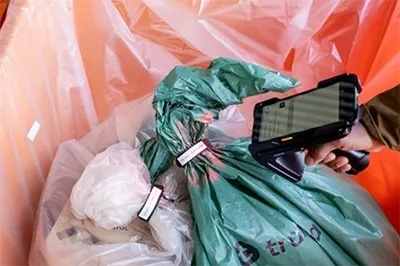
Model A: RFID-tagged waste bags
In this model, each bag carries a unique RFID identifier associated with a household or customer.
The vehicle-mounted reader identifies the bag during collection. The backend records the number of bags collected from each account and can use the information as an input for variable waste charging.
This model is useful for door-to-door collection, particularly when individual waste quantities are estimated through the number or type of bags collected.
Model B: RFID-tagged waste containers
Each waste bin carries a unique tag. When the collection vehicle lifts and empties the container, the onboard reader identifies it and records the operation.
The system can track collection frequency, container location, service history, and maintenance status.
This model is especially suitable for residential collection programs, commercial waste services, and municipal container management.
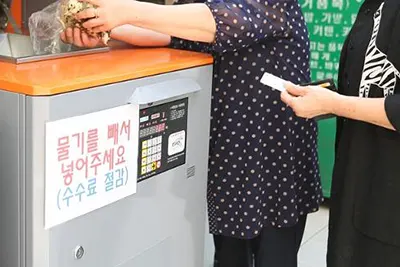
Model C: RFID user cards and access-controlled disposal
In this model, residents identify themselves using an RFID card before depositing waste into a designated collection unit.
The reader verifies the user account and authorizes access. An integrated weighing system then measures the amount of waste deposited.
The backend connects the user’s identity with the recorded weight and calculates the applicable disposal fee.
South Korea’s RFID-based food waste collection system is a well-known example of this approach.
2.3 Automatic Collection Recording and Exception Handling
During vehicle collection, RFID provides the identity of the waste container or bag. Additional equipment can help determine whether the operation was completed successfully.
A reliable collection record should distinguish among several situations:
Situation | System Response |
Registered tag read and collection confirmed | Record a completed collection event |
Tag read but no emptying confirmation | Flag for operational review |
Unknown tag detected | Identify an unregistered container or bag |
Expected tag not detected | Check for a possible missed reading or collection |
Tag unreadable or damaged | Record an identification exception |
Consider a collection vehicle approaching a tagged bin. The reader successfully identifies the tag, but the lifting mechanism does not complete its cycle.
Without additional sensor information, the platform might incorrectly interpret the reading as a completed collection. A tilt sensor or lifting-arm signal can provide the missing evidence.
This is why RFID identification and collection confirmation should be treated as separate functions.
2.4 Uploading and Using Collection Data
Once the vehicle controller generates a collection record, the platform can use it for several purposes.
Service verification
Managers can compare the planned collection schedule against actual recorded events. Locations without a valid collection record can be reviewed to determine whether the service was missed.
Usage-based billing
For systems that charge according to collection frequency or waste quantity, RFID provides the identification link between the waste and the registered account.
The billing platform can calculate charges using the recorded collection events or measured weight, depending on the local pricing model.
Route analysis
Collection records combined with GPS data provide insight into vehicle movements, collection frequency, and service coverage.
Over time, managers can identify unnecessary stops, recurring delays, and areas that require changes to their collection schedules.
Performance assessment
Municipal authorities and contractors can use timestamped records to evaluate service delivery and investigate complaints.
2.5 Technical Challenges in Real Collection Environments
RFID systems operate in demanding environments. Several engineering considerations can directly affect identification reliability.
Multiple tags within the reading zone
Several tagged bags or containers may enter the reader’s field simultaneously. UHF anti-collision protocols allow the reader to identify multiple tags, but antenna placement and reading-zone control remain important.
Metal interference
Metal containers, vehicle structures, and nearby equipment can affect RF propagation. On-metal tags, suitable antenna positioning, and practical field testing help reduce these problems.
Movement and vibration
Collection vehicles operate with repeated lifting, tipping, and impact cycles. Tags, antennas, cables, and connectors must withstand mechanical stress.
Water and contamination
Rain, dirt, cleaning chemicals, and waste residue can affect tag enclosures and mounting materials. Outdoor installations should use suitable environmental protection and secure mounting methods.
Unreliable network coverage
Cellular communication may be interrupted in underground facilities or remote collection areas. Local data storage and automatic synchronization help prevent data loss.
3. International Applications of RFID in Waste Collection
RFID waste management systems do not follow one universal deployment model. Different cities use the technology to identify waste bags, monitor household collection, verify disposal quantities, or improve municipal operations.
The following cases illustrate four different approaches.
3.1 South Korea: RFID-Based Food Waste Identification and Pay-As-You-Throw
South Korea provides a well-established example of RFID identification at the waste disposal point rather than on the collection vehicle.
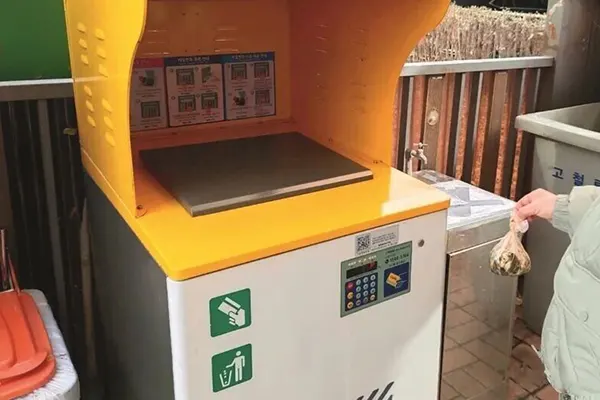
In many apartment complexes, residents use an RFID card to identify their household before depositing food waste into a dedicated disposal unit.
Equipment configuration
The system typically integrates:
- RFID card reader
- Household identification cards
- Electronic weighing equipment
- Food waste disposal container
- Network-connected data management system
How it works
First, the resident presents an RFID card to the reader. The system identifies the household and authorizes the disposal operation.
Next, the resident deposits food waste into the designated unit. An integrated weighing device measures the amount deposited.
The system then sends the household ID, waste weight, and transaction time to the central management platform. The recorded quantity provides the basis for calculating the disposal fee.
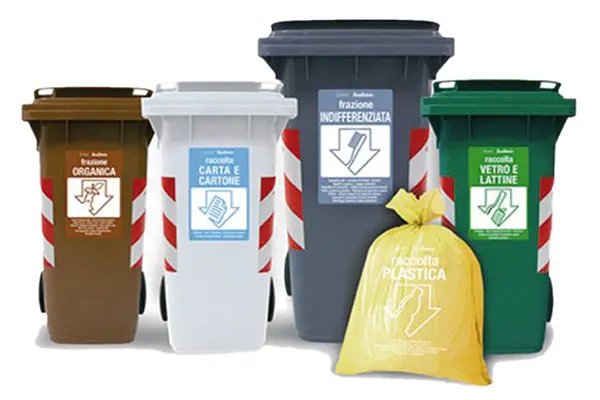
3.2 Italy, Benevento: Vehicle-Mounted RFID Reading of Waste Bags
Benevento in southern Italy has tested an approach that identifies individual waste bags during door-to-door collection.
Unlike container-based systems, this model attaches an electronic identifier to the waste bag itself.
Equipment configuration
The preliminary trial used:
- Identified plastic waste bags
- RFID antennas installed on a compactor collection vehicle
- Vehicle-mounted reading and data collection equipment
- A management system connecting bag identifiers with registered users
How it works
Participating households received identified bags for residual municipal waste.
During door-to-door collection, the vehicle’s RFID antennas read the identifiers as workers loaded the bags into the collection vehicle.
The system associated the captured codes with the corresponding household accounts. By recording the number of collected bags, the municipality could establish a data basis for a future variable waste tariff.
The preliminary trial also assessed the reliability of the equipment and vehicle installation under actual collection conditions.
3.3 India, Manesar and Rohtak: RFID for Household Collection Verification
Several municipal authorities in Haryana, India, have introduced RFID-based identification to improve the monitoring of door-to-door waste collection.
Unlike the Korean and Italian examples, the primary objective here is service verification rather than individual waste billing.
Equipment configuration
The reported deployments include:
- RFID tags installed at residential and commercial properties
- Handheld or vehicle-associated identification equipment, depending on the deployment
- GPS-enabled collection vehicles
- A centralized solid waste management monitoring platform
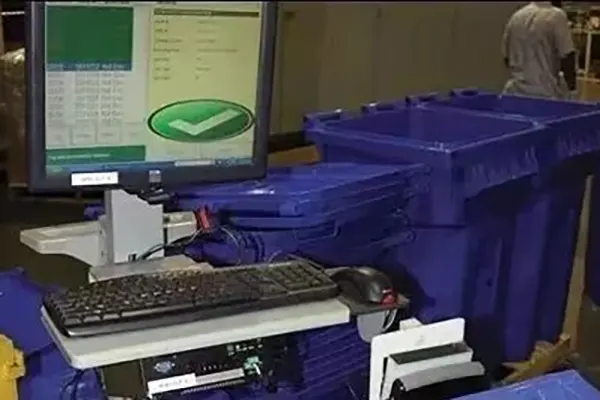
How it works
Each participating property receives a unique identifier linked to its registered location.
When sanitation workers collect waste from a tagged property, they scan the identifier. The system records the collection event and uploads the information to the municipal monitoring platform.
Managers can review collection records and compare them with the planned service schedule.
If a property has no corresponding collection record, officials can investigate whether the collection team missed the location or whether a technical problem prevented successful identification.
3.4 Portugal, LIPOR: RFID and GIS for Waste Collection Management
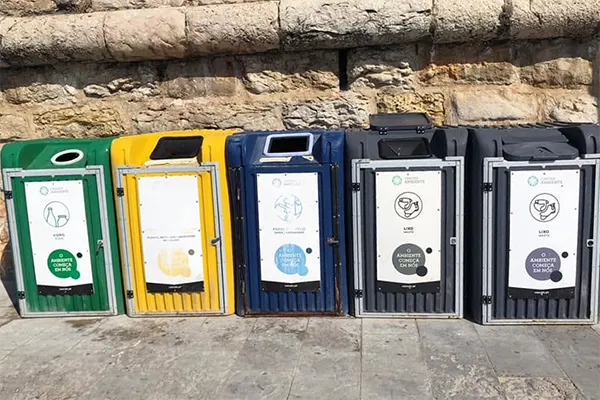
LIPOR, the Intermunicipal Waste Management of Greater Porto, provides an example of how RFID can support a broader digital waste collection system.
Its approach combines container identification, vehicle monitoring, geographic information, and a centralized management platform.
Equipment configuration
The documented system includes:
- UHF RFID tags installed on residential waste containers
- Vehicle-mounted RFID readers and antennas
- Onboard computers
- GPS and GIS-based management functions
- A centralized operational monitoring platform
The 2025 research paper on LIPOR’s system specifies Gen 2 UHF tags operating at 865–868 MHz, with unique identifiers encoded in the EPC memory.
How it works
Each registered waste container carries an RFID tag. When the collection vehicle picks up a container, its onboard reader identifies the tag and associates it with the collection operation.
The onboard computer combines the identification data with information about the collection route and operational events.
The central platform then consolidates collection records and provides managers with information about service coverage, equipment use, and collection performance.
LIPOR has also explored the integration of GIS and container filling-level information to support more responsive collection scheduling.
4. Comparison of RFID Waste Collection Applications
Different deployment models serve different operational requirements. The following table summarizes the four examples.
Application | Identification Object | Reading Method | Main Purpose |
South Korea | Household/user card | Fixed reader at disposal unit | Individual weighing and billing |
Benevento, Italy | Waste bag | Vehicle-mounted RFID antennas | Bag identification and variable tariff records |
Manesar and Rohtak, India | Household/property tag | Field scanning during collection | Service verification |
LIPOR, Portugal | Waste container | Vehicle-mounted UHF reader | Collection tracking and operational management |
A system designed for household-level weighing requires a different reading arrangement from one designed to identify hundreds of waste containers across a municipal collection network.
5. Technical Selection and Implementation Considerations
Selecting an RFID system for waste collection requires more than choosing a tag frequency. The equipment must match the physical collection environment and the way workers handle waste.
5.1 Choosing Between UHF and HF RFID
UHF RFID is generally the preferred option for vehicle-mounted identification and bulk waste collection.
HF RFID is more appropriate for controlled, close-range identification, such as household card authentication at a dedicated food waste disposal unit.
For metal containers, the choice should also account for the installation environment. An appropriately designed on-metal UHF tag may offer a practical solution without changing the overall identification architecture.
5.2 Tag Installation and Protection
The tag mounting method affects long-term reading reliability.
For outdoor waste containers, mechanical mounting or an integrated tag cavity can provide better protection than ordinary adhesive attachment.
Bag identification requires a different approach. The tag or label must remain readable during storage, handling, and transportation without interfering with normal collection operations.
Before large-scale deployment, engineers should test the tag on the actual container material and under realistic environmental conditions.
5.3 Integrating RFID with Existing Collection Vehicles
Municipal operators do not always need to replace their entire vehicle fleet to introduce RFID.
A retrofit system can add readers, antennas, controllers, and communication modules to existing collection vehicles.
The installation should consider the following factors:
- Available mounting positions around the lifting mechanism
- Antenna coverage and reading-zone boundaries
- Power supply and electrical protection
- Connections to vehicle operating signals
- GPS and cellular communication availability
- Compatibility with existing management software
For new vehicles, RFID equipment can be integrated during the vehicle design and manufacturing process, allowing better coordination between the reader, lifting mechanism, and onboard control system.
In either approach, testing should take place during actual lifting and emptying operations rather than relying only on stationary tag-reading tests.
Conclusion
RFID brings greater traceability and accountability to waste collection by connecting individual bags, containers, or households with recorded collection activities.
Its practical value comes from three main functions: automatic identification, collection event recording, and data integration.
For a successful deployment, operators should prioritize reliable tag identification, durable installation, appropriate reader positioning, and accurate backend event processing. Integrating RFID with weighing equipment, GPS, and filling-level sensors can further extend the system’s capabilities.
As waste collection becomes increasingly data-driven, RFID provides a practical identification foundation for more transparent, measurable, and efficient waste management operations.
Contact
We are always ready to serve you.
Please feel free to contact us
for any antenna inquiry or requirement.
Leave us a message in the form below and
we will get back to you within 24 hours.