
8dBi UHF Integrated RFID Logistics Tracking Antenna


Product Descriptions
The APRIA8008CS is an 8dBi circularly polarized UHF integrated RFID reader antenna designed for the 865–868 MHz band. Its rugged 256×256×100mm white ABS radome delivers a focused beamwidth (65° horizontal / 60° vertical), VSWR ≤1.5, and a strong front-to-back ratio ≥22. With IP65 protection, 100W power handling, and DC grounding lightning protection, it is well-suited for RFID logistics tracking, warehouse management, door control systems, and parking lot management.
Descriptions
- 865-868MHz
- 8dBi
- Circular Polarization
- 256*256*100mm
Applications
- RFID logistics tracking
- Warehouse management
- Door control system
- Parking lot management
Product Specifications
Model: APRIA8008CS
Electrical Specifications
Frequency | 865-868MHz |
Gain | 8dBi |
Beam width | Hor:65° Ver:60° |
Polarization | Circular |
VSWR | ≤1.5 |
F/B Ratio | ≥22 |
Impedance | 50Ω |
Maximum power | 100W |
Lightning protection | DC Ground |
Connector | Customized |
Mechanical Specifications
Dimension | 256*256*100mm |
Net weight | 2.5kg |
Packing size | 28*28*12cm |
Gross weight | 3kg |
Radome material | ABS |
Radome color | White |
Operating temperature | -20-60℃ |
IP Rating | IP65 |
Antenna Pattern

H-Plane

E-Plane
Applications

RFID Logistics Tracking

Warehouse Management
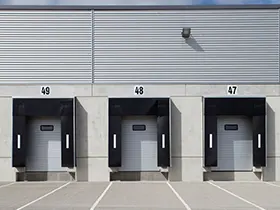
Door Control System

Parking Management
PRODUCT SUPPORT
FAQ - ETSI UHF Integrated RFID Reader Antenna
An integrated RFID reader antenna is a device that combines an RFID reader and an antenna into a single unit. Unlike a traditional RFID setup that uses a separate reader and external antenna, this design reduces the number of individual components and simplifies system installation. It can be used in applications such as access control, inventory management, asset tracking, and automated identification. The exact functions depend on the reader’s communication interfaces, supported protocols, and system configuration.
An integrated UHF RFID reader antenna sends radio-frequency signals to detect nearby RFID tags. When a compatible passive UHF tag receives the signal, it uses the energy from the reader’s transmission to respond with its stored identification data. The integrated reader processes this response and makes the collected information available to the connected system. Reading performance depends on factors such as antenna characteristics, tag design, reader settings, and the surrounding environment.
Integrated UHF RFID readers can automate the identification of tagged goods as they pass through designated warehouse entry and exit points. When tagged items move through a configured reading zone, the reader captures their identification data and sends it to the connected inventory management system. This helps reduce manual scanning and supports more efficient receiving, shipping, and inventory updates. Reading accuracy depends on tag placement, item density, reader settings, and the layout of the reading area.
An IP65-rated RFID reader antenna is protected against dust ingress and water jets from any direction under the specified test conditions. For outdoor installation, choose a stable mounting position and use suitable brackets, cable glands, and connectors to maintain the enclosure’s protection. Pay attention to cable entry points and installation details, since improper connections can compromise protection. IP65 does not mean the device can be submerged in water or exposed to unlimited weather conditions.
An integrated RFID reader combines the reader electronics and antenna in one device, reducing the need for separate reader and antenna enclosures. This can simplify installation and reduce external RF cable connections. In a separate reader-antenna system, the reader and antennas are independent, allowing greater flexibility in antenna placement and multi-zone configurations. The choice depends on installation space, coverage requirements, system architecture, and maintenance preferences.
Multiple RFID readers can be deployed at separate warehouse locations to identify tagged goods at receiving areas, storage zones, production lines, and shipping checkpoints. Each reading point can report identification data to a central management platform, providing visibility across different operational stages. When planning multiple reading zones, consider antenna positioning, overlapping coverage, reader interference, tag density, and coordination between devices. Proper configuration and on-site testing help reduce unintended reads between adjacent zones.
Please feel free to contact us by info@airpluxtec.com for more detailed info if you’re interested in this Antenna, or please check here for our more UHF RFID Access Control Integrated Reader Antenna products.
Contact
We are always ready to serve you.
Please feel free to contact us
for any antenna inquiry or requirement.
Leave us a message in the form below and
we will get back to you within 24 hours.