RFID Forklift System for Warehouse Logistics Management Solutions
RFID Forklift System for Warehouse Logistics Management Solutions

Table of Contents
- Introduction
- What is RFID?
- How is RFID applied in forklift warehouse logistics management?
- Advantages of RFID Forklift Management
- RFID Product Recommendations
- RFID Positioning Solutions
- What improvements can RFID solutions bring to warehouse logistics management?
Introduction
-
Industry background
With the rapid development of logistics and warehousing, market demand has upgraded, and the requirements for warehouse automation have increased. Various management tools have become important tools for improvement. Forklifts, as the main force in material handling, have become increasingly important in enterprise logistics and are widely used in various important goods transportation venues.
- The Importance of RFID in Warehouse Logistics Management
In response to diverse demands, the construction of diversified and intelligent logistics and warehousing systems has set higher standards for forklift development. While ensuring basic power transportation functions, forklifts must also enhance composite functions and added value to play a crucial supporting role in achieving intelligent logistics and intelligent warehouses. At this point, the development and application of RFID automatic identification technology in forklift warehouse management have become particularly important.
What is RFID?
- Explanation of RFID (Radio Frequency Identification)
RFID (Radio Frequency Identification) technology is a non-contact communication technology that uses radio waves to achieve long-distance identification and information reading of items. Compared to traditional barcode technology, RFID offers superior penetration, multi-tag long-distance identification capabilities, large information capacity, rewritable functionality, and unique identification information, making it highly suitable for application in forklift systems.
- Components of an RFID Forklift Management System
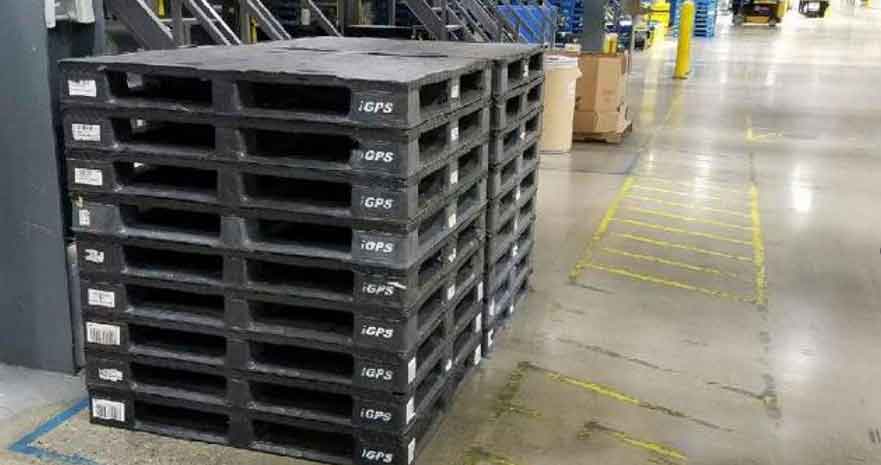
- RFID electronic tags: Installed on pallets or goods to record detailed information about the goods.
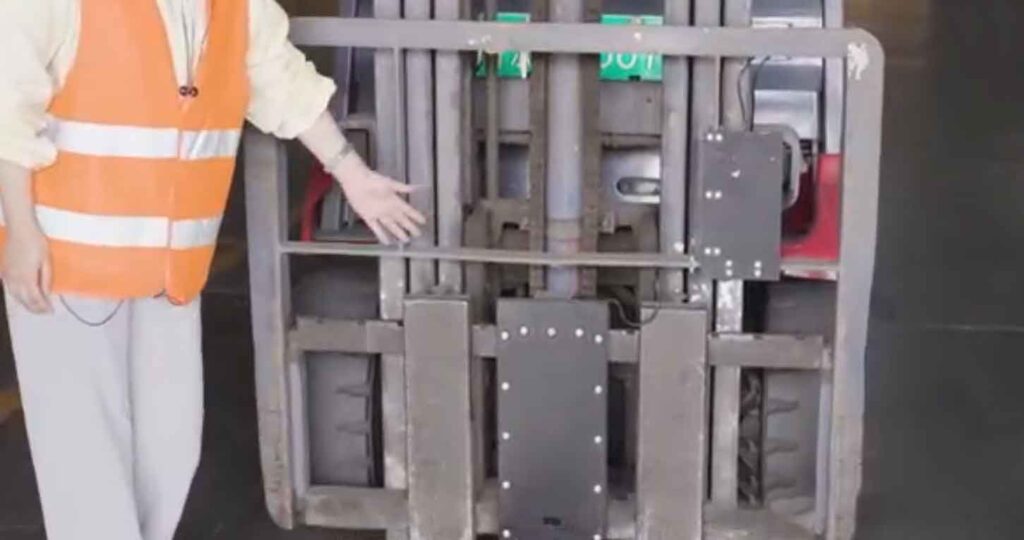
- RFID readers and antennas: Installed on forklifts to read information from RFID tags.
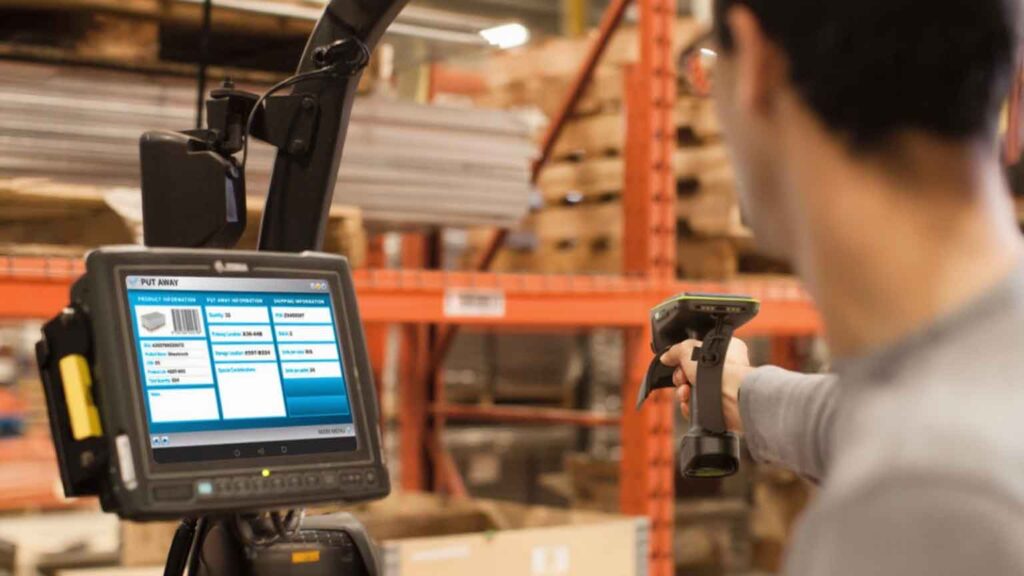
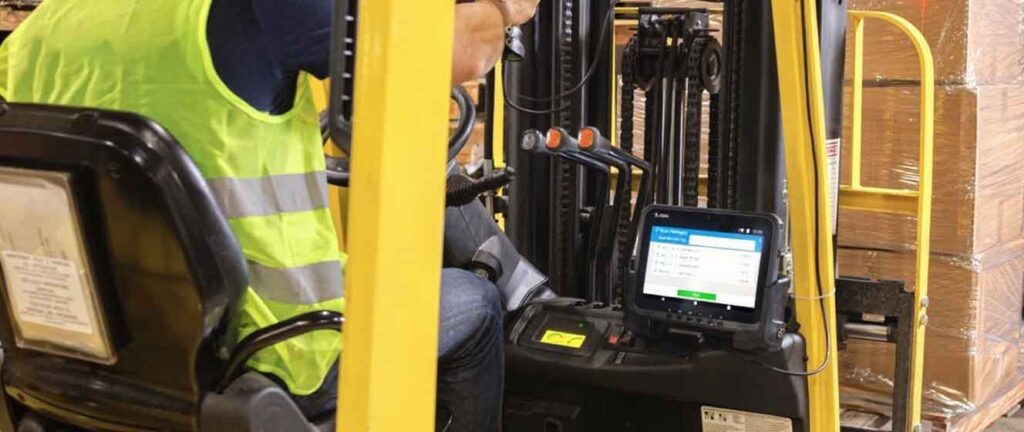
- Industrial tablet PC: Installed on the forklift, used to display and operate RFID reader information, supporting wireless communication.
- RFID Shelf Tags: Installed on shelves to identify and locate cargo storage positions.
How is RFID applied in forklift warehouse logistics management?
RFID forklift management involves installing RFID electronic tags inside pallets to bind them to the pallets, or installing them on shelves to bind them to the shelves. When the WMS generates a new task, it will dispatch the task to the industrial PC of a forklift that has no pending tasks based on the operational status of the forklift system. After the forklift operator initiates the task, they follow the guidance of the forklift RFID industrial PC to proceed to the designated shelf or warehouse entrance to execute the task. During the process, the forklift RFID reading system confirms the goods based on the task status, and the driver does not need to intervene.
- Inbound Operations
- Data Entry: Operators enter inbound data into the WMS (Warehouse Management System), associating the inbound goods’ information with the pallet.
- Task Assignment: The WMS generates a new inbound task and assigns it to the industrial tablet PC on the forklift.
- Guided Operations: Forklift operators follow the industrial tablet’s guidance to the designated shelf or warehouse entrance to execute the inbound task.
- Shelf Confirmation: The forklift’s RFID reading system reads the shelf labels and pallet labels to confirm the storage location of the goods and complete the shelving process.
- Logistics Tracking
- Real-time tracking: Track the location of goods in real time using RFID tags and readers.
- Path display: The system displays the logistics paths and current locations, generating logistics tracking reports.
- Outbound Operations
- Instruction Issuance: Operators issue outbound instructions in the WMS, and the industrial tablet PC on the forklift receives the relevant tasks.
- Task Execution: Forklift operators follow the instructions on the industrial tablet PC to proceed to the designated shelf and pick up the palletized goods.
Information Comparison: The RFID reading system reads the pallet labels
• Inventory Counting
1. Automatic Counting: Regularly scan labels in the warehouse using fixed RFID readers to automatically update inventory information.
2. Manual inventory: Forklift operators use the RFID reading system on the forklift to perform manual counting, compare the counting results with the system records in real time, and automatically issue alerts when abnormalities are detected.


Advantages of RFID Forklift Management
1. Fast scanning speed
Ultra-high frequency RFID electronic tags enable simultaneous scanning of multiple tags, offering fast speeds and significantly improving work efficiency. Compared to traditional barcode scanning, RFID can read tag information without visual contact, reducing operation time.
2. Accurate identification of storage locations
RFID storage location tags read by the wireless terminal and RFID reader on the forklift ensure that goods are placed in the correct location. The RFID system can update the storage location of goods in real time, reducing misplacement or incorrect placement.
3. Reusable RFID tags
RFID tags typically have a lifespan exceeding 20 years (100,000 read/write cycles) and their content can be modified, making them reusable and reducing corporate costs. Compared to single-use barcode labels, RFID tags are more environmentally friendly and economical.
4. Long-range identification of goods, eliminating the need for manual searching
RFID forklift management enables remote reading of electronic tags on shelves and items. When used with a handheld long-range RFID reader, forklift operators no longer need to get off the vehicle to locate goods, thereby avoiding misplacement or mis-delivery and improving the efficiency of warehousing and transfer.
5. Real-time data updates and management
The RFID system can collect and update real-time information on goods receiving, shipping, and inventory counts, ensuring data accuracy and timeliness. Managers can query and analyze data at any time through the system to optimize warehouse management decisions.
6. Reduce human errors
The automatic identification and recording functions of RFID technology reduce the complexity and error rate of manual operations, improving overall management efficiency. Forklift operators only need to follow system instructions, avoiding the cumbersome process of manual recording and verification.
RFID Product Recommendations
- Zebra FX9600 RFID Reader
- Features: Suitable for use in mobile environments, with anti-interference capabilities and high sensitivity, capable of stable operation in harsh environments.
- Applications: Installed on forklifts to read RFID tags on pallets and goods.
- Airplux APRIA9006CA, APRIA9006CB, APRIA86969CF RFID Antennas
- Features: High directionality and wide coverage range, suitable for installation on forklifts to ensure effective tag reading during operations.
- Applications: Installed on the front or side of forklifts to read RFID tags on pallets and goods.
- Zebra ET60 Industrial Tablet PC
- Features: Industrial-grade tablet computer with wireless communication support and high durability, suitable for use on forklifts.
- Applications: Installed on the dashboard of the forklift driver’s seat to display and operate information from the RFID reader.
RFID Positioning Solutions
- Fixed RFID Readers
-
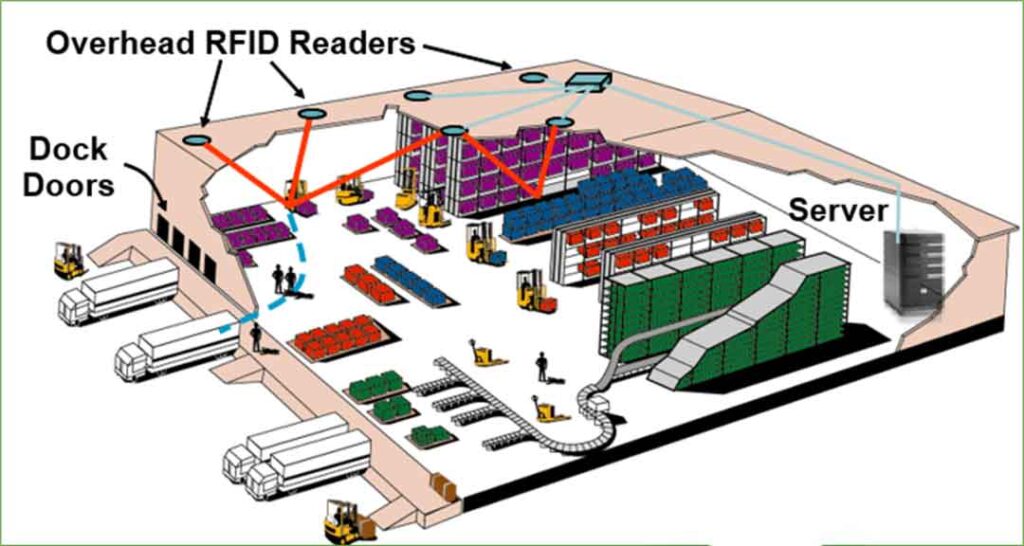
- Location: Install fixed RFID readers at warehouse entrances, exits, key pathways, and storage areas. Data from antennas in different directions is used to determine entry/exit movements, with real-time data recording.
- Recommended products: Zebra FX9600 or FXR90 readers, paired with directional antennas.
- Function: Real-time reading and recording of goods entry/exit information, enabling precise location tracking and monitoring of goods.
- Dynamic Positioning
- Technology: Combine RFID tags and readers to achieve dynamic positioning through signal strength and multi-point reading.
- Recommended Product: Zebra ATR7000 RFID Array
- Application: Real-time monitoring of changes in the location of goods and equipment, achieving real-time high-precision positioning of passive RFID tags, and generating dynamic path maps and location information.
- Advantages: Improve positioning accuracy and reduce instances of lost or misplaced goods.
RFID Positioning Solutions
- Improve work efficiency
RFID-based forklift warehouse logistics management solutions install RFID reading systems and industrial tablets PC on forklifts to achieve automatic identification, real-time tracking, and precise management of goods, significantly improving warehouse logistics efficiency and accuracy.
- Meet diverse needs
Compared to traditional barcode technology, RFID technology offers higher automation and information processing capabilities, meeting the diverse needs of modern logistics warehousing and providing the necessary support for smart logistics and smart warehouses.
- Optimize operational processes
Through RFID forklift management, enterprises can achieve efficient goods intake, outbound operations, and inventory counting, reduce human errors, lower operational costs, enhance overall management levels, and strengthen market competitiveness.