
Weekly News: AST SpaceMobile Deploys BlueBird-6, Strengthening Satellite-to-Cell Connectivity
Dec 26, 2025
1. AST SpaceMobile Deploys BlueBird-6, Strengthening Satellite-to-Cell Connectivity
2. India’s 5G Coverage Reaches Approximately 85% of Population
3. AI-Driven Network Automation Becomes Core to Telecom Operations
4. Industry Outlook Reports Signal 2026 as a Turning Point for Telecom Infrastructure
5. Direct-to-Device Satellite Connectivity Moves Toward Commercial Adoption
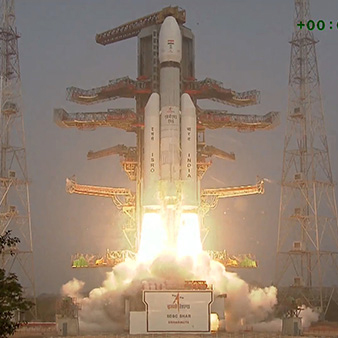
AST SpaceMobile Deploys BlueBird-6, Strengthening Satellite-to-Cell Connectivity
AST SpaceMobile has successfully launched and deployed its BlueBird-6 satellite, marking a major milestone in the development of satellite-to-cellular communications. Featuring the largest commercial communications array ever placed in low Earth orbit, BlueBird-6 is designed to enable 4G and 5G connectivity directly to standard smartphones without specialized hardware.
This deployment significantly advances the viability of Direct-to-Device (D2D) connectivity as a complementary layer to terrestrial mobile networks. Rather than replacing ground infrastructure, satellite-to-cell solutions are increasingly positioned as a coverage extension for remote, underserved, and disaster-prone areas.
For the global telecom industry, BlueBird-6 reinforces a broader trend toward hybrid network architectures, where satellite, terrestrial cellular, and cloud platforms work together to deliver continuous connectivity. As D2D moves closer to commercial scale, it is expected to play an important role in future network resilience and global coverage strategies.
India’s 5G Coverage Reaches Approximately 85% of Population
India’s telecom authorities have confirmed that nationwide 5G coverage has expanded to roughly 85% of the population by the end of 2025. The rollout has progressed beyond major metropolitan areas and is increasingly reaching semi-urban and rural regions, signaling a transition from early deployment to broad national coverage.
This expansion is accelerating digital adoption across multiple sectors, including mobile broadband, enterprise connectivity, IoT applications, and smart infrastructure projects. Improved access to high-speed wireless networks is also expected to support innovation in education, healthcare, and industrial digitization.
India’s large-scale rollout highlights how 5G deployment is evolving globally—from dense urban capacity builds toward inclusive, nationwide connectivity. For operators and equipment suppliers alike, the focus is shifting to scalability, cost-efficient deployment, and long-term network sustainability.
AI-Driven Network Automation Becomes Core to Telecom Operations
Across late December 2025, multiple operators and technology vendors highlighted the growing role of AI-driven network automation in live telecom networks. AI tools are increasingly applied in areas such as RAN optimization, fault detection and recovery, traffic management, and energy efficiency.
As network complexity continues to grow with 5G, 5G-Advanced, and heterogeneous network layers, manual optimization is becoming impractical at scale. AI-based automation enables operators to reduce operational costs while improving performance consistency and service reliability.
This trend reflects a broader industry shift toward software-defined, self-optimizing networks, where intelligence is embedded directly into network operations. AI is no longer viewed as an experimental add-on, but as a foundational capability for managing next-generation wireless infrastructure.
Industry Outlook Reports Signal 2026 as a Turning Point for Telecom Infrastructure
Year-end industry outlook reports released during this period point to 2026 as a strategic inflection point for global telecom infrastructure. While coverage expansion remains important, operators are expected to prioritize monetization, network intelligence, and deeper integration with cloud, AI, and satellite technologies.
Investment focus is shifting toward 5G-Advanced features, AI-enabled RAN, and Non-Terrestrial Networks (NTN), reflecting the need to support more diverse services and revenue models. Rather than building networks purely for scale, operators are increasingly optimizing for flexibility, efficiency, and service differentiation.
These outlooks suggest that the next phase of telecom growth will be driven not just by radio technology, but by how intelligently networks are designed, managed, and integrated into broader digital ecosystems.
Direct-to-Device Satellite Connectivity Moves Toward Commercial Adoption
Industry reviews published at the end of 2025 indicate that Direct-to-Device (D2D) satellite connectivity is progressing from trial deployments into early commercial rollout in selected markets. Operators are beginning to position satellite connectivity as a permanent extension layer rather than an emergency fallback.
Non-Terrestrial Networks are increasingly viewed as a way to enhance coverage continuity, improve network resilience, and support mobility in remote or infrastructure-limited environments. This hybrid approach allows operators to combine terrestrial cellular performance with satellite reach.
As commercial models mature, D2D services are expected to integrate more closely with existing mobile offerings, laying the groundwork for future global connectivity frameworks and influencing how networks are designed heading into the 6G era.