
RFID Tag Applications | Emerging Trends and Core Use Cases
RFID Tag Applications | Emerging Trends and Core Use Cases
RFID Tag Applications are reshaping industries with smarter inventory management, secure access control, and advanced traceability. Discover the latest trends and innovations driving the future of connected solutions.
Table of Contents
Introduction
Current State of the Global RFID Tag Market and RFID Tag Applications
Core RFID Tag Applications in Key Industries
Innovative Manufacturing Processes Driving RFID Tag Applications
Conclusion

Introduction
RFID Tag Applications are evolving with greater diversity, enhanced functionality, and improved sustainability as RFID technology deepens its integration with cutting-edge innovations and emerging processes.
So, what is the current state of the RFID tag market? Which emerging technologies have achieved deep integration with RFID tags? And in which key sectors are RFID Tag Applications driving innovative applications? This article takes you on an in-depth exploration!
Current State of the Global RFID Tag Market and RFID Tag Applications
Amid the digital wave, global RFID tag adoption continues to accelerate.
According to research data from Global Info Research, QYR, and other institutions, the global RFID tag market has expanded steadily in recent years.
The global RFID tag market is projected to reach $7.51 billion by 2030, with a compound annual growth rate (CAGR) of 8.8%.
Core RFID Tag Applications in Key Industries
RFID Tag Applications in Apparel Retail
As consumer demands become increasingly diverse, the rapid growth in retail SKU counts has become the norm. The global retail industry is actively adopting RFID technology, using apparel tags to tackle this challenge and meet diverse inventory management needs.
Global leader Decathlon achieved a fivefold improvement in inventory efficiency, more frequent inventory checks, and smoother goods handling and picking.
- During production
The backend intelligent system’s database stores the corresponding tag data, and each item carries a fixed-code UHF RFID apparel tag.
- Goods are transported from factories to distribution centers
Sorting lines and scanning channels equipped with UHF RFID readers efficiently and accurately direct items to their correct destinations.
- In physical stores
RFID handheld devices help staff efficiently complete inventory counts, while RFID technology enables unmanned self-checkout systems within the store.

RFID Tag Applications in Power Grid Monitoring
State Grid Xixia Power Supply Company uses “RFID tags + drones” for grid inspections, greatly improving efficiency and cutting labor costs.
All local poles, towers, transformers, and ring main units carry RFID tags for accurate facility management.
Drones with cameras and RFID readers send data to a central system that consolidates equipment information. During inspections, drones read RFID tags to check status and compare it with historical data to spot risks.

RFID Tag Applications in Linen Washing Management
In scenarios involving large-scale linen washing management—such as hotels, hospitals, and laundry facilities—traditional manual recording or barcode scanning methods increasingly reveal inefficiencies, error-prone processes, and challenges in data traceability. The advent of RFID linen washing tags has revolutionized linen washing management.

By attaching RFID tags to linen items, each piece gets a globally unique identifier, effectively transforming it into smart, trackable linen.
Staff attach RFID tags (sewn in or heat-sealed) to new linen items and enter their detailed information into the management system. During inventory intake, readers batch-scan the items. After confirming quantity and information accuracy, staff store the items in inventory, and the system updates inventory data in real time.
In garment and linen applications, RFID Tag Applications delivers a new level of technical optimization for cleaning traceability management.

Innovative Manufacturing Processes Driving RFID Tag Applications
Passive RFID Light-Emitting Tags — Wuxi Marathon Baggage Management
Passive RFID light-emitting tags are essentially electronic IDs with built-in “light-emitting capabilities.” They consist of three components: a passive RFID chip, a micro energy-harvesting antenna, and an LED light-emitting unit.

This smart RFID tag, less than 1 millimeter thick, appears as an ordinary sticker yet conceals remarkable technology.
Its built-in micro-energy harvesting antenna captures radio frequency signals in the air, instantly converting electromagnetic waves into electricity that powers the LED light. The corresponding LED on the tag illuminates with pinpoint accuracy, transforming it from hidden to visible in a striking way.

In 2025, passive RFID light-emitting tags revolutionized baggage management at the Wuxi Marathon.
The newly implemented smart baggage recognition system automatically illuminated the small lights on participants’ bags as they approached their designated storage zones, enabling “30-second express bag drop-off and retrieval” and setting a new benchmark for service excellence at major sporting events.
New Anti-Theft Solution: Implantable RFID Encrypted Wallet
With the growing popularity of digital currencies, the public is increasingly focused on how to securely and efficiently store and manage their crypto assets.
An innovative product called the Apex Wallet has captured widespread market attention with its unique miniaturized design. Compared to traditional hardware wallets, the Apex Wallet is approximately the size of a pill and can be implanted under the skin for discreet data storage.
This innovative design not only significantly reduces physical space requirements but also greatly enhances the wallet’s portability.

Utilizing RFID technology, the Apex Wallet enables users to effortlessly access and manage stored cryptocurrencies via a mobile app. Its contactless data transmission feature allows users to read and verify data simply by bringing the tag near an RFID reader—eliminating the need for plugging, unplugging, or wired connections.
RFID technology supports high-speed data transmission, enabling swift verification and transaction signing for cryptocurrency wallets. This efficiency is particularly crucial for cryptocurrency transactions requiring immediate responsiveness.
RFID Anti-Counterfeiting Traceability Label—Tea Capsule
In recent years, the tea beverage market has expanded rapidly, but issues have also emerged, such as unclear ingredients, difficulty in distinguishing authenticity, and inconsistent brewing practices.
The RFID high-frequency NFC anti-counterfeiting label brings new technological capabilities to the tea industry, enabling full transparency and trust throughout the tea supply chain.
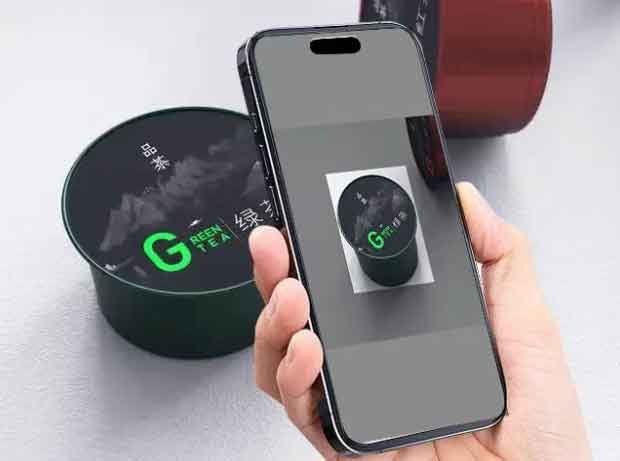
For premium tea brands prioritizing origin transparency, the RFID tag serves as a “digital identity card.” Simply tap your phone’s NFC near the tea capsule packaging to instantly access comprehensive details:
- Tea origin, harvest date, and processing techniques are clearly displayed.
- Key stages from packaging to quality inspection remain fully traceable.
- Precise water temperature and steeping time recommendations ensure optimal flavor extraction.
- Encrypted chip technology eliminates counterfeits, safeguarding both brands and consumers.
Conclusion
Looking ahead, RFID Tag Applications will become increasingly integrated into manufacturing processes and everyday life, with innovative RFID technologies continuously emerging to meet diverse IoT needs.