Electronic Product Antennas Guide: PCB, FPC and LDS Antennas

Why LDS Antennas Became the Mainstream in Compact Consumer Electronics

This article explores why LDS antennas consumer electronics designs have become the mainstream choice in modern compact devices.
It analyzes antenna form factor evolution, structural constraints, and manufacturing realities that drive LDS adoption in space-constrained, multi-band products.
The discussion focuses on practical engineering trade-offs rather than theoretical antenna models.

Table of Contents

  1. Foreword
  2. What is RF? Why is an Antenna Essential?
  3. The Four Most Common Antennas in Consumer Electronics
  4. Why Have LDS Antennas Become the Mainstream Solution?
  5. Structural Forms and Design Considerations of LDS Antennas
  6. Key Considerations for LDS Process
  7. LDS Material System and Selection Logic
  8. Conclusion

Foreword

As consumer electronics continue to evolve toward thinner, lighter, and more compact designs, available internal space keeps shrinking, while wireless systems must support an ever-growing range of communication standards and frequency bands.

As the key interface between electronic systems and free-space electromagnetic waves, antennas are continuously evolving in form, materials, and manufacturing processes.

In this context, LDS antennas in consumer electronics have emerged as a mainstream solution for meeting aggressive space and performance requirements.

I. What is RF? Why is an Antenna Essential?

RF (Radio Frequency) refers to high-frequency electromagnetic signals capable of propagating through free space. In wireless communication systems, RF signals serve as the physical carriers of information over distance.

At lower frequencies, surrounding media tend to absorb electromagnetic energy, reducing propagation efficiency. As frequency increases, signals can radiate into space, making wireless communication possible. Antennas serve as the interface that converts guided RF signals into radiated electromagnetic waves—and vice versa—enabling over-the-air transmission.

II. The Four Most Common Antennas in Consumer Electronics

PCB Antenna

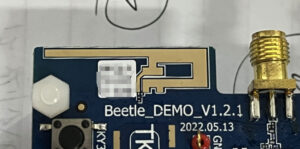
PCB antennas are conductive traces printed directly on the circuit board, commonly implemented in straight, inverted-F, or serpentine geometries. When the effective electrical length approaches a quarter wavelength, the structure can operate as a basic antenna.

LDS antennas consumer electronics

PCB antennas are cost-effective and easy to integrate, but their performance is strongly constrained by board size and nearby components.

Ceramic Antenna

Ceramic antennas use high-permittivity dielectric materials to achieve compact size and stable performance. They offer good interference resistance and environmental robustness, making them suitable for short-range applications such as TWS earbuds and IoT devices.

FPC Antenna

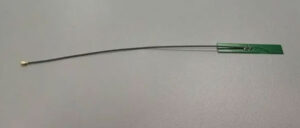
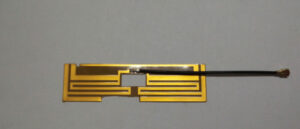
FPC antennas are flexible, lightweight solutions that can be shaped to fit product structures. They support slim device designs and relatively low cost, but impedance matching is more challenging and performance is generally inferior to rigid metal antennas.

LDS Antennas Antenna

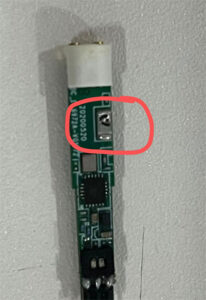
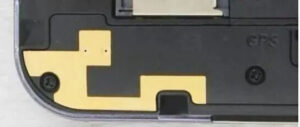
LDS antennas leverage three-dimensional surfaces to achieve higher spatial efficiency and improved RF performance. While more costly, they provide significantly greater design freedom compared with PCB or FPC antennas.

LDS antennas consumer electronics

III. Why Have LDS Antennas Become the Mainstream Solution?

The core advantage of LDS antennas in consumer electronics lies in their ability to fully utilize three-dimensional structural surfaces inside compact devices.

The key distinction between LDS and FPC antennas lies in their formability and attachment capabilities. LDS antennas can be molded and attached to non-flat, three-dimensional curved surfaces, whereas FPC antennas typically require relatively flat mounting surfaces. Consequently, LDS antennas can more effectively utilize irregular internal spaces within products. Currently, most consumer electronics on the market have adopted LDS antenna solutions.

LDS (Laser Direct Structuring) employs laser direct forming technology. By selectively laser-etching plastic structural components such as brackets and back covers, the material surface gains metallization capability. This is followed by electroless plating to form the metallic antenna pattern. This process can be applied to various irregular curved surfaces, further enhancing internal space utilization.

Advantages of LDS Antennas

  1. Space-saving, enabling thinner product designs.
  2. Higher antenna consistency and stability, less susceptible to machining errors or manual assembly variations.

LDS Antennas Antenna

LDS antennas typically involve longer lead times due to multi-stage manufacturing and cross-supplier coordination. LDS-specific materials are significantly more expensive than standard plastics, and the overall process introduces higher quality control complexity. In addition, LDS materials may exhibit slightly reduced mechanical toughness compared to conventional PC plastics, requiring careful structural and process design.

It is important to note that LDS antennas are not the optimal solution for all consumer electronics. For mid-to-high-end products constrained by structural space, requiring multi-band or multi-antenna coexistence, and demanding high consistency in overall RF performance, LDS antennas offer distinct advantages in spatial utilization and performance stability.

However, for products with relatively relaxed structural constraints, fewer frequency bands, or high cost sensitivity, FPC antennas or PCB antennas remain more cost-effective choices. Therefore, the adoption of LDS antennas should be comprehensively evaluated based on product positioning, structural conditions, and performance objectives.

IV. Structural Forms and Design Considerations of LDS Antennas

From a design perspective, LDS antennas introduce unique structural constraints that must be considered early in mechanical and RF co-design.

LDS antennas primarily consist of via holes, laser perforations, and three-dimensional surface laser-engraved structures.

Via Hole Design Specifications

LDS antennas consumer electronics

Key design principles include:

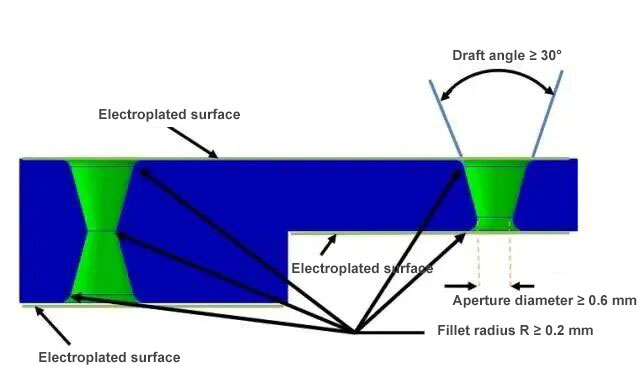
  ◆ Incorporate either a single tapered hole or dual tapered holes. The choice depends primarily on aesthetic requirements. If wall thickness is too thick, resulting in excessive hole diameter that compromises appearance, dual tapered holes should be used. (as shown in Figure 1)

  ◆ The taper angle must exceed 30 degrees to facilitate laser engraving;

  ◆ The smaller side of the aperture must exceed 0.6 mm, as this location corresponds to the mold’s parting line (where mold steel components meet and collide). A smaller aperture risks mold steel deformation, causing flash on the injection-molded product. On the visible surface, an overly large aperture compromises aesthetics.

  ◆ Holes are typically larger internally and smaller externally to minimize visual size. However, mold ejection constraints may necessitate sacrificing aesthetics by reversing this taper.

◆ A fillet transition is generally required (see Figure 1), with a minimum radius R ≥ 0.2 mm.

  ◆ Ensure the mold parting line step height is less than 0.03 mm (requires mold manufacturer control). Excessive step height may cause line breakage.

Laser Perforation Design

Modern smartphones demand increasingly high standards for secondary exterior surfaces. When numerous conductive tapered holes are designed, visible holes on the exterior can compromise aesthetics. In such cases, laser perforation technology is employed. This laser perforation technology eliminates the need for pre-designed holes. Instead, micro-holes are directly created with a laser at the desired connection points near feed points. Since the micro-hole diameter is only 0.1–0.14 mm, combined with secondary surface coating, they are invisible to the naked eye. This preserves the integrity of the secondary surface while maintaining antenna functionality.

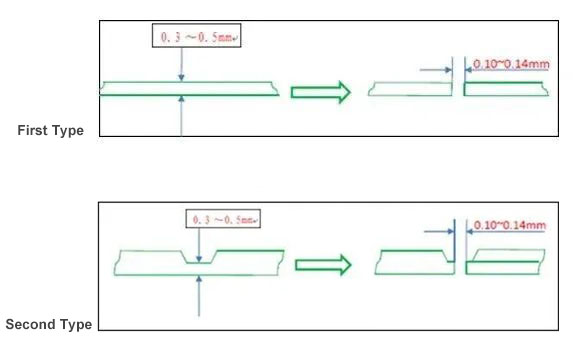
Laser perforation requires plastic wall thickness below 0.5 mm. Two approaches exist:

  1. Average wall thickness below 0.5 mm.
  2. If average wall thickness exceeds 0.5 mm, localized material removal is needed to reduce thickness below 0.5 mm at perforation sites.

Typically, localized thickness should be 0.3–0.5 mm. Two design approaches:

LDS antennas consumer electronics

Key Design Principles for Laser Perforation (see Figures 2 and 3 above):

◆ For reliable laser perforation, the local plastic thickness should be controlled within 0.3–0.5 mm, with a typical laser processing time of approximately 1–2 seconds.

◆ After laser drilling, the resulting aperture diameter is typically 0.10–0.14 mm, while the final aperture size after electroplating is reduced to 0.08–0.12 mm.

◆ When the plastic wall thickness is below 0.5 mm, laser perforation can be performed directly, as illustrated in Figure 2.

◆ For wall thicknesses exceeding 0.5 mm, localized material removal is necessary to reduce the thickness in the perforation area to 0.3–0.5 mm, as shown in Figure 3.

◆ To avoid circuit discontinuities, step transitions should incorporate rounded corners, with a minimum radius of R1 ≥ 0.2 mm.

◆ Regarding draft angles, ANG1 ≥ 30 degrees is generally recommended. In space-constrained designs, a minimum draft angle of 20 degrees is acceptable, but values below this threshold should be avoided.

3D Surface Laser Deposition Structure Design

After engineers define the required antenna areas and circuit patterns, the LDS process begins with laser deposition.
The laser projects directly onto the LDS plastic shell, activating the surface along the intended antenna traces.
Engineers then apply electroplating to deposit metal onto the laser-activated regions, forming the final antenna circuit patterns.

During laser projection, either the laser head, the product, or both can rotate, depending on the specific antenna geometry and design requirements.
Engineers develop the laser editing program based on the antenna layout and manufacturing constraints.

V. Key Considerations for LDS Process

Beyond RF performance, manufacturing yield and cosmetic quality are critical challenges in LDS antenna production.

1) Ejector pin marks, mold steel joints, and gates should avoid the laser engraving area. If unavoidable, the joint step height must be ≤0.03 mm, and flash step height must be ≤0.03 mm.

2) No mold pull marks are permitted in the laser engraving area.

3) Inner hole surfaces must be free of step differences, depressions, burrs, dust, etc.

4) No structural protrusions (e.g., latches, screw studs, insert pins) may obstruct the laser in the engraving area.

5) Maintain a minimum 0.30mm clearance between circuit lines and material edges. Proximity may cause laser dust to adhere to plastic edges, leading to plating overflow during electroforming.

6) Surface circuit areas must not exhibit abnormal shrinkage.

7) Plastic part tolerances must not exceed LDS tolerances.

8) LDS shell production processes are typically complex (6-8 steps for cosmetic parts), with defects occurring at each stage, leading to very low cumulative yield rates. Therefore, LDS shell processes should avoid excessive complexity to prevent low first-pass rates.

9) Vacuum plating surface treatments may affect cosmetic appearance.

This is because the LDS via or laser drilling process involves coating grinding, which may result in inconsistent hole shapes. Additionally, production variations—such as some parts receiving 5 coats while others require 6 coats due to re-sanding—can cause hole size inconsistencies. Laser-drilled holes leave noticeable marks after plating, which may be unacceptable for high-precision equipment. Therefore, primary surfaces should not feature micro-vias or laser-drilled holes like those in MIC applications.

10) Control electrolytic copper thickness at 5~9μm and nickel thickness at 3~5μm. If gold plating is required, its thickness must exceed 0.1μm.

 11) Primary surface requirements: Spacing between lines ≥1.0mm; line width ≥0.3mm.

12) Plastic surface roughness must be between Rz 5 μm and Rz 10 μm to meet LDS process requirements. Surface grinding is generally unnecessary (Rz 15 μm is acceptable under special circumstances) and must not exceed Rz 15 μm.

13) For LDS-treated visible surfaces requiring polishing during spraying, control weak points in circuit routing (e.g., thin areas near side button holes) to prevent polishing-induced circuit breaks or damage.

14) If edges of electroplated areas feature rounded corners, maintain a minimum distance of 0.5 mm from the edge. Rounded corners may cause laser engraving to extend onto side surfaces, impairing antenna performance.

VI. LDS Material System and Selection Logic

Material selection plays a decisive role in determining the performance ceiling of LDS antennas, especially in 5G-era applications.

As LDS plastic is a modified polymer containing organometallic complexes that release metallic particles upon laser exposure, careful consideration is required for substrate selection, additives, and manufacturing processes.

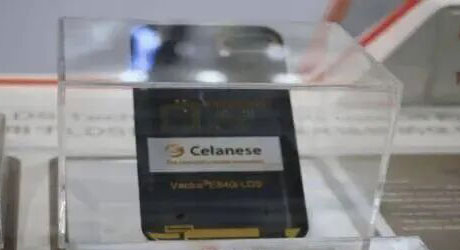
Common resin substrates for LDS functional plastics include: Polycarbonate (PC), PC/Acrylonitrile-Butadiene-Styrene (ABS) alloys; Thermoplastic polyesters such as polybutylene terephthalate (PBT), PBT/polyethylene terephthalate (PET) alloys, and PBT/polycyclohexylenedimethylene terephthalate (PCT) alloys; Nylon (PA) such as PA66, PA6, high-temperature nylon (PPA), and long-chain PA alloys; Liquid crystal polymers (LCP), including glass fiber (GF)-reinforced variants of the above substrates.

LCP-Based Materials and 5G Applications

LCP emerged as a high-performance specialty engineering plastic in the early 1980s. Liquid crystal aromatic polyesters form highly ordered fibrous structures due to molecular chain orientation in their liquid crystal state, resulting in exceptionally high tensile and flexural elastic moduli.

Compared to PC, thermoplastic polyesters, and PA-based substrates, LCP-based LDS functional plastics exhibit superior performance and broader application prospects in the 5G communication era. This stems from the inherent characteristics of LCP substrates. Key features of LCP include:

① Excellent dimensional stability and high creep resistance;

② Extremely low melt viscosity and outstanding melt flowability upon reaching the melt flow temperature;

③ Intrinsically flame-retardant properties, enhancing safety and environmental friendliness;

④ High mechanical strength, enabling reduced material thickness;

⑤ Superior solvent resistance;

⑥ Excellent high-temperature tolerance, withstanding reflow soldering and other soldering processes;

⑦ Very low moisture absorption.

A significant drawback of LCP-based LDS functional plastics is their high cost, coupled with strong anisotropy and coloring properties.

LDS antennas consumer electronics

Conclusion

As end devices demand increasingly sophisticated multi-frequency, multi-antenna, and slim designs, LDS antennas in consumer electronics and their material systems will continue to see broader adoption.

In real-world product development, the choice of antenna form factor and materials ultimately requires a balanced trade-off among structural constraints, RF performance targets, cost sensitivity, and long-term reliability.

Close Menu