Automotive Antenna Placement Guide: Optimizing 5G, GNSS, V2X & Vehicle Wireless Performance

Learn best practices for automotive antenna placement, including 5G, GNSS, WiFi, BLE, UWB and C-V2X antenna integration. Explore vehicle wireless system design, RF cable loss, smart antennas, EMI mitigation and full-vehicle OTA testing.

Table of Content

  1. Introduction
  2. Wireless Layout: The High-Stakes Game of Vehicle Physics
  3. Considerations Regarding RF Transmission Cable Loss
  4. Guidelines for GNSS Antenna Placement
  5. Guidelines for V2X Antenna Placement
  6. Case Studies of Multi-Function Integrated Antenna Layouts
  7. Case Studies of Antenna + TBox Integrated Module Layouts
  8. Full-Vehicle Antenna Testing: Validating Performance in a 5G World
  9. Best Practices for In-Vehicle Wireless Layout: From Theory to Implementation
  10. Advanced Considerations: Interference, Multi-band, and Vehicle-Specific Layouts
I. Introduction

Modern vehicles are no longer just mechanical machines; they are sophisticated “data centers on wheels.” From 5G telematics to C-V2X and high-precision GNSS, the complexity of in-vehicle wireless systems is exploding.

However, even the most advanced RF module is only as good as its antenna placement. In this comprehensive overview, we explore the critical strategies for vehicle wireless layout, link budget optimization, and the future of integrated smart antennas.

Automotive Antenna Placement Guide: Optimizing 5G, GNSS, V2X & Vehicle Wireless Performance

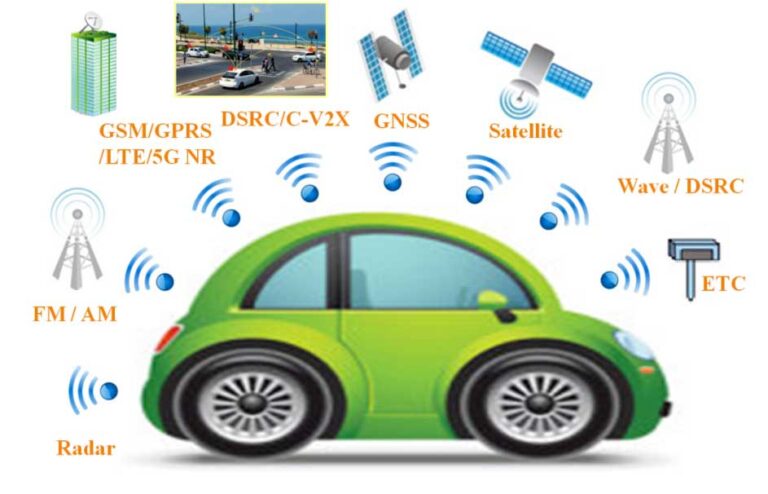
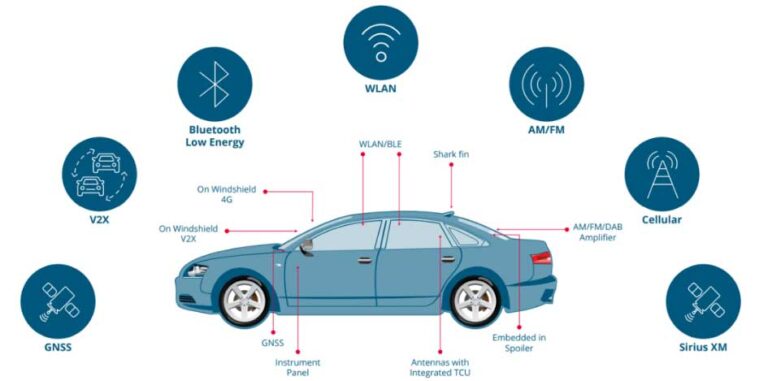
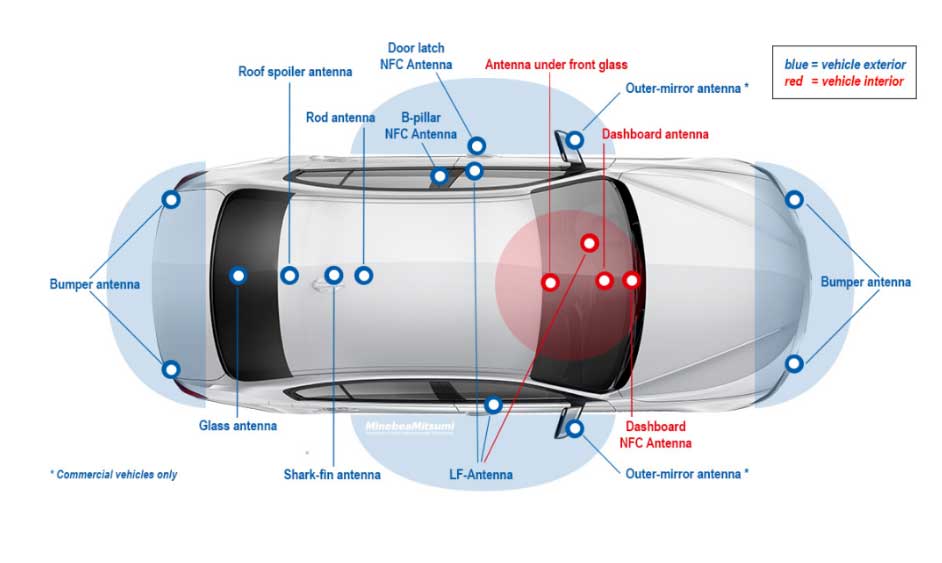
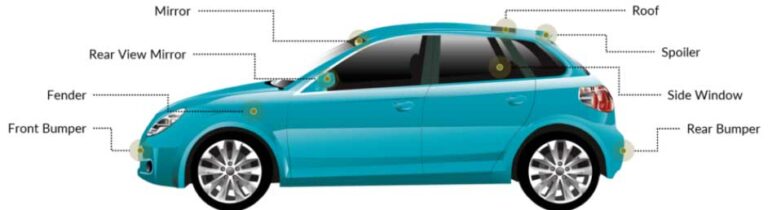
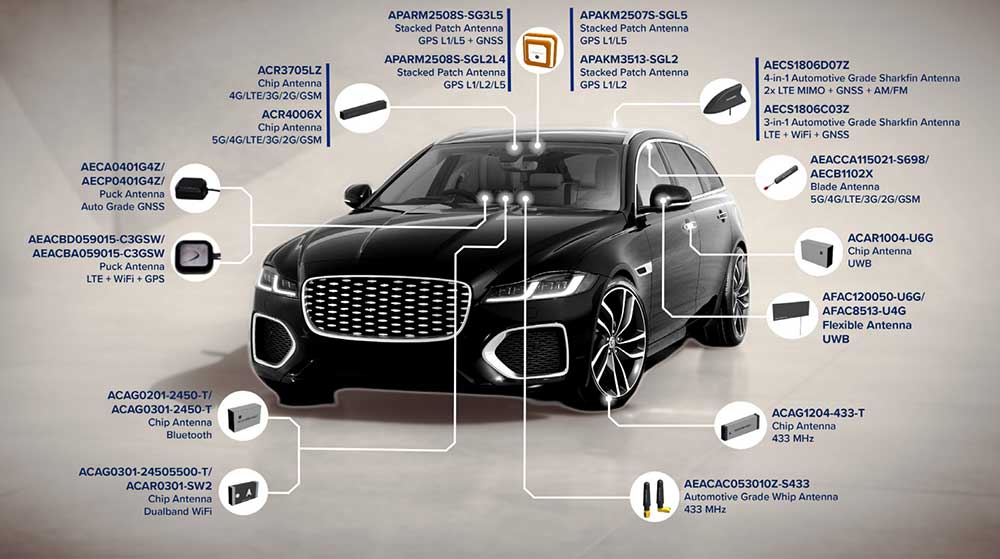
Figure 1: Schematic Diagram of Automotive Antenna Placement in Passenger Cars

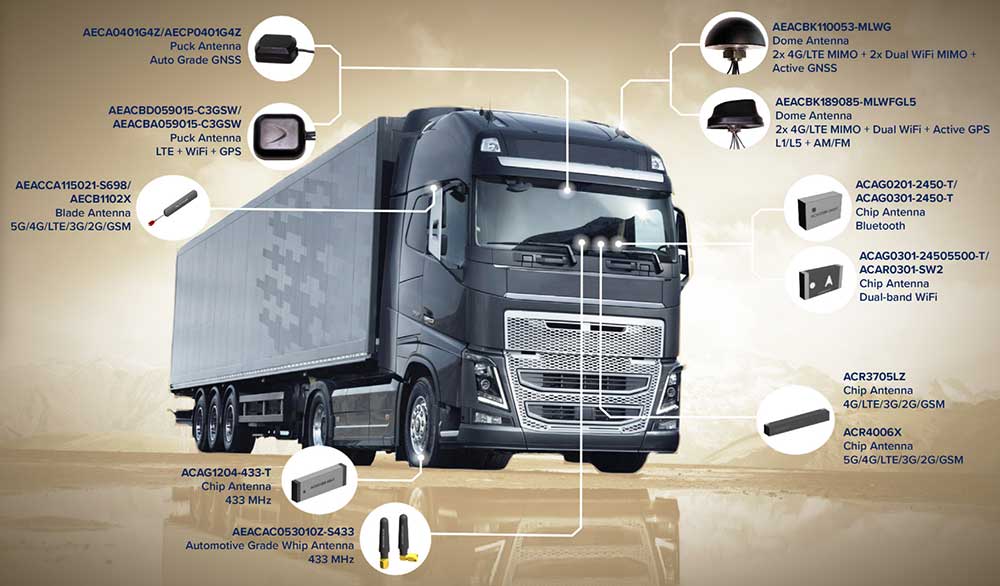
Figure 2: Schematic Diagram of Automotive Antenna Placement in Commercial Vehicles

Automotive Antenna Placement Guide: Optimizing 5G, GNSS, V2X & Vehicle Wireless Performance

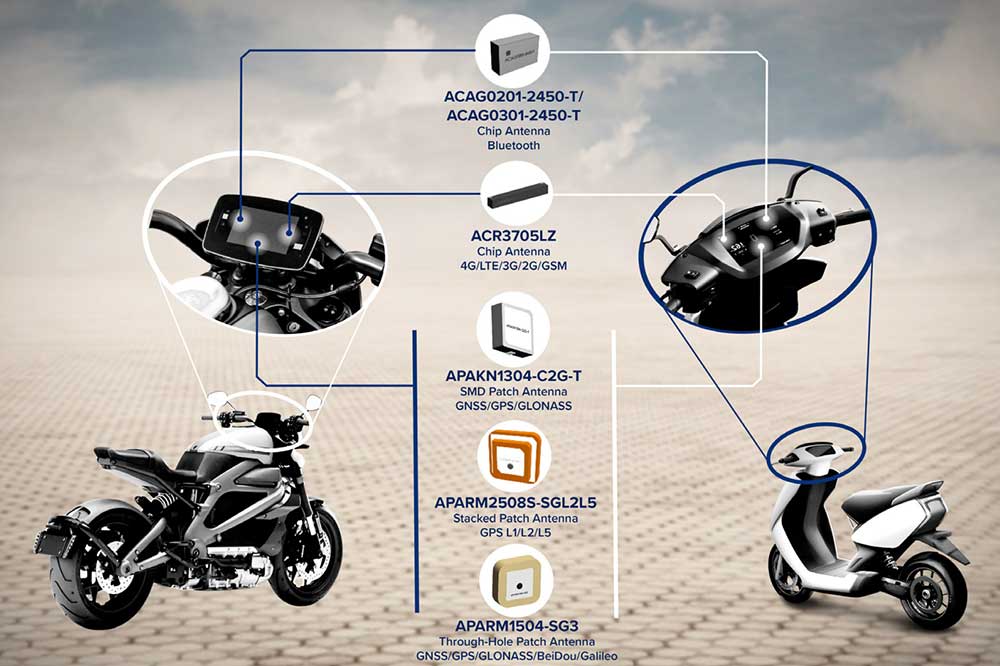
Figure 3: Schematic Diagram of Automotive Antenna Placement in Two-Wheeled Vehicles

Ref:https://abracon.com/uploads/resources/Abracon-Antennas-for-Autonomous-and-Connected-Automotive-Services.pdf

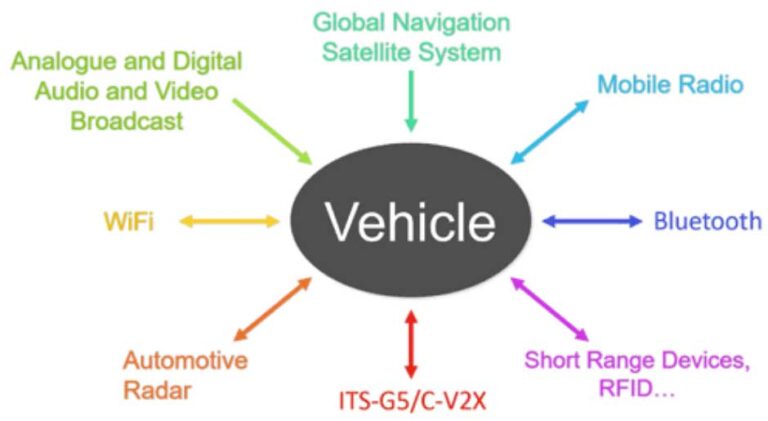
A summary of wireless functions is listed below, numbering in the dozens:

  1. GSM, GPRS, LTE, 5G NR, etc.: The current mainstream technologies are LTE and 5G, and the adoption of 5G in vehicles is steadily increasing;
  2. GNSS: Single-band/dual-band/tri-band GPS, BeiDou, etc.;
  3. Satellite: Geostationary, low-Earth orbit (LEO), etc.; low-speed and high-speed communication, etc.;
  4. FM/DAB:
  5. V2X:
  6. WiFi: CarPlay compatibility
  7. Classic Bluetooth (BT): Wireless headphones, etc.
  8. BLE: Digital keys and other functions; may also include wireless BMS (using the StarFlash protocol)
  9. UWB: Digital keys, CPD, intrusion detection
  10. TPMS: 433 MHz, to be replaced by BLE in the future;
  11. ETC:
  12. NFC:
  13. Radar: 77 GHz band (autonomous driving), 60 GHz (door radar)

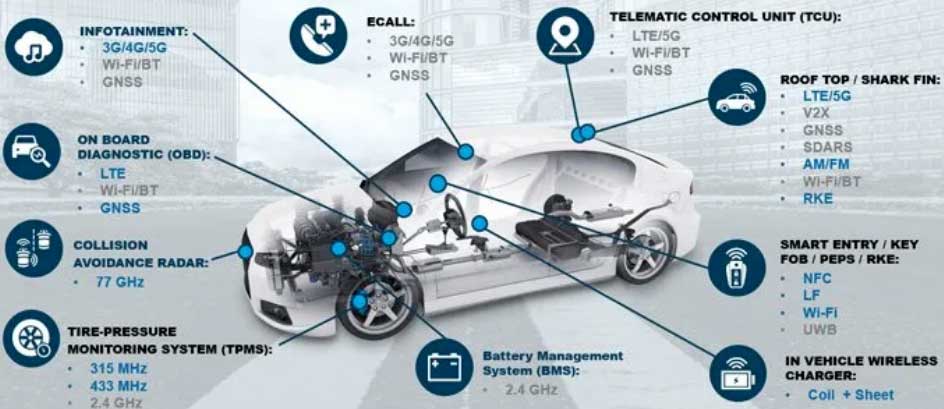
Figure 4: Diagram of In-Vehicle Wireless Functions

Automotive Antenna Placement Guide: Optimizing 5G, GNSS, V2X & Vehicle Wireless Performance

Figure 5: Schematic Diagram of In-Vehicle Wireless Functions

Figure 6-1: Schematic Diagram of In-Vehicle Wireless Functions

Automotive Antenna Placement Guide: Optimizing 5G, GNSS, V2X & Vehicle Wireless Performance

Figure 6-2: Schematic Diagram of In-Vehicle Wireless Functions

Ref:https://abracon.com/uploads/resources/Abracon-Antennas-for-Autonomous-and-Connected-Automotive-Services.pdf

Ref:|Products

Ref:https://www.molex.com/content/dam/molex/molex-dot-com/en_us/pdf/product-briefs/987652-0276-v2.pdf?inline

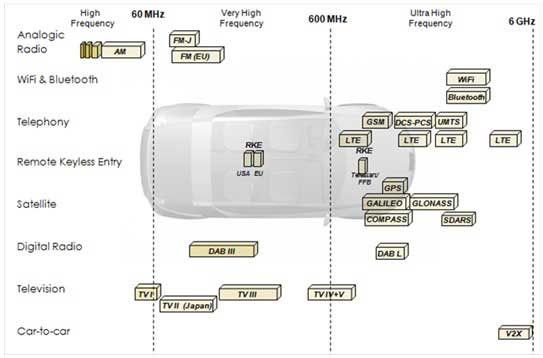
Figure 7: In-vehicle wireless functions and sampled frequency bands (incomplete)

Ref:Integrated antennas – Ficosa

With so many wireless functions, this involves the wireless layout of the entire vehicle.

II. Wireless Layout: The High-Stakes Game of Vehicle Physics

The physical location of an antenna on a vehicle body is far more than an aesthetic choice; it is a critical engineering decision.

Automotive Antenna Placement Guide: Optimizing 5G, GNSS, V2X & Vehicle Wireless Performance

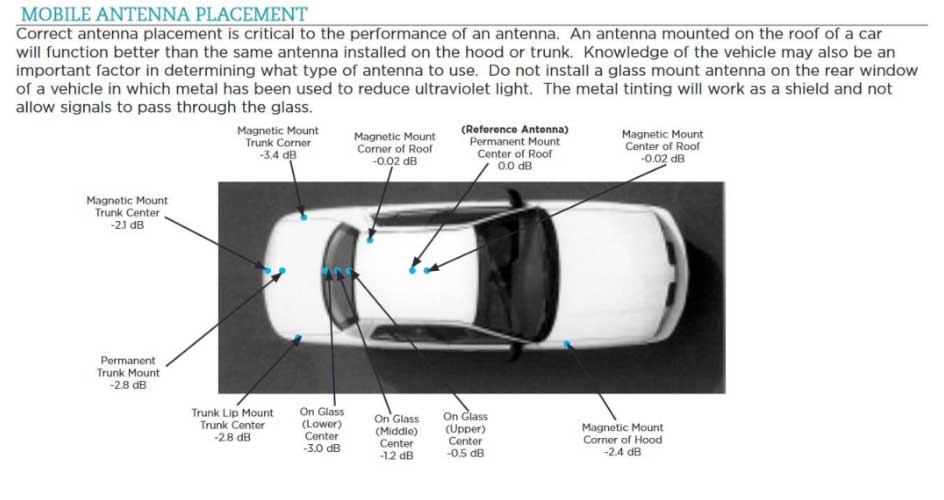
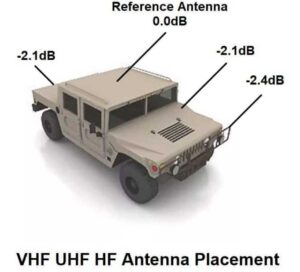
Figure 8: Impact of different mounting locations on the vehicle body on wireless performance

Figure 9: Impact of different mounting locations on the vehicle body on wireless performance (based on a specific operating frequency band)

Mounting locations directly dictate signal gain, radiation patterns, and the overall reliability of the wireless link. Metal surfaces act as reflectors, glass roofs introduce attenuation, and nearby electronics generate EMI—all conspiring to degrade signal integrity.

Currently, common antenna layouts utilize both internal (red) and external (blue) placements. However, as shown in Figure 11, the industry has evolved toward several specialized “integration hubs.”

Automotive Antenna Placement Guide: Optimizing 5G, GNSS, V2X & Vehicle Wireless Performance

Figure 10: Current Common In-Vehicle Antenna Layouts

Ref:Antennas | MinebeaMitsumi Europe

Figure 11: Possible In-Vehicle Antenna Mounting Locations

Ref:https://www.mistralsolutions.com/blog/automotive-antenna-technologies/

1. The Roof

The vehicle roof remains the gold standard for antenna placement. Its elevation provides a clear First Fresnel Zone and minimal obstruction, resulting in near-ideal 360° horizontal coverage.

  • Omnidirectional Services: This is the preferred site for high-throughput and safety-critical links, including LTE/5G NR, Wi-Fi, and V2V.
  • Satellite & Directional Services: Services requiring a clear “view of the sky,” such as GNSS (GPS/BeiDou), SDARS (Satellite Radio), and high-frequency sensing (24/77 GHz), benefit from the roof’s unobstructed zenith.
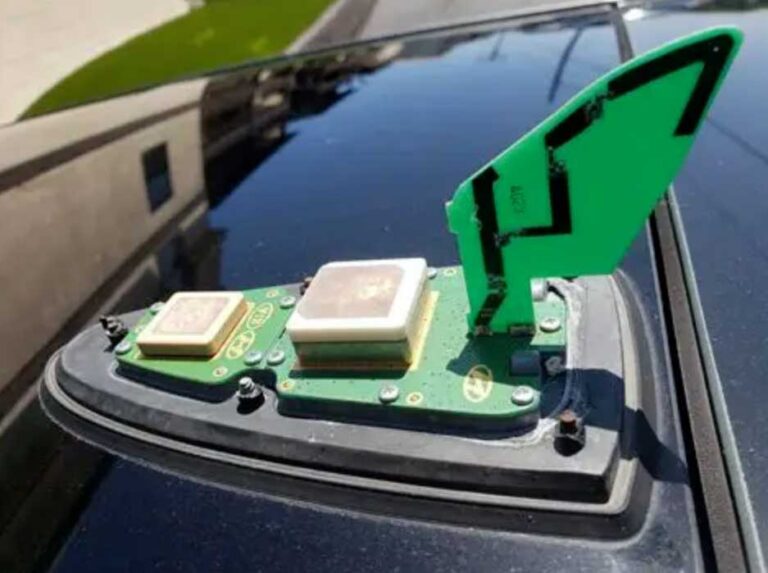
  • The Shark Fin Evolution: Most modern vehicles consolidate these services into a Shark Fin Module. While efficient, engineers must manage mutual interference within these dense clusters.

2. Spoilers and Windshields

To satisfy aerodynamic and stylistic requirements, manufacturers often “hide” antennas within non-metallic components.

  • Pioneering Innovation: Strategies pioneered by Toyota and Volvo in the late 1990s involve embedding antennas into rear spoilers or beneath polymer composite panels. This allows for high-performance connectivity without the visual profile of a rod antenna.
  • Glass Integration: In the absence of a spoiler, film-based fractal antennas or printed lines can be integrated into the rear windshield or side windows. However, designers must meticulously account for the dielectric constant of the glass and any metallic tints, which can significantly shift the antenna’s resonant frequency.

3. Side Mirrors

The exterior rearview mirror has emerged as a strategic hub for short-range and specialized frequencies. Because the mirror sits outside the vehicle’s main metal “cage,” it provides an excellent line-of-sight to the front, side, and rear.

  • Integrated Modules: Modern mirror assemblies now house a suite of technologies, including AM/FM/DAB, RKE (Remote Keyless Entry), Wi-Fi, and even GNSS.
  • V2X Advantage: Mirrors are often used as secondary V2X nodes to provide diversity and eliminate the “dead zones” typically created by the vehicle’s A-pillars.

4. Alternative Placements and Challenges

While bumpers and fenders offer additional mounting points, they are highly susceptible to structural shadowing. For instance, an antenna mounted on a front bumper may experience significant signal drops (up to 20-30 dB) when communicating with a target located behind the vehicle, as the signal must penetrate the entire engine block and chassis.

III. Considerations Regarding RF Transmission Cable Loss

In the design of a vehicle’s wireless system, it is essential to consider not only the performance of the antenna but also the RF Signal Attenuation caused by the length of the RF cable between the antenna and the ECU.

Automotive Antenna Placement Guide: Optimizing 5G, GNSS, V2X & Vehicle Wireless Performance

Figure 12 Schematic of RF Cabling Between the Antenna and the ECU

Figure 13 Schematic of RF Cabling Between the Antenna and the ECU

Automotive Antenna Placement Guide: Optimizing 5G, GNSS, V2X & Vehicle Wireless Performance

Figure 14 Schematic of RF Cabling Between the Antenna and the ECU

IV. Guidelines for GNSS Antenna Placement

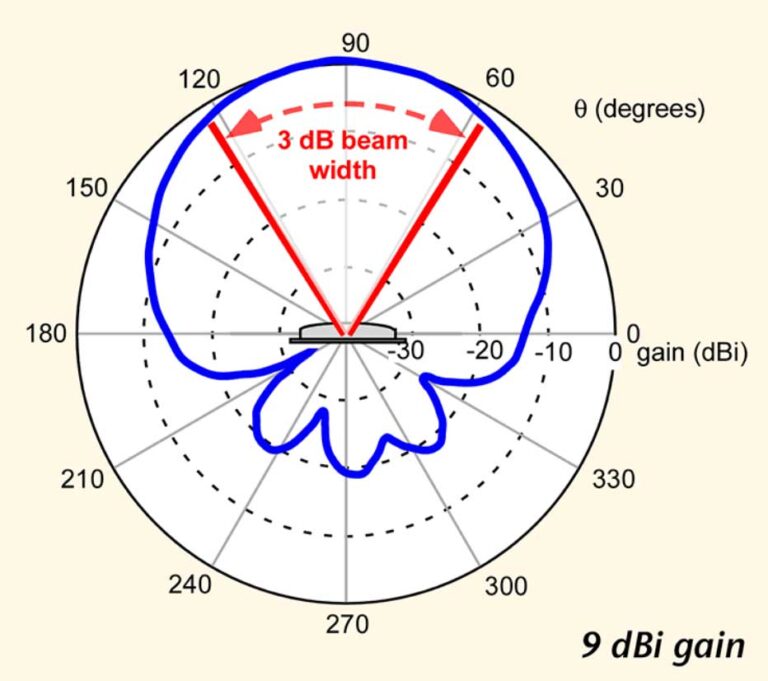
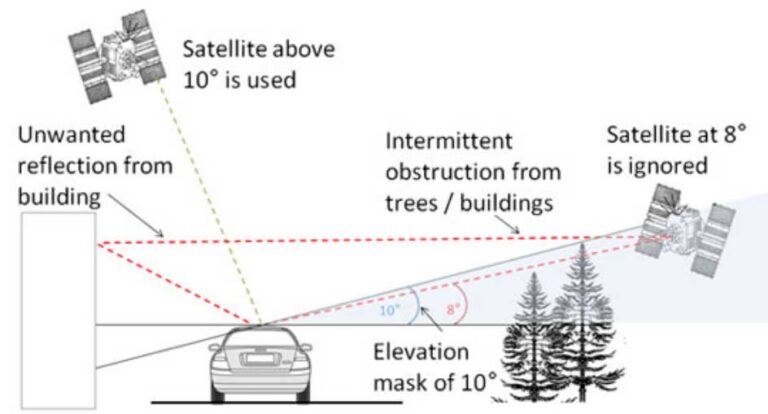
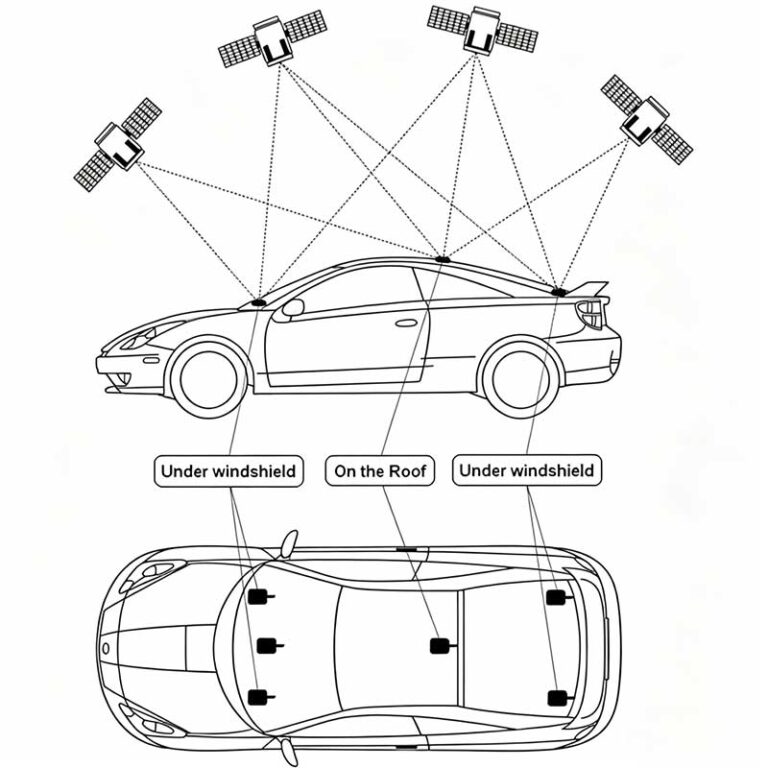
When placing GNSS antennas, consider the antenna’s beamwidth (60° to 70°) and ensure there are as few obstructions as possible within this range to maximize the reception of positioning messages from different satellites.

Figure 15-1 GNSS Antenna Beam Width

Automotive Antenna Placement Guide: Optimizing 5G, GNSS, V2X & Vehicle Wireless Performance

Figure 15-2 Satellite Elevation Mask

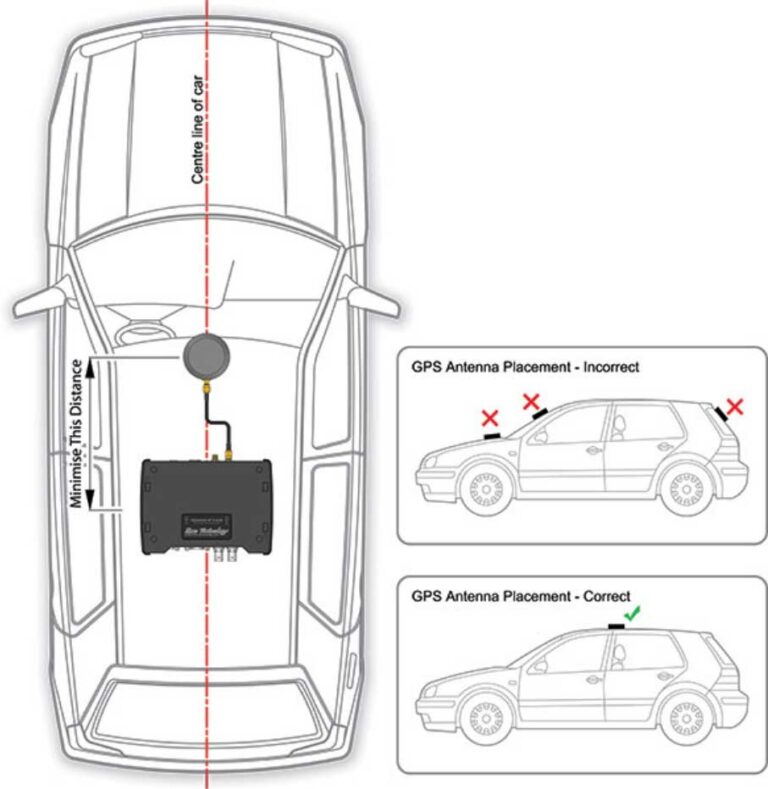
Figure 16 Recommended GNSS Antenna Placement

Automotive Antenna Placement Guide: Optimizing 5G, GNSS, V2X & Vehicle Wireless Performance

Figure 17 GNSS Antenna Placement Should Ensure the Maximum Number of Visible Satellites

Ref:https://en.racelogic.support/VBOX_Automotive/Knowledge_Base/GNSS_Antenna_Placement_and_Setup

Ref:https://www.vlg-solution.com/high_frequency_radio_antenna/Antenna_Positioning_on_Vehicle_Considerations_for_GNSS_Accuracy_2634.html

V. Guidelines for V2X Antenna Placement

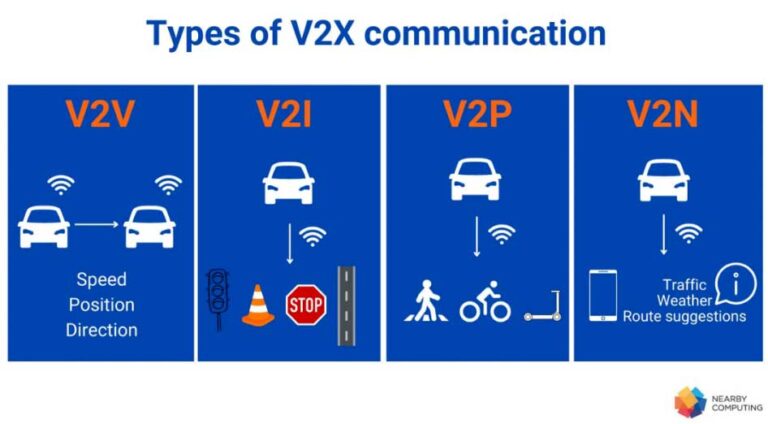
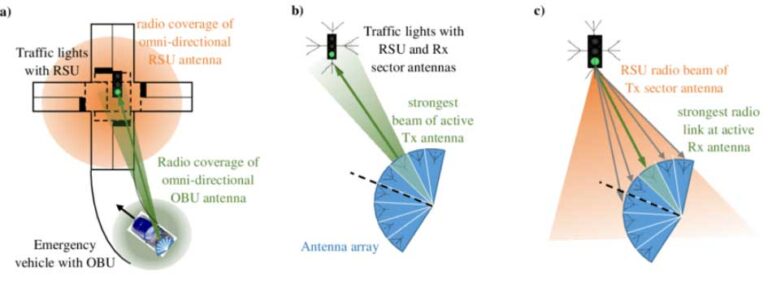
C-V2X (Cellular Vehicle-to-Everything) antennas are the backbone of modern Cooperative Intelligent Transport Systems (C-ITS), facilitating seamless data exchange between vehicles (V2V) and infrastructure (V2I). This real-time connectivity is pivotal for:

  • Traffic Flow Optimization: By broadcasting real-time road conditions, such as congestion or hazards, C-V2X allows vehicles to coordinate maneuvers and reroute dynamically, effectively mitigating gridlock before it forms.
  • Critical Emergency Response: In the event of a collision, C-V2X antennas broadcast immediate “Post-Crash Notifications” to surrounding traffic. This rapid dissemination of data minimizes secondary accidents and accelerates emergency response, significantly improving survival rates.
  • Non-Line-of-Sight (NLOS) Perception for Autonomous Driving: Unlike cameras or LiDAR, C-V2X acts as a digital sensor that “sees” around corners. By communicating with smart infrastructure (like traffic signals), the vehicle’s compute platform can preemptively adjust its trajectory, ensuring safe navigation in complex, high-density environments.

Core Requirements: To support these mission-critical applications, V2X antennas must prioritize high reliability and low latency, typically demanding 360° omnidirectional coverage and robust short-range connectivity.

Figure 18 V2X Functions

Automotive Antenna Placement Guide: Optimizing 5G, GNSS, V2X & Vehicle Wireless Performance

Figure 19 V2X Functions

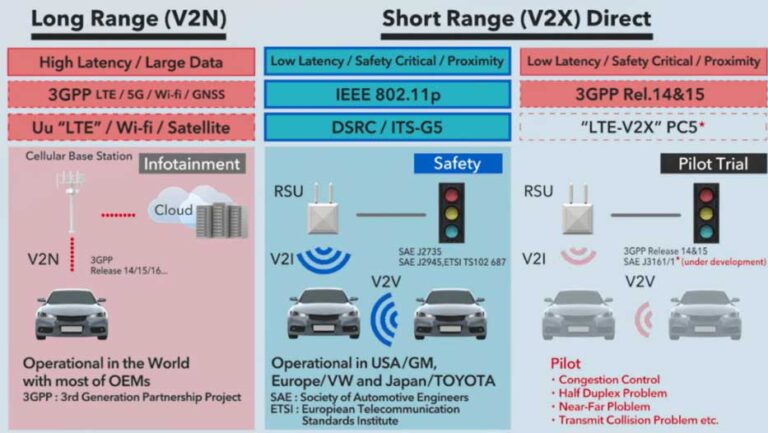
Figure 20 V2X Standards and Frequency Bands

C-V2X Antenna Frequencies C-V2X antennas operate in two main frequency ranges: 5.85 GHz–5.925 GHz and 5.875 GHz–5.905 GHz, used for vehicle-to-vehicle and vehicle-to-infrastructure communication, respectively.

Refhttps://poynting.tech/articles/newsletter-articles/aug-2024/driving-the-future-v2x-systems-and-the-role-antennas-play/

Automotive Antenna Placement Guide: Optimizing 5G, GNSS, V2X & Vehicle Wireless Performance

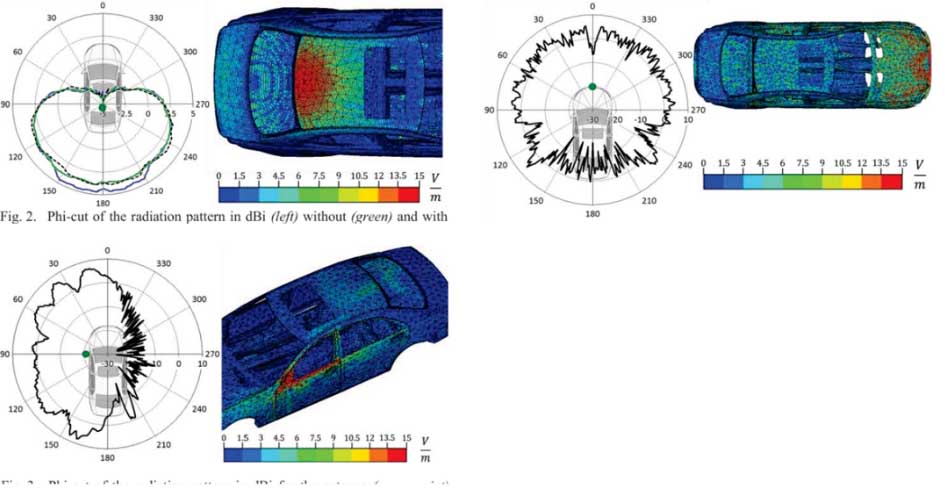
Figure 21: V2X Antenna Coverage Range

Ref:https://sci-hub.se/10.1109/EuMC.2015.7345736

Figure 22: Schematic of V2X Antenna Coverage

Polarization Strategy: Why RHCP is the Standard for C-V2X

For C-V2X applications, Right-Hand Circular Polarization (RHCP) is the industry-recommended standard due to the high mobility of vehicles.

  • The Pitfalls of Linear Polarization: In dynamic environments, linearly polarized antennas often suffer from polarization mismatch. If the transmitting and receiving antennas are not perfectly aligned, signal attenuation can plummet by as much as 30 dB, leading to frequent link drops.
  • The RHCP Advantage: Circular polarization offers superior robustness against multi-path interference and signal fading. Because the signal rotates, it remains stable regardless of the vehicle’s orientation or tilt. Even with slight misalignments common in high-speed driving, signal loss is typically capped at a mere 3 dB, ensuring a resilient and reliable communication link.

Antenna Selection: Balancing Coverage and Range

Choosing between omnidirectional and directional antennas depends on the specific deployment scenario:

  • Omnidirectional Antennas (Standard for V2V): For Vehicle-to-Vehicle (V2V) communication, omnidirectional patterns are essential. They provide $360^\circ$ situational awareness, ensuring the vehicle can send and receive safety messages from any direction.
  • Directional Antennas (V2I & Long-Range): For infrastructure-to-vehicle (V2I) setups or specialized long-range fleet tracking, directional antennas offer higher gain and greater signal stability over distance.
  • Industrial-Grade Solutions: For fixed terminals like bus stations or smart intersections, fiberglass omnidirectional antennas are the preferred choice, offering high gain combined with UV protection and IP-rated waterproofing for harsh outdoor environments.

RefC-V2X Antennas Advanced & Customized Antennas

Refhttps://ars.copernicus.org/articles/19/233/2022/

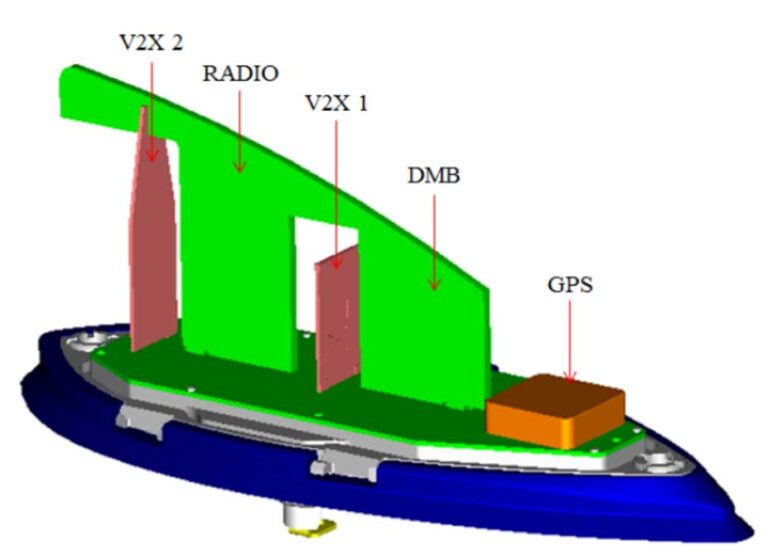
The figure below shows a shark fin combination antenna design incorporating a V2X antenna

Automotive Antenna Placement Guide: Optimizing 5G, GNSS, V2X & Vehicle Wireless Performance

Figure 23: Shark fin combination antenna with V2X antenna

Ref:https://www.ieice.org/~isap/ISAP_Archives/2018/pdf/ThP-06.pdf

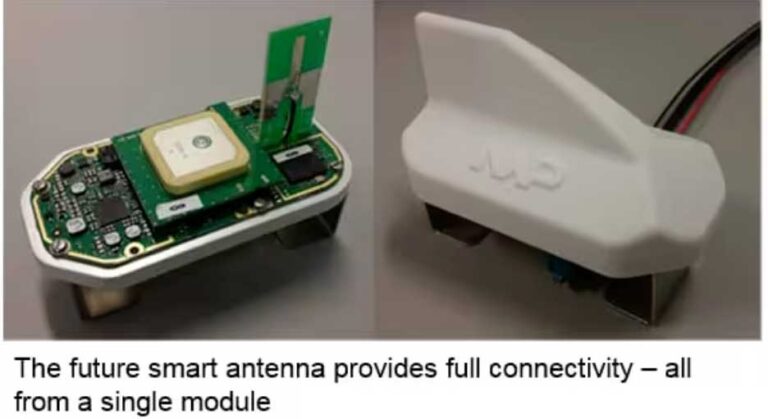
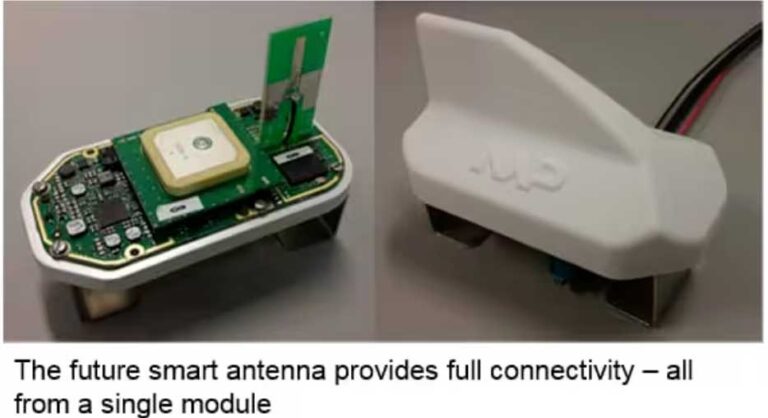
Figure 24: NXP’s smart antenna solution (including V2X)

Ref:https://www.nxp.jp/company/about-nxp/smarter-world-blog/BL-V2X-AUTOMATED-DRIVING

VI. Case Studies of Multi-Function Integrated Antenna Layouts

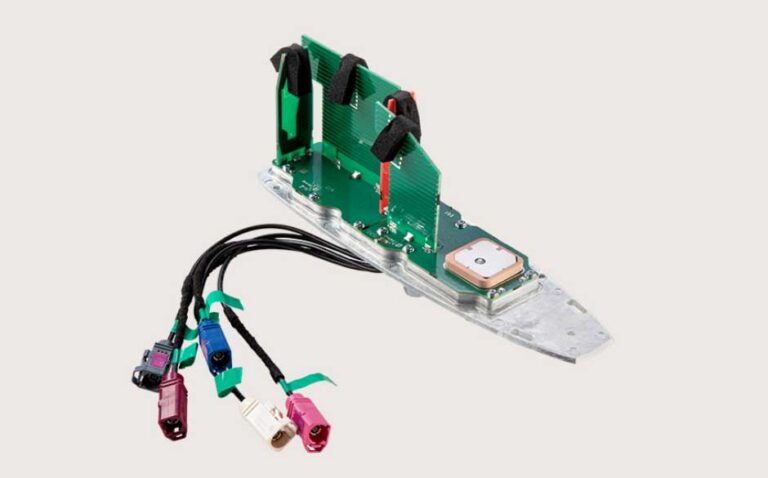
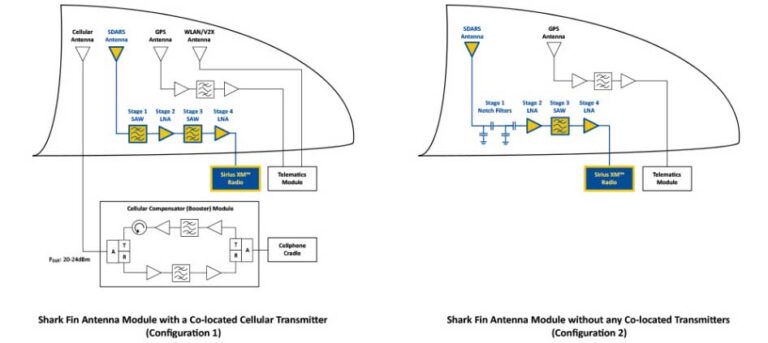
Case Study: Shark Fin Combination Antennas:

Automotive Antenna Placement Guide: Optimizing 5G, GNSS, V2X & Vehicle Wireless Performance

Figure 25: Combination Shark Fin Antenna

Figure 26: Combination Shark Fin Antenna

Automotive Antenna Placement Guide: Optimizing 5G, GNSS, V2X & Vehicle Wireless Performance

Figure 27: Combination Shark Fin Antenna

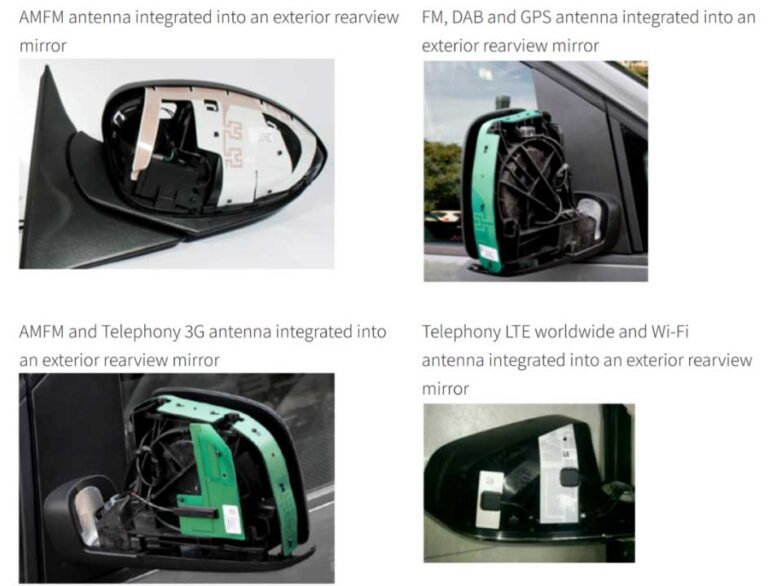
Case Study: Antennas Integrated into Rearview Mirrors:

Figure 28: Antennas with Different Functions Integrated into a Rearview Mirror

Ref:Integrated antennas – Ficosa

VII. Case Studies of Antenna + TBox Integrated Module Layouts

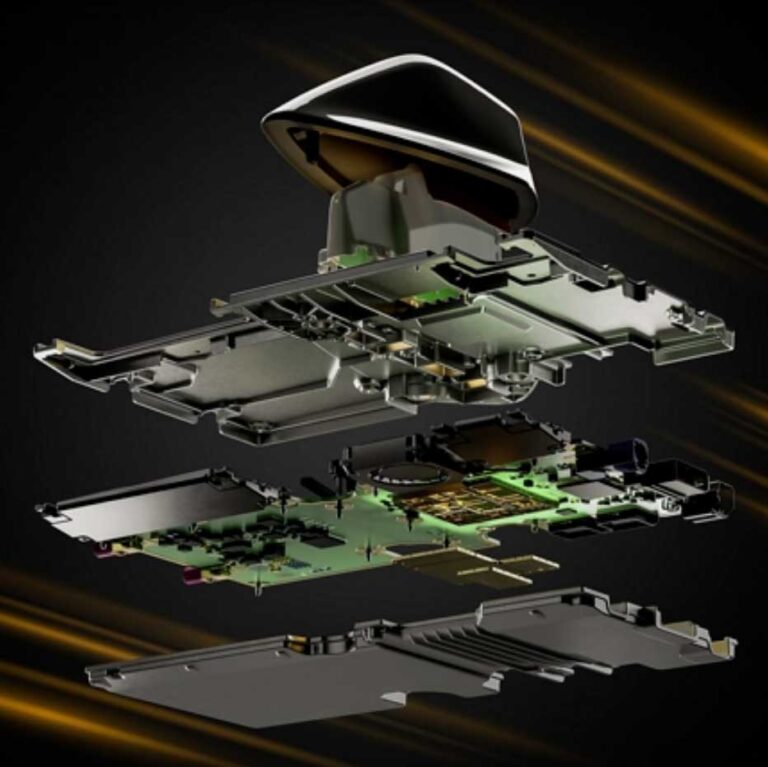
Automotive Antenna Placement Guide: Optimizing 5G, GNSS, V2X & Vehicle Wireless Performance

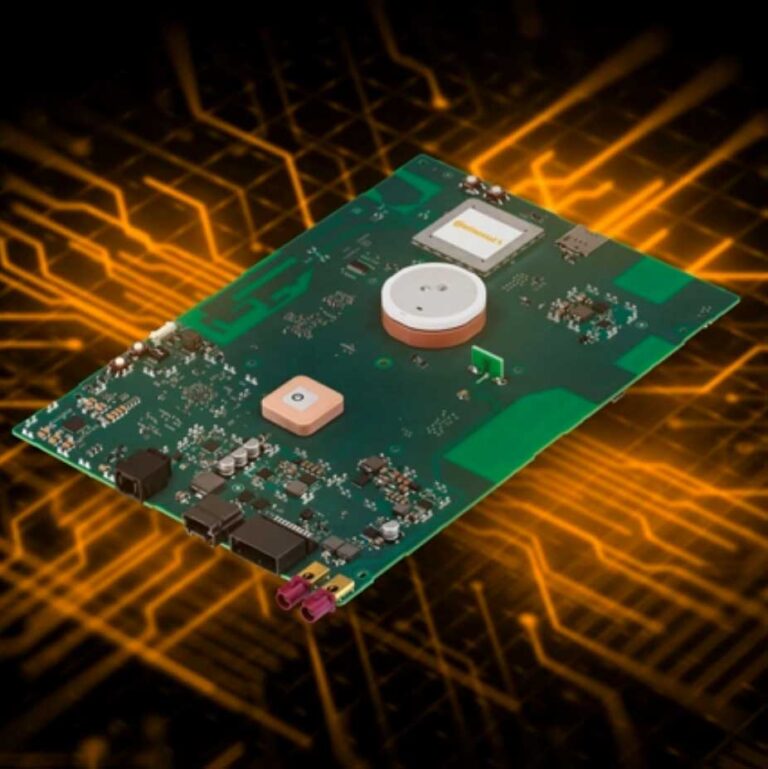
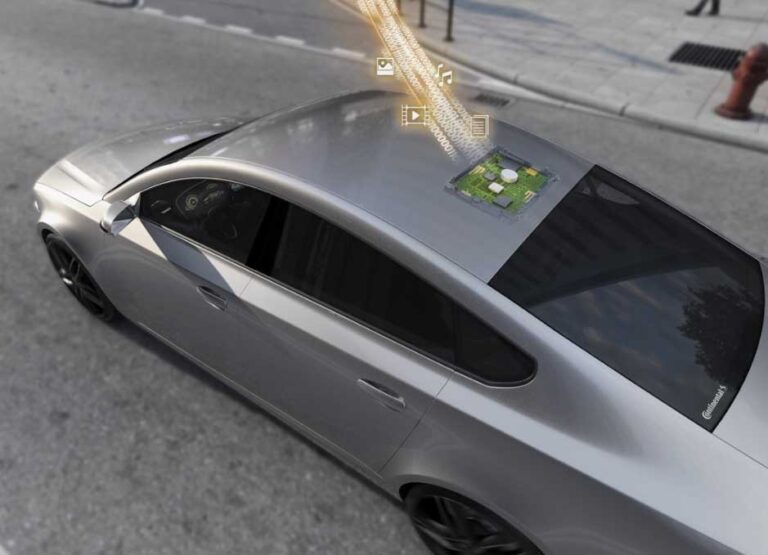
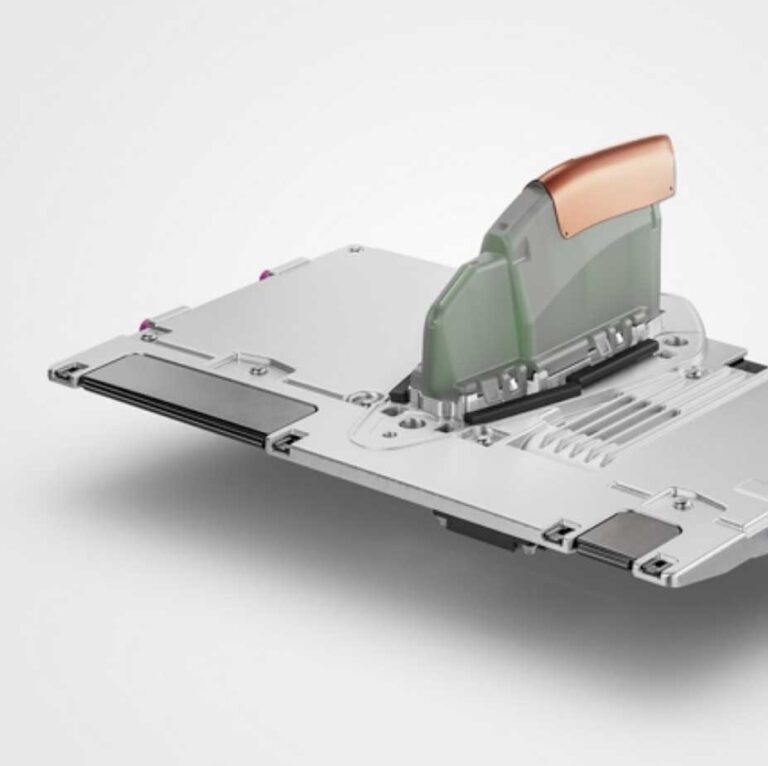
Figure 29: Continental’s Smart Antenna Module (Antenna + TBox Integrated Module)

Figure 30: Continental’s Smart Antenna Module (Antenna + TBox Integrated Module)

Automotive Antenna Placement Guide: Optimizing 5G, GNSS, V2X & Vehicle Wireless Performance

Figure 31: Smart antenna module (antenna + TBox integrated unit)

Figure 32: Layout of the smart antenna module in the vehicle

Automotive Antenna Placement Guide: Optimizing 5G, GNSS, V2X & Vehicle Wireless Performance

Figure 33: NXP’s smart antenna solution (including V2X)

Ref:https://www.nxp.jp/company/about-nxp/smarter-world-blog/BL-V2X-AUTOMATED-DRIVING

Global and China Automotive Smart Antenna Research Report, 2022-2023

Ref:http://www.researchinchina.com/Htmls/Report/2023/72859.html

VIII. Full-Vehicle Antenna Testing: Validating Performance in a 5G World

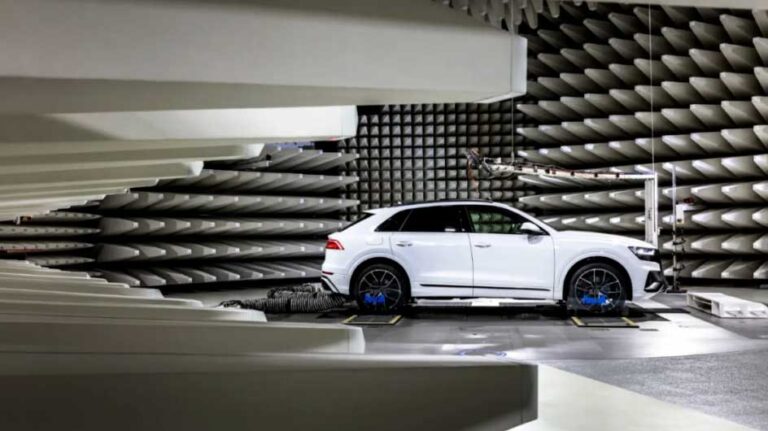
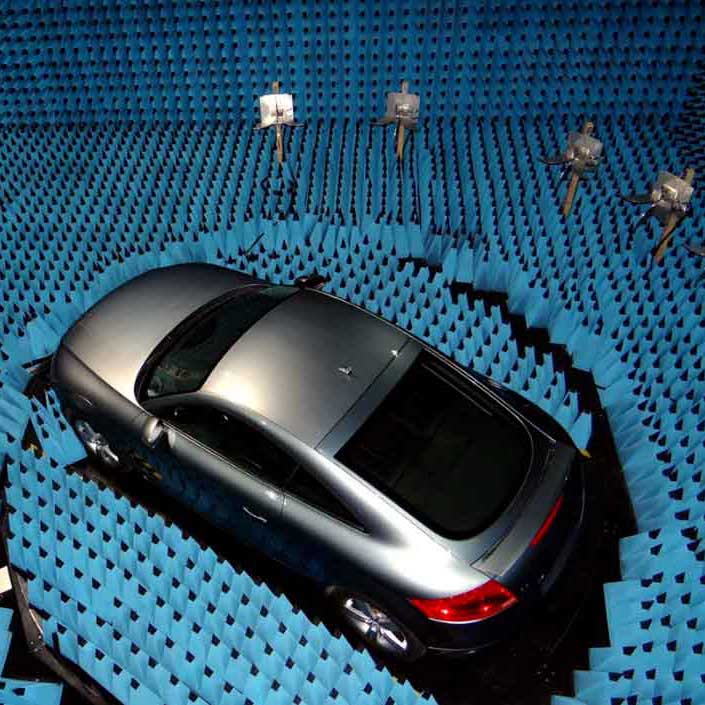
While component-level pre-certification is essential, the final “truth” of a wireless system is only revealed through Full-Vehicle Antenna Testing. In the modern automotive landscape, the vehicle body itself acts as a complex electromagnetic environment that can either enhance or degrade signal integrity.

The Legacy Gap: Why Traditional Anechoic Chambers are Falling Behind

Most legacy automotive test chambers were designed for the era of AM/FM radio, Bluetooth, and early 4G. These facilities typically cap out at 3 GHz. However, the modern “Software-Defined Vehicle” (SDV) operates on a different spectrum. With 5G NR, Wi-Fi 6, and Ultra-Wideband (UWB), frequency requirements now span from 600 MHz to over 10.6 GHz—and even up to 20 GHz for advanced sensing. Testing these high-frequency protocols in an outdated chamber is like trying to run a modern diagnostic on a vintage oscilloscope; the fidelity simply isn’t there.

Efficiency vs. Accuracy: The Shift to Multi-Probe Systems

In automotive engineering, time-to-market is everything. Traditional mechanical scanning methods—where a single probe moves around the vehicle—are notoriously slow. This long duration leads to:

  • Calibration Drift: Extended test cycles can compromise data accuracy as temperatures and equipment states fluctuate.
  • Escalating Costs: Since most antenna measurement facilities charge by the hour, slow testing directly inflates R&D budgets.

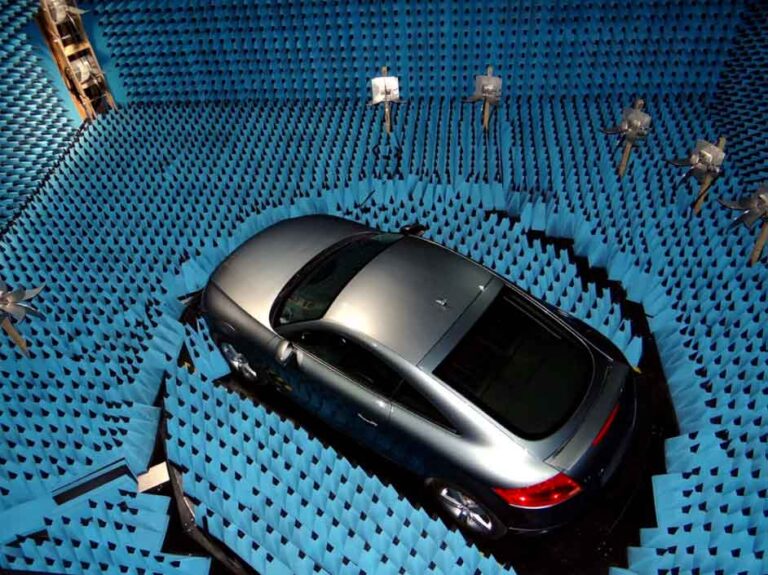
To solve this, the industry is pivoting toward Multi-Probe “Arc” Systems. By utilizing an array of simultaneous sensors, engineers can capture a full spherical radiation pattern in a fraction of the time. These high-fidelity systems provide the resolution needed for modern OTA (Over-the-Air) performance evaluation, ensuring that 5G throughput and GNSS sensitivity meet the rigorous internal standards of leading OEMs.

Figure 34: Vehicle-level wireless performance evaluation testing

Automotive Antenna Placement Guide: Optimizing 5G, GNSS, V2X & Vehicle Wireless Performance

Figure 35: Vehicle-level wireless performance evaluation testing

Ref:https://www.ednasia.com/automotive-antenna-tests-rising-in-demand-as-well-as-complexity/

Ref:https://www.rohde-schwarz.com/us/solutions/automotive-testing/automotive-emc-and-full-vehicle-antenna-testing/full-vehicle-antenna-testing/full-vehicle-antenna-testing_253949.html

IX. Best Practices for In-Vehicle Wireless Layout: From Theory to Implementation

Optimizing automotive wireless performance is a delicate balance between electromagnetic physics, industrial design, and cost-efficiency. To achieve reliable connectivity, engineers should follow a structured, three-step integration process.

Step 1: Establishing the RF Link Budget

Before a single antenna is mounted, establishing a Link Budget is mission-critical. This mathematical model predicts the total energy path from the transmitter in Vehicle A to the receiver in Vehicle B.

  • Key Variables: Designers must meticulously account for insertion losses in the Antenna Module, signal attenuation across Coaxial Cable Assemblies, and internal losses within the Telematics Control Unit (TCU).
  • Objective: By documenting these variables early, you can design active compensation (such as bi-directional amplifiers) to ensure the TCU operates within its optimal sensitivity range.

Step 2: Strategic Placement & Aesthetic Integration

The physical mounting point is the single most influential factor in signal quality. While the roof is the “Prime Real Estate” for $360^\circ$ coverage, modern trends present new challenges:

  • The Shark Fin Dilemma: While ideal for height, packing 5G, GNSS, and V2X elements into one small housing can cause mutual interference.
  • The Glass Roof Conflict: Counterintuitively, panoramic glass roofs can significantly degrade 5.9 GHz (C-V2X) performance. In such cases, shifting PC5 elements to the rear of the module is necessary to maintain rearward connectivity.
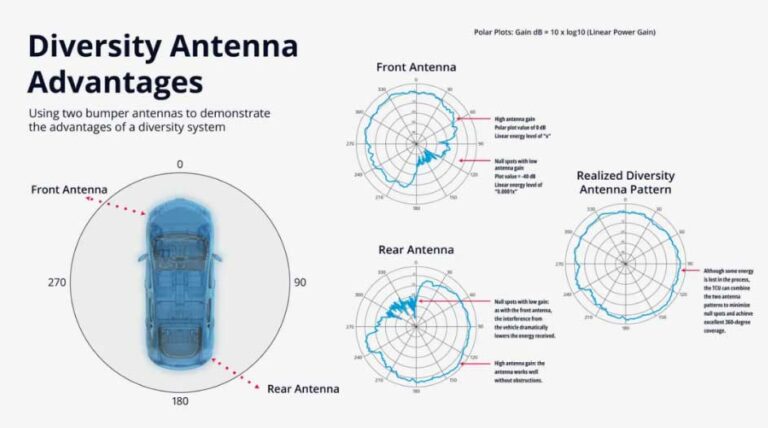
  • Identifying Dead Zones: Antennas placed in bumpers or windshields often suffer from structural shadowing. Utilizing Polar Diagrams is essential to visualize these “radiation nulls” and adjust placement to avoid signal blockage by the vehicle’s metal chassis.

Step 3: Leveraging Antenna Diversity Systems

When a single mounting point cannot meet performance KPIs, a Diversity System is the solution. By deploying two complementary antennas (e.g., front-left and rear-right), the system can effectively cancel out blind spots. This dual-antenna architecture ensures that while one node might be shadowed by the vehicle body, the other maintains a high-gain link, drastically improving the reliability of PC5 sidelink communications.

Figure 36: Two Complementary Antennas Optimizing Signal Coverage

Step 4: RF Cabling and Interconnect Optimization

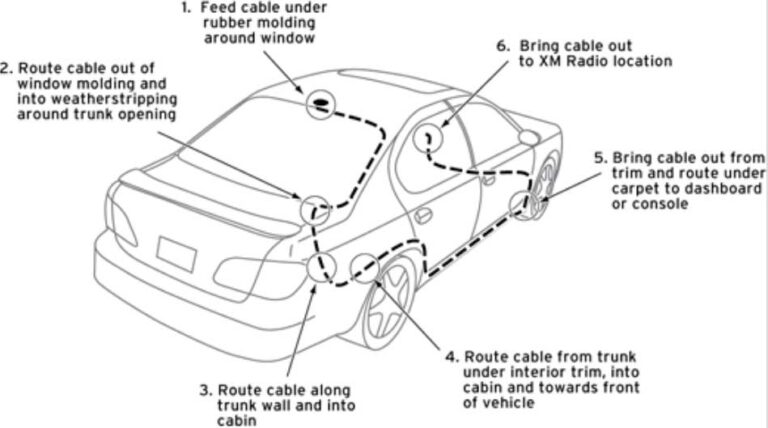
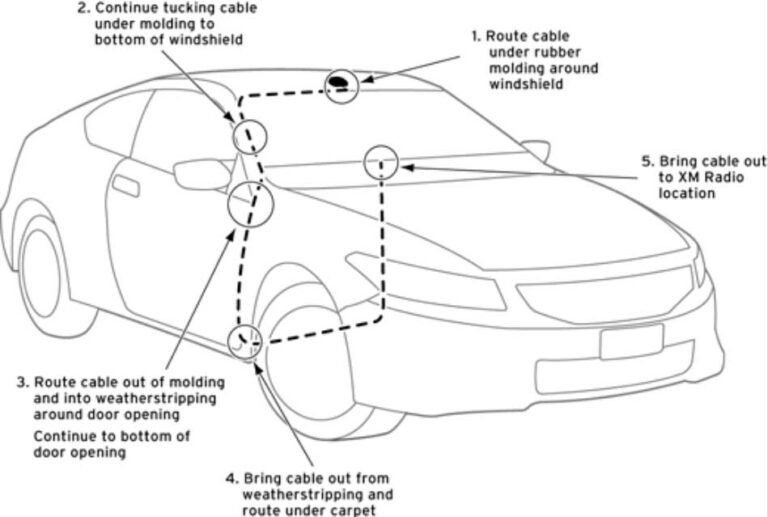
Once the placement is finalized, the focus shifts to the “nervous system” of the wireless setup: the RF cabling. Signal attenuation in cables is often the silent killer of wireless performance.

  • The Length vs. Loss Trade-off: While shorter cables minimize signal decay, vehicle architecture often demands runs exceeding 2 meters. Engineers must choose high-performance 50-ohm coaxial cables, but this comes with a “weight and cost penalty.”
  • Connector Integrity: Every interconnection point introduces potential mismatch and loss. Utilizing automotive-grade, high-frequency connectors is non-negotiable for maintaining system impedance and reliability under vibration.
  • Active Compensation: In scenarios where long cable runs are unavoidable, a Bi-directional Amplifier (Compensator) should be integrated. This device boosts the Uplink (UL) signal to counteract system losses and stabilizes the Signal-to-Noise Ratio (SNR) for the Downlink (DL), ensuring the TCU receives a clean, actionable signal.

Step 5: Iterative Validation — From Simulation to Prototype

A successful wireless layout is never “one and done.” It requires a rigorous validation loop to bridge the gap between theory and real-world physics.

  • Early-Stage Simulation: Use electromagnetic (EM) simulation software to refine the initial Link Budget. This phase identifies potential interference between internal antenna elements (like 5G and GNSS) before physical parts are manufactured.
  • Prototype Testing: Once a physical mule is available, move to anechoic chamber testing. Real-world data from Polar Diagrams and Throughput Tests will likely reveal discrepancies from the simulation, allowing for final fine-tuning of antenna orientation or software-level gains.
  • System-Level Sign-off: The final goal is to ensure the entire RF path—from the antenna tip to the TCU chipset—meets the stringent KPIs for safety-critical applications like autonomous emergency braking or high-speed V2V alerts.

Ref:5 Best Practices for Optimizing Vehicle Connectivity

https://www.designnews.com/auto-components/5-best-practices-for-optimizing-vehicle-connectivity

Ref:Antenna Placement Examples – Analysis and Simulations | WIPL-D

X. Advanced Considerations: Interference, Multi-band, and Vehicle-Specific Layouts
Beyond basic placement, achieving “Automotive Grade” connectivity requires addressing fine-grained environmental factors. Here are the critical considerations for hardening your wireless architecture.

1. EMI Mitigation and Signal Integrity

Vehicles are “electromagnetic minefields.” To protect sensitive 5G and V2X links from Interference (EMI), follow these clearance rules:

  • Distance from Noise Sources: Maintain a 12 to 18-inch buffer from high-EMI components like alternators, high-voltage inverters, and infotainment processors. This is vital for 5G NR, which has a higher noise floor sensitivity.
  • Combating Multipath Interference: Metallic surfaces cause signal reflections that lead to destructive interference. Elevating the antenna by 1 to 2 inches using non-metallic spacers can significantly clean up the radiation pattern and improve RX sensitivity.

2. Multi-band Optimization (Sub-6GHz vs. mmWave)

Modern cellular layouts must accommodate a spectrum of frequencies, each with unique propagation physics:

  • Low-Band (600–900 MHz): Focus on maximizing ground plane consistency for long-range stability.
  • Mid-Band (1.8–2.6 GHz): The “sweet spot” for 4G/5G; requires clear line-of-sight (LoS) to maintain high throughput.
  • High-Band/mmWave (24–40 GHz): Extremely sensitive to blockages. Front-roof mounting is recommended in urban deployments to maximize the “First Fresnel Zone” clearance when approaching cell towers.

3. Tailored Layouts by Vehicle Architecture
One size does not fit all. Antenna placement must adapt to the physical chassis of the vehicle:

Vehicle Type

Recommended Placement

Technical Justification

Sedans / Coupes

Rear roof (6-8″ from window)

Avoids engine EMI; balances drag and gain.

Pickups / Trucks

Front of the cargo bed roof

Maximizes height; avoids trailer shadowing.

SUVs (Panoramic)

Forward of the sunroof

Prevents signal attenuation from specialized glass coatings.
Commercial Vans

Front roof edge

Ensures signal penetration above high-wall cargo areas.

Buses

Rear roof section

Isolates antennas from front-mounted engine noise.

Close Menu