What is Antenna Polarization?​

Antenna polarization defines the orientation of electromagnetic waves, directly shaping signal quality and reliability. Understanding its types and applications helps optimize wireless communication across fields like 5G, satellite, and IoT.

Table of Contents 

Introduction

What is Antenna Polarization?

Types of Antenna Polarization

The Importance of Antenna Polarization

Applications of Antenna Polarization

Challenges Associated with Antenna Polarization

Future Trends in Antenna Polarization
What is Antenna Polarization

Introduction

Antenna polarization​ is a fundamental concept in wireless communications and electromagnetic theory. It describes the direction of the electric field in the electromagnetic waves emitted or received by an antenna.

Understanding antenna polarization is crucial for optimizing communication systems, as it directly impacts signal quality, transmission efficiency, and overall system performance.

This article will delve into the various types, characteristics, applications, and influence of polarization in modern communication technologies.

What is Antenna Polarization

What is Antenna Polarization?

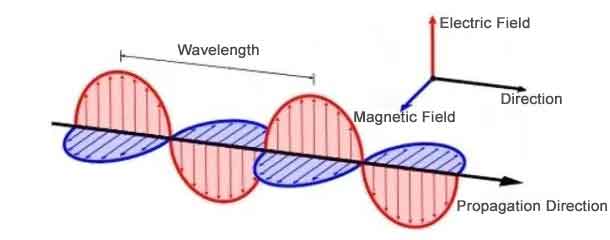
Polarization refers to the direction of the electric field vector within an electromagnetic wave.

When an antenna transmits or receives a signal, it generates an electromagnetic wave with specific polarization characteristics. An antenna’s polarization is defined by the direction of its electric field relative to the Earth’s surface.

Correct alignment of the polarization between transmitting and receiving antennas is essential for maximizing signal strength and minimizing losses caused by polarization mismatch.

Types of Antenna Polarization

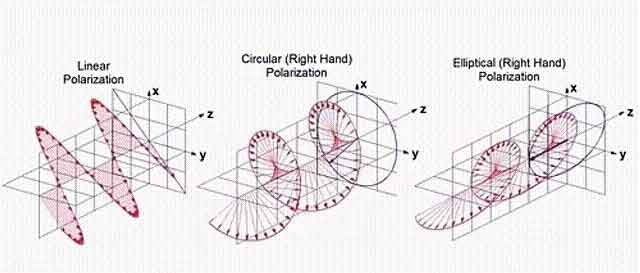
Antenna polarization can be categorized into several types, each possessing unique characteristics and applications. There are primarily three main types: linear polarization, circular polarization, and elliptical polarization.

Types of Antenna Polarization

Antenna Polarization - Linear Polarization

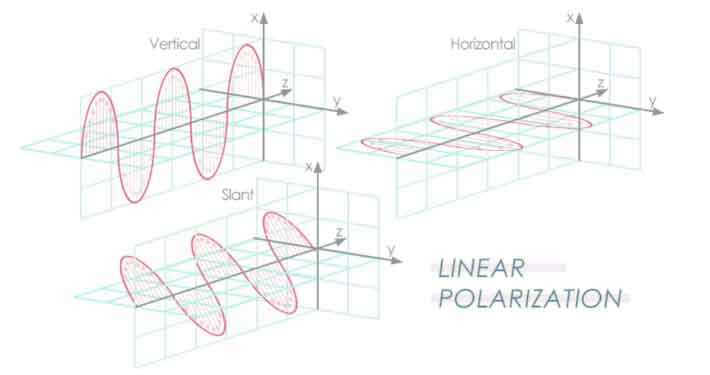
Linear polarization occurs when the electric field oscillates within a single plane. This type can be further subdivided into three categories:

Vertical Polarization

In this configuration, the electric field oscillates vertically. Vertical polarization is commonly used in terrestrial communication systems because it enables nearly omnidirectional propagation in the horizontal plane, meaning the signal propagates uniformly in all horizontal directions.

Horizontal Polarization

Here, the electric field oscillates horizontally. Horizontal polarization is typically employed in broadcasting applications where signals need to cover extensive areas.

Oblique Polarization

This type involves the electric field oscillating at an angle (typically ±45 degrees) relative to the horizontal or vertical plane. Oblique polarization can improve signal reception in environments with obstacles or multipath effects, as it can improve reception of signals that may have been reflected or scattered.

Due to its simplicity and effectiveness in many applications, linear polarization is widely used. However, it may encounter signal loss issues when misalignment exists between transmit and receive antennas.

Linear Polarization

Antenna Polarization - Circular Polarization

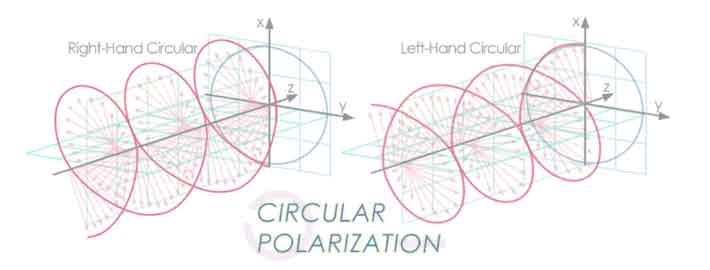
Circular polarization involves the rotation of the electric field vector as the wave propagates. This type can be divided into two categories:

Right-Hand Circular Polarization (RHCP)

Lorem ipsum dolor sit amet, consectetur adipiscing elit. Ut elit tellus, luctus nec ullamcorper mattis, pulvinar dapibus leo.

Left-Hand Circular Polarization (LHCP)

Lorem ipsum dolor sit amet, consectetur adipiscing elit. Ut elit tellus, luctus nec ullamcorper mattis, pulvinar dapibus leo.

Circularly polarized antennas offer particular advantages in satellite communications and mobile applications where antenna orientation may vary. They deliver superior performance in multipath propagation environments by mitigating signal fading caused by reflections from buildings or terrain.

To achieve circular polarization, two conditions must be met:

  1. The two orthogonal components of the electric field must have equal amplitudes.
  2. These components must be 90 degrees out of phase.
Circular Polarization

Antenna Polarization - Elliptical Polarization

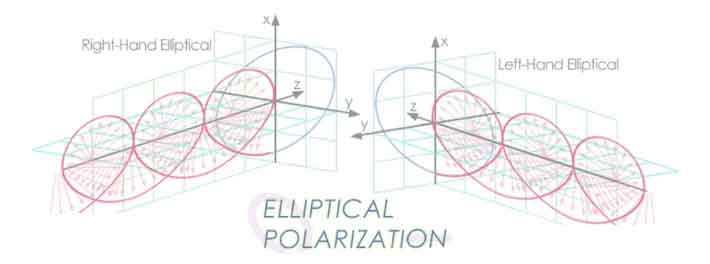
Elliptical polarization is a more general form that arises when two linearly polarized waves of unequal amplitude combine to produce an elliptical wave.

This type of polarization can be viewed as a special case of both linear and circular polarization.

Elliptical polarization is less common than linear or circular polarization but offers benefits in certain applications, particularly where signal conditions vary significantly.

Elliptical Polarization

The Importance of Antenna Polarization

Signal Integrity

Properly aligned polarization between transmit and receive antennas ensures maximum signal strength and minimizes losses from reflections or scattering.

Multipath Mitigation

Circular and oblique polarization are particularly effective at reducing the effects of multipath propagation, which can cause disruptive interference and signal fading.

Diversity Techniques

Modern wireless systems often employ multiple-input multiple-output (MIMO) technology, leveraging different polarizations to enhance throughput and reliability by optimizing performance through spatial diversity.

Environmental Adaptability

Certain polarization types are better suited for specific environments. For instance, circularly polarized antennas perform well in urban settings where signals may reflect off buildings.

Applications of Antenna Polarization

Telecommunications

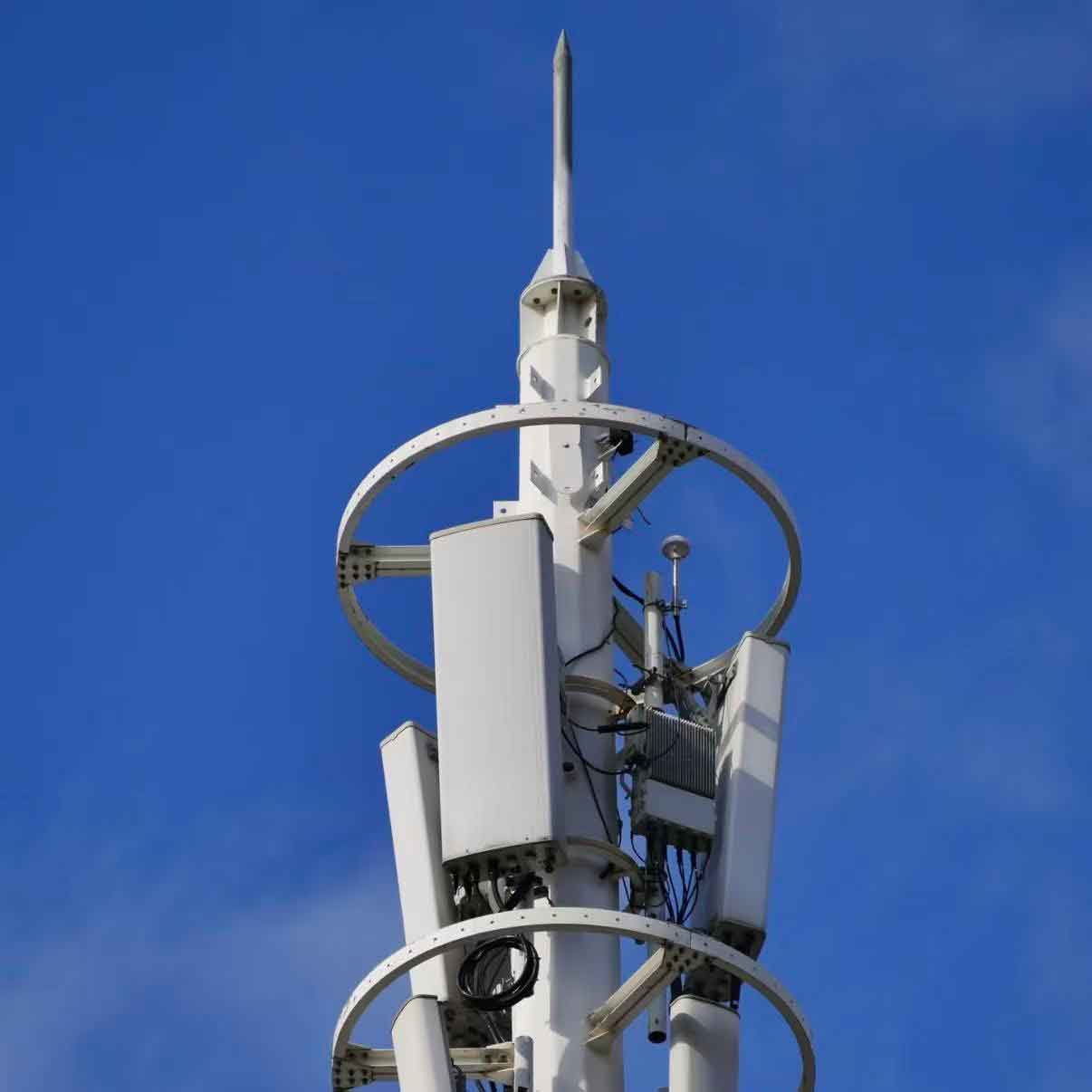
Both linear and circular polarization are widely used in cellular networks, satellite communications, and broadcasting services to ensure reliable long-distance transmission.

Telecommunications​

Radar Systems

Different polarizations can enhance target detection capabilities and reduce interference from unwanted reflections.

Radar Systems​

Remote Sensing

In satellite imaging and weather monitoring, varied polarizations aid in gathering information about surface characteristics and atmospheric conditions.

Remote Sensing​

Wireless Networks

Modern Wi-Fi systems utilize multiple distinct polarizations to boost data throughput and minimize interference between users.

Wireless Networks

Challenges Associated with Antenna Polarization

Despite the evident importance of antenna polarization, several challenges persist:

  • Polarization mismatch loss

    Significant signal loss—in some cases up to 3 dB—can occur when transmit and receive antennas are mismatched (e.g., one vertically polarized and the other horizontally polarized), compromising communication reliability.
  • Environmental Interference

    Numerous reflective surfaces in urban environments can complicate signal propagation patterns, making it difficult for certain polarization types to maintain integrity.
  • Design Complexity

    Effectively incorporating multiple polarizations into designs requires advanced engineering techniques and careful consideration of factors including size constraints and material properties.

Future Trends in Antenna Polarization
As wireless communication continues to evolve—particularly with advancements like 5G technology—antenna polarization will play an increasingly critical role:

  1. MIMO Technology

    Integrating multiple antennas using different polarization modes enhances spectrum efficiency and boosts data rates for next-generation networks.
  2. Smart Antennas

    Smart antennas with adaptive beamforming can also adjust their polarization in real time to optimize performance under changing conditions.
  3. Integration with IoT Devices

    As the Internet of Things (IoT) expands, devices will require efficient communication methods that leverage diverse polarizations to manage increasing data traffic while maintaining low power consumption.
  4. Research Innovations

    Ongoing exploration of novel materials, such as metamaterials, may yield new designs that enhance antenna performance across different polarizations while minimizing size and weight constraints.

Conclusion

Antenna polarization is a fundamental concept that significantly impacts the performance of wireless communication systems, spanning diverse applications from telecommunications to remote sensing technologies.

By understanding different polarization types—including linear, circular, and elliptical—along with their respective advantages, disadvantages, and challenges, engineers can design more efficient antennas tailored to specific requirements.

As technology advances, particularly in MIMO systems and smart antennas, recognizing the importance of mastering antenna polarization will remain a critical factor in achieving reliable communication links in complex environments.

Close Menu