What is an Antenna Array?

This article provides a clear and practical overview of Antenna Array Fundamentals Explained, covering key concepts such as dipoles, antenna elements, array gain, and beamforming principles. It explains how multiple antenna elements work together to form directional beams and improve signal performance. The article also introduces phase control, beam patterns, and the role of antenna arrays in modern wireless systems such as 5G and MIMO. This overview is intended for engineers and readers seeking a solid foundation in antenna array design.

Antenna Array Fundamentals Explained

Introduction

An antenna array consists of two or more antenna elements arranged and excited according to defined rules, so that electromagnetic waves radiate directionally in space. Instead of relying on a single radiator, engineers use antenna arrays to control beam direction, beam width, and signal strength more precisely.

Before diving deeper into antenna arrays, it is useful to review antenna elements and the fundamental components that form the basis of array design. This step-by-step approach helps clarify how complex radiation patterns emerge from simple structures and sets the stage for Antenna Array Fundamentals Explained in a practical engineering context.

Fundamental Concepts of Antenna Arrays

At the most basic level, antenna arrays build upon two key components: dipoles and antenna elements.

Dipole

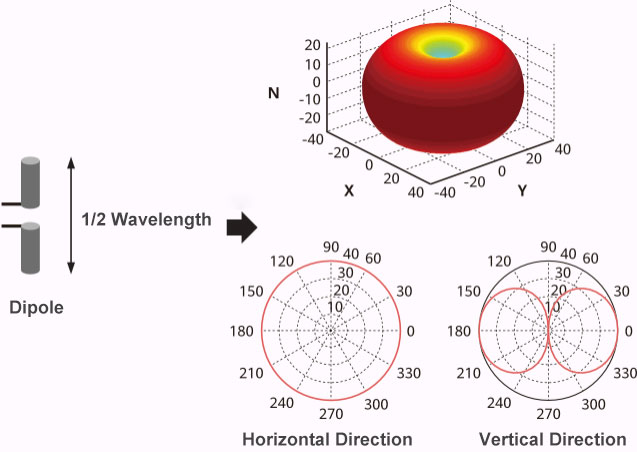
A dipole forms when two symmetrical conductors align so that their total length equals half the operating wavelength. At this length, the induced current resonates at the target frequency, which maximizes radiation efficiency. Engineers therefore refer to this structure as a half-wave radiator, commonly known as a dipole, as illustrated in the picture. 

In modern 5G systems, millimeter-wave frequencies correspond to wavelengths measured in millimeters. As a result, antennas become extremely compact. Consequently, designers can integrate far more radiating elements into the same antenna panel compared with sub-6 GHz systems.

Antenna Array Fundamentals Explained

Antenna Element (also referred to as a radiating element)

By combining a dipole with a reflector, engineers create a single antenna element. The reflector redirects energy forward, allowing reflected and direct waves to superimpose constructively. As a result, the antenna element produces directional radiation rather than omnidirectional coverage. Understanding this building block is essential for Antenna Array Fundamentals Explained, since large arrays simply replicate and arrange these elements in space.

Antenna Array Fundamentals Explained

Antenna Arrays and Array Gain

Antenna Array

A single antenna element acts as the basic unit of radiation. However, during feed and system design, engineers typically arrange multiple elements into a specific geometry to form an antenna array. By coordinating these elements, the array combines radiated energy and achieves significantly higher gain than a single element alone.

Antenna Array Gain

Engineers define antenna array gain as the ratio between the radiated power produced by an array at a given spatial point and the power produced by a single antenna element at the same point.

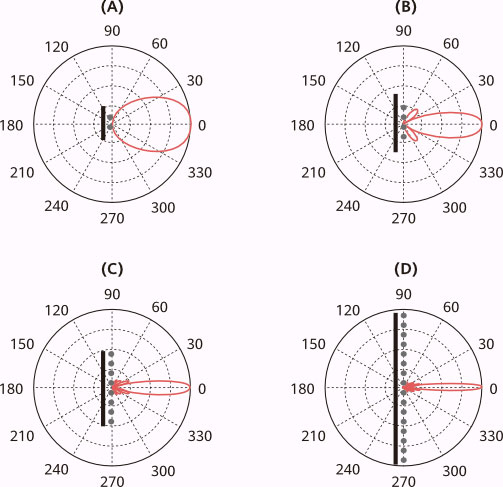
For example, two antenna elements can already form a directional beam. Moreover, under equal transmit power, increasing the number of elements narrows the beam width and concentrates energy more effectively. Therefore, for an array with N elements, engineers often approximate the maximum array gain as:

Ga (dB) = 10 log₁₀(N)

This relationship highlights one of the most intuitive results of Antenna Array Fundamentals Explained: more elements lead directly to higher directional gain.

Phase Difference and Signal Superposition Principle

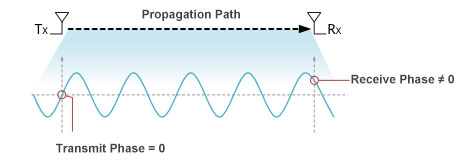
After antenna elements transmit wireless signals, those signals propagate through space before reaching the receiving antenna. During propagation, the signal phase changes continuously.

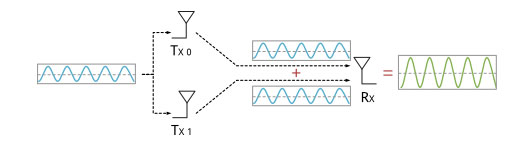
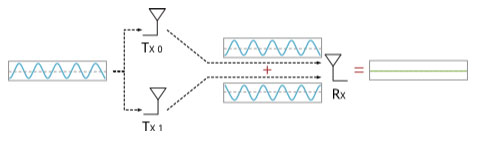
When multiple antenna elements transmit simultaneously, signals from different elements arrive at the receiver with different phases. Depending on these phase differences, the signals may combine constructively or destructively. This mechanism forms the physical foundation of array beamforming.

Scenario 1

The same signal emitted from two elements arrives at the receiver with identical phase. The two signal energies fully combine at the receiver, resulting in maximum combined energy.

Scenario 2

When the same signal is emitted from two antenna elements and arrives at the receiver with completely opposite phases, the energies of the two signals are fully canceled at the receiver, resulting in zero combined energy.

Relationship Between Antenna Number and Beam Pattern

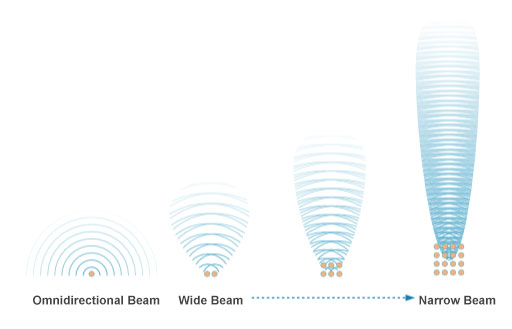
1、Using a Single Antenna

Electromagnetic waves radiate in all directions, forming an omnidirectional beam with a relatively short signal coverage range.

2、Using Two or More Antennas

When electromagnetic waves formed by multiple antennas meet in space, they can interfere constructively or destructively to create new waveforms.

3、Using Two Antennas

Signal radiation forms a wide beam, extending farther than an omnidirectional beam. More antennas result in narrower radiation beams and greater signal coverage.

4、Large-Scale Array Antennas

Signals can be further focused into narrow beams, achieving even greater coverage distances.

Beamforming

Beamforming is a technique that adjusts beam width and direction by controlling the amplitude and/or phase of signals in the RF chain. This enhances energy efficiency in signal transmission, reduces interference between users, and increases system capacity.

Antenna Array Fundamentals Explained

In implementation, beamforming is achieved by adjusting the phase and amplitude of signals emitted by each antenna element, causing the radiation beam to converge toward a specific direction.

Antenna Array Fundamentals Explained

As shown in the figure, for signals received by the terminal from antennas in the same horizontal row, phase differences exist between different signal propagation paths. Based on the relationship between wavelength and path length differences, the required initial phase differences can be calculated.

After calculation, we obtain the initial phase information of the antenna array. By then adjusting the phase and amplitude of the signal emitted by each antenna element, we can achieve specific beamforming effects.

Gain Types and Functions of Antenna Arrays

Array Gain: Enhances the average downlink signal-to-noise ratio (SNR)

For array antennas, the signal received at the receiver is the result of the superposition of signals from multiple antenna elements.

For noise N: Noise from different antenna elements is uncorrelated, so the combined noise power at the receiver remains unchanged;

For useful signal S: Useful signals from different antenna elements are correlated, so the combined signal power increases linearly with the number of antenna elements;

Therefore, using an antenna array enables array gain through multi-antenna combining, effectively improving the average signal-to-noise ratio (SNR).

Interference Suppression Gain: Enhances uplink average SINR

In multi-antenna systems, interference cancellation algorithms like IRC effectively improve the average SINR (Signal-to-Interference-plus-Noise Ratio), delivering interference-scenario gains. For antenna arrays, greater antenna element count correlates with superior interference suppression capability.

Spatial Diversity Gain: Reduces relative SNR fluctuations

Wireless channel fading causes fluctuations in received signal SNR. Random fading on single paths is unavoidable, whereas multipath transmission offers diversity gain (each path is independent and experiences distinct fading; reliable transmission is maintained as long as one path maintains sufficient signal strength). Multipath transmission of signals from different antenna elements in an array significantly reduces the probability of complete signal fading, thereby minimizing SNR fluctuations.

Spatial multiplexing gain: Increases the number of transmitted streams and capacity

By transmitting multiple data streams simultaneously from different antenna elements, the transmitter forms a MIMO system when the receiver also uses an antenna array. As antenna counts increase and beams narrow, beam correlation decreases. Consequently, the system supports more parallel data streams and higher overall capacity—one of the most powerful outcomes of Antenna Array Fundamentals Explained.

Close Menu