
RFID in Modern Sports: From Timing to Intelligence

RFID in Modern Sports: From Timing to Intelligence
From marathon timing systems to intelligent athlete analytics, RFID in Modern Sports is quietly redefining how competition is measured and experienced.
What began as a tool for identification has evolved into a data-driven infrastructure powering performance optimization, safety, and fan engagement across the global sports industry.
Table of Contents
- Introductin
- RFID in Modern Sports: Applications in Running Events
- RFID Applications in Team Sports
- RFID in Modern Sports: Timing and Tracking Systems
- Pushing Boundaries in Extreme Sports
- Athlete Performance Tracking
- Enhancing Fan Experience
- Future Outlook: The Evolution of RFID in Modern Sports
Introduction
Radio Frequency Identification (RFID) technology plays a vital role in sports by identifying and tracking objects or individuals via radio waves.
It consists of tags containing unique identification codes and readers that wirelessly capture this information without requiring direct contact or line-of-sight.This technology enhances efficiency and accuracy in sporting events, particularly in timing, athlete performance analysis, and fan services.
As a foundational enabler of data-driven competition, RFID in Modern Sports is reshaping how events are measured, analyzed, and experienced.

RFID in Modern Sports: Applications in Running Events
In running events, RFID is primarily used for precise timing and participant tracking.
Competitors typically wear RFID tags on their bibs or shoes, while readers at the start, finish, and intermediate checkpoints record their passage times. For instance, the Berlin Marathon employs a distributed RFID timing architecture deploying 184 activation points along its 42-kilometer course.
Each reader features dual-polarized antennas that use Time Difference of Arrival (TDoA) algorithms to map the spatiotemporal coordinates of 50,000 participants into a four-dimensional spatiotemporal data model.
Data from 2024 shows this technology reduced course congestion by 41%, achieving the lowest participant collision rate in the event’s history.
RFID Applications in Team Sports
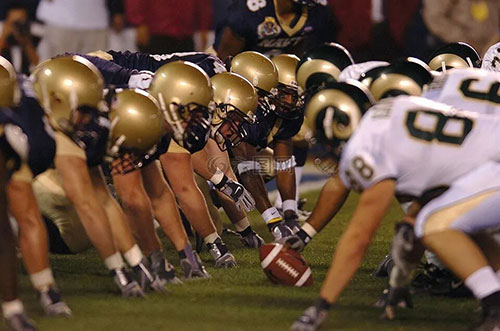
In team sports like NFL football, RFID tags embedded in players’ shoulder pads and chips in the football itself track their positions, speeds, and movement trajectories. This helps coaches analyze performance, optimize training, and develop game strategies.
For instance, Zebra Technologies has partnered with the NFL to deploy RFID technology in all games since 2015 (Zebra RFID in NFL).
RFID in Modern Sports: Timing and Tracking Systems
RFID serves as a core technological foundation for officiating and timing decisions in modern sports.
Participants wear RFID tags on bibs or shoes, while readers at the start, finish, and intermediate checkpoints record passage times with high precision. The 1994 Berlin Marathon pioneered early large-scale electronic timing systems, laying the groundwork for RFID-based solutions and addressing the limitations of manual timing in large-scale events.
In recent years, UHF RFID technology has become mainstream, supporting timing points up to 16 meters wide and making it suitable for international marathons. Beyond running events, RFID is also used in cycling races and obstacle courses, where readers placed at key locations ensure course compliance while enhancing transparency and safety.
Wimbledon’s intelligent sideline system combines 96 GHz millimeter-wave radar with RAIN RFID to create a dynamic electromagnetic boundary. When embedded court markers cross preset thresholds, an FPGA-based accelerator predicts ball trajectories within 7 μs, reducing Hawk-Eye judgment error from ±3.6 mm to ±0.9 mm.

Pushing Boundaries in Extreme Sports
Electromagnetic Lifeline for Mountain Rescue
Switzerland’s avalanche rescue system employs a LoRa-RFID hybrid architecture. Trapped individuals’ snow suit tags maintain 22dBm transmission power even at -20°C.
2023 field data shows this system reduced average location time from 35 minutes to 6 minutes 47 seconds, resulting in a fourfold increase in successful golden-hour rescues.These advances further demonstrate how RFID in Modern Sports extends beyond competition into safety-critical environments.
Hydrodynamics in Deep-Dive Monitoring
Pressure-resistant RFID tags worn by world-record-holding freedivers transmit blood oxygen data via surface acoustic wave technology at 217 meters depth. Sensors utilize tantalum capacitor energy storage, enabling 48-hour continuous monitoring in fully watertight environments.
This advances deep-dive medicine by establishing new decompression sickness early warning models.

Athlete Performance Tracking
A Paradigm Shift in Biomechanical Monitoring
Traditional inertial measurement units (IMUs) face limitations in battery life and data transmission bottlenecks. In contrast, passive RFID tags utilizing backscatter technology enabled real-time modeling of pressure distribution per square centimeter at Real Madrid’s training facility.
Research on Cristiano Ronaldo’s signature “elevator ball” revealed peak foot pressure of 25.7 N/cm² at ball contact. Data transmission via EPC Gen2 protocol at 4W power maintained latency below 8ms.
Ultra-High-Resolution Capture of Movement Trajectories
Manchester City’s youth academy deployed a 3D-RFID positioning system using phase-difference ranging algorithms, establishing 384 reference nodes across an 80-meter training field.
Experimental data shows that capture error for sudden stops and directional changes by 17-year-old trainees decreased from ±1.2 meters with traditional GPS to ±3.8 centimeters. Knee internal rotation angle resolution reached 0.7 degrees, providing a new dimension of data support for preventing ACL injuries.
Dynamic Metabolic Monitoring
Nike and Texas Instruments collaborated on a smart jersey project embedding flexible RFID humidity sensor arrays within the fabric.
During the 2023 Tour de France, this technology captured thousands of sweat electrolyte data points at five-second intervals. Utilizing frequency-hopping transmission at carrier frequencies between 902–928 MHz, it successfully detected three early-stage rhabdomyolysis cases.
The Emergent Revolution in Device Intelligence
Wilson’s smart tennis racket, equipped with a built-in three-axis RFID gyroscope, captured peak racket face angular velocities of 4720°/s during elite players’ swings at the US Open. Through dynamic Q-value adjustment technology, it maintained packet loss rates below 0.03%.
This discovery directly prompted the ITF to revise swing mechanics standards in its youth training curriculum.

Enhancing Fan Experience
RFID technology significantly improves fans’ stadium experience, primarily through ticket management, cashless payments, and security controls. RFID wristbands or cards enable fans to enter quickly, reducing queue times, and store credit card information to support on-site purchases of food and souvenirs.
For example, the Tampa Bay Lightning provide season ticket holders with jerseys embedded with RFID chips, facilitating entry and purchases while boosting fan loyalty. In large stadiums, RFID also aids crowd management by tracking wristband locations to optimize foot traffic distribution and prevent congestion.
For instance, the Olympics and music festivals frequently utilize RFID wristbands to ensure safety and efficiency.
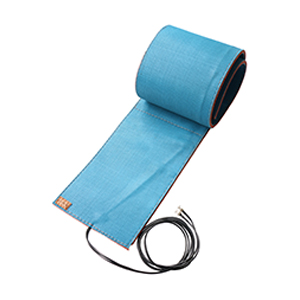
Model: APRIA8007LJS / APRIA9007LJS
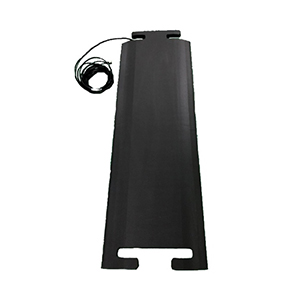
Model: APRIA80012CT / APRIA90012CT
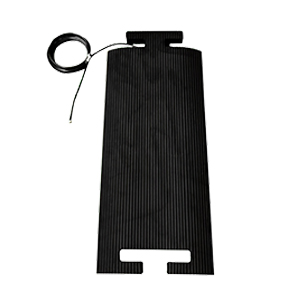
Model: APRIA8009CE / APRIA9009CE
Future Outlook: The Evolution of RFID in Modern Sports
As RFID evolves from item identification into spatiotemporal sensing that bridges the physical world and digital twins, competitive sports are entering the era of the quantified self.
From elite athletes’ movement vectors to the traces left by ski blades, radio waves are forming an invisible data network across the global sports ecosystem.This shift marks not only a technological advancement, but a new phase of insight and continuity in how human performance is understood.