
Fiberglass Antennas: The Core Signal Transmission Components in Anti-Drone Systems
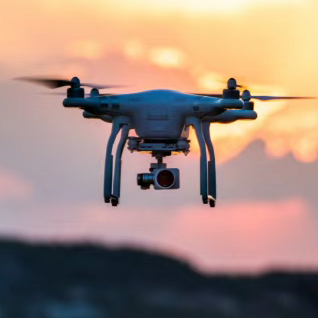
As drone activity rapidly expands, unauthorized UAVs have become a growing security threat to critical environments. Anti-drone systems rely heavily on antenna performance to detect, track, and disrupt drone signals. Among all antenna technologies, Fiberglass Anti-Drone Antennas stand out for their superior durability, low-loss performance, and adaptability, making them essential components in modern counter-UAV defense.
Fiberglass Antennas: The Core Signal Transmission Components in Anti-Drone Systems
Table of Contents
Introduction
Core Characteristics of FRP Antennas for Anti-Drone Systems
Application Scenarios of Fiberglass Antennas in Anti-Drone Equipment
Advantages and Technical Challenges of FRP Antennas
Future Development Trends of FRP Antennas
Conclusion
Introduction
With the rapid proliferation of drone technology, while playing a vital role in aerial photography, logistics, and rescue operations, issues such as unauthorized flights and disruptive flights pose serious threats to public safety, military secrets, and aviation order. As the primary countermeasure against these risks, anti-drone systems must possess precise detection, effective jamming, and stable tracking capabilities.
Antennas, serving as the “bridge” for signal exchange between the equipment and the external environment, directly determine the performance ceiling of anti-drone systems. Among various antenna materials, fiberglass antennas have become the ideal choice for anti-drone systems and are now widely deployed across various operational scenarios.
Core Characteristics of FRP Antennas: Foundational
Advantages for Anti-Drone Equipment
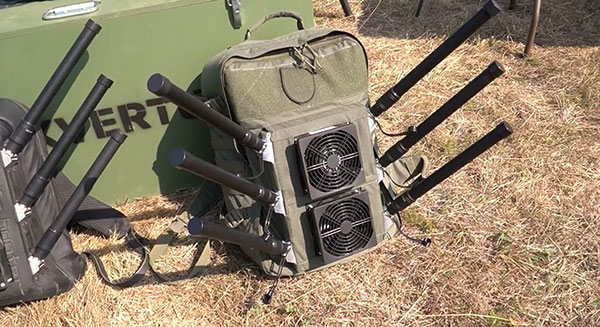
Fiber-reinforced plastic (FRP) antennas, composed of glass fiber reinforcement and resin matrix, combine the weather resistance of non-metallic materials with the signal transmission capabilities of metallic antennas. Their properties align exceptionally well with the operational demands of anti-drone equipment, primarily manifested in three aspects:
1. Low-loss, High-gain Signal Performance
Anti-drone systems must receive weak electromagnetic signals from drones (e.g., remote control signals, video transmission signals) or transmit strong jamming signals to sever drone-controller links. This demands antennas with minimal signal attenuation and high amplification capabilities. Fiberglass maintains a stable dielectric constant (typically 4.0–5.5) and an extremely low loss tangent (≤0.005), minimizing energy loss during signal transmission.
Simultaneously, optimizing the antenna element layout and the curvature design of the FRP housing achieves high gain of 8-15 dBi. This significantly extends the detection range (up to over 10 kilometers) and interference coverage area of anti-drone equipment.
2. Weather-Resistant Environmental Adaptability
Anti-drone systems are frequently deployed in challenging outdoor environments such as airport runways, border patrol zones, and large-scale event venues, where they endure extreme conditions including high temperatures, heavy rainfall, strong winds, and salt spray.
FRP antennas exhibit far superior corrosion resistance compared to traditional metal antennas (e.g., aluminum alloy antennas oxidize easily in salt fog environments, reducing their lifespan to 1-2 years). With anti-corrosion coating treatment, they operate stably within a temperature range of -40°C to 85°C and relative humidity exceeding 95%, while withstanding level 12 wind force. requiring minimal maintenance and meeting the “long-term deployment and all-weather operation” requirements of anti-drone equipment.
3. Lightweight Portability and Concealability Advantages
Certain anti-drone systems (e.g., vehicle-mounted systems, portable anti-drone guns) impose strict weight and size constraints. Fiberglass’s density is only 1/4 to 1/3 that of metal (approximately 1.8–2.0 g/cm³). For equivalent dimensions, fiberglass antennas weigh over 50% less than aluminum alloy counterparts, significantly reducing overall equipment load and enhancing deployment flexibility.
Additionally, FRP antennas can be customized with scene-specific colors (e.g., camouflage hues, low-visibility gray). Their non-metallic composition eliminates metallic reflections, allowing seamless integration into surrounding environments. This makes them ideal for anti-UAV applications requiring high concealment, such as military restricted zones and critical venues.
Typical Application Scenarios of Fiberglass Antennas in Anti-Drone Equipment
Anti-drone equipment primarily falls into three categories: “detection,” “jamming,” and “tracking.” Fiberglass antennas fulfill differentiated roles across these equipment types, meeting specific functional requirements through customized designs:
1. Detection-Type Anti-Drone Equipment: Precise Capture of Drone Signals
The core mission of detection equipment (e.g., drone radars, radio monitoring stations) is to discover and locate drones. In such systems, FRP antennas primarily function as “signal receivers,” employing wideband designs to cover commonly used drone frequency bands (2.4GHz, 5.8GHz civilian bands; 1.5GHz, 2.3GHz industrial bands):
- UAV Radar Systems
Employing fiberglass parabolic antennas, these systems leverage high directivity (beamwidth controllable between 3°-5°) and low sidelobe characteristics to minimize ground clutter interference. They precisely capture UAV radar echo signals, combining signal processing algorithms to identify and locate “low, slow, and small” UAVs.
For example, an anti-drone radar system deployed at an airport, paired with a 1.2-meter diameter fiberglass parabolic antenna, can identify drones with a wingspan greater than 0.3 meters within an 8-kilometer range, with a false alarm rate below 0.1%.
- Radio Monitoring Equipment
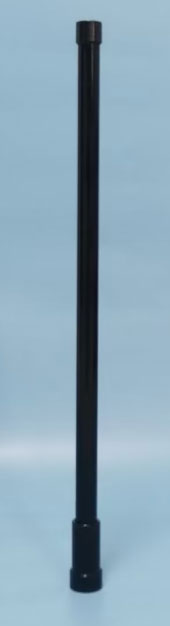
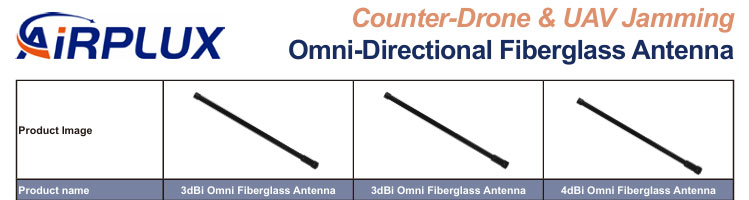
Utilizes FRP omnidirectional antennas or directional array antennas. Omnidirectional antennas scan radio signals from drones over wide areas, while directional antennas precisely track suspected signal sources. For instance, portable radio monitoring stations deployed in border regions feature an FRP omnidirectional antenna measuring just 0.8 meters in length and weighing under 1.5 kg. Operators can carry the device for mobile monitoring, rapidly locating drones illegally crossing borders.
2. Jamming-type Anti-UAV Equipment: Efficiently Severing Signal Links
Jamming devices (e.g., drone jamming guns, fixed jamming stations) suppress drone remote control and video transmission links by emitting strong electromagnetic signals, forcing drones to return or land. FRP antennas serve as “signal transmitters” in such equipment, requiring high power tolerance and wide-band coverage capabilities:
- Portable Anti-Drone Jammer Gun
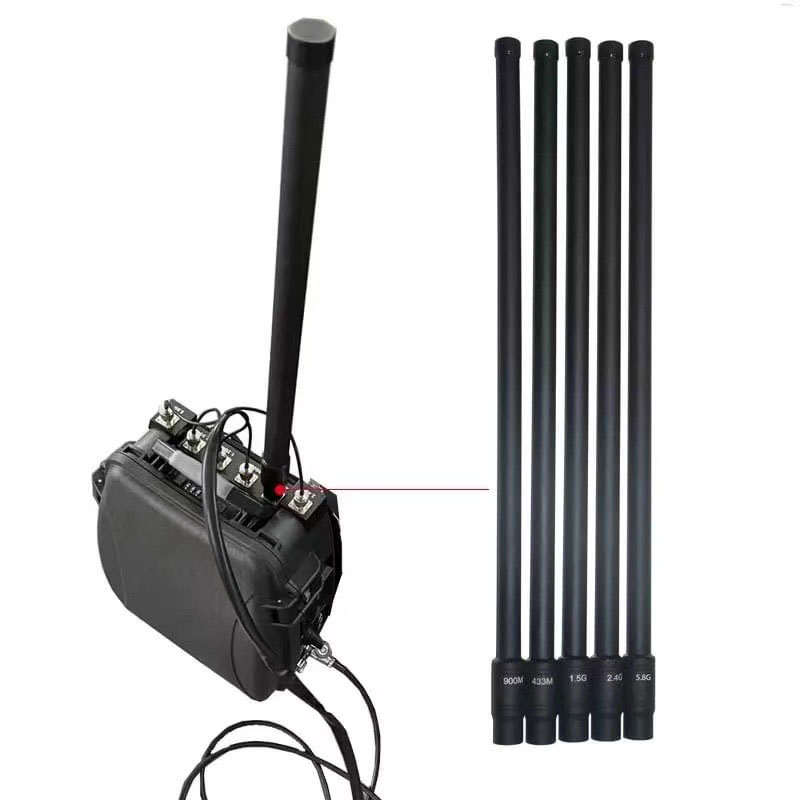
Constrained by weight limitations (typically ≤5kg), these employ miniaturized fiberglass dipole antennas. Each antenna weighs only 0.3kg and integrates three frequency bands: 2.4GHz, 5.8GHz, and 1.575GHz (GPS signal). With a transmission power of up to 30W, they achieve effective jamming ranges of 1-3 kilometers.
Operators aim the handheld device at drones. The lightweight fiberglass antenna reduces fatigue during prolonged holding, while its non-metallic material prevents unintended RF exposure to the operator.
- Fixed Anti-UAV Jammer Station
Deployed around critical targets (e.g., nuclear power plants, government buildings), utilizing fiberglass Yagi or log-periodic antennas. Multi-antenna array design achieves 360° dead-zone-free interference coverage.
An interference station deployed at a nuclear power plant, equipped with four fiberglass Yagi antennas, covers the full 100-6000MHz frequency band with an interference radius of 5 kilometers. It can simultaneously suppress multiple drones operating on different frequencies. The fiberglass antennas’ salt-fog resistance makes them suitable for the humid environment surrounding nuclear power plants.
3. Tracking-type Anti-UAV Equipment: Stable Target Trajectory Locking
Tracking devices (e.g., electro-optical tracking systems, UAV capture devices) must continuously monitor flight paths after detecting drones or guide capture equipment toward targets. FRP antennas serve as “signal trackers” in such systems, requiring rapid beam scanning and high signal stability:
- Electro-Optical/Electromagnetic Hybrid Tracking System
Integrates FRP directional antennas with electro-optical cameras. The antenna continuously receives the drone’s electromagnetic signals, adjusting its orientation based on signal strength feedback. This enables dual “electromagnetic + optical” tracking in conjunction with the camera.
For instance, in a composite tracking system deployed for major event security, the FRP antenna achieves beam switching speeds of 0.1 seconds per cycle. It can precisely track drones traveling at speeds up to 60 kilometers per hour, ensuring high capture rates when deploying entrapment nets.
Comparative Advantages and Challenges of FRP Antennas in Anti-UAV Equipment
1. Advantages Compared to Traditional Metal Antennas
Compared to aluminum alloy and copper antennas previously widely used in anti-UAV equipment, the core advantage of FRP antennas lies in their “all-scenario adaptability”:
Characteristic | Fiberglass (FRP) Antennas | Aluminum Antennas | Application Differences |
Signal Loss | Low (dielectric loss ≤ 0.005) | Higher (oxidation increases loss) | Detection range improved by 20%–30% with FRP antennas |
Environmental Adaptability | -40°C to 85°C; resistant to salt fog and strong winds | -20°C to 60°C; prone to oxidation and corrosion | Outdoor service life extended to 5–8 years |
Weight | 1.8-2.0g/cm³ | 2.7g/cm³ | Overall equipment weight reduced by 30%–50% |
Concealment | Customizable colors; no metallic reflection | Strong metallic sheen; easily visible | Suitable for deployment in military and confidential environments |
2. Current Technical Challenges
Despite their significant advantages, FRP antennas still face challenges requiring breakthroughs in high-end anti-UAV applications:
- High-frequency signal transmission bottleneck
As drones evolve toward “miniaturization” and “high-speed operation,” some new models utilize 6-18GHz millimeter-wave signals. FRP materials exhibit slightly increased dielectric loss at high frequencies, requiring resin formulation optimization (e.g., ceramic powder modification) to further reduce loss;
- Multi-band Integration Challenges
Anti-drone systems must simultaneously cover multiple frequency bands (e.g., GPS, BeiDou, remote control, video transmission). Traditional FRP antennas are predominantly single-band designs, and integrating multiple bands often leads to inter-band interference. Novel multi-feed coupling structures must be developed to minimize signal crosstalk.
Future Trends: Collaborative Innovation Between Fiberglass Antennas and Anti-UAV Technology
As anti-UAV demands continue to evolve, fiberglass antennas will advance toward “high performance,” “intelligence,” and “integration”:
- High Performance
By adopting carbon fiber-glass fiber hybrid reinforcement materials, mechanical strength and signal gain will be further enhanced while reducing weight. This enables adaptation to new equipment such as soldier-portable and drone-mounted anti-UAV systems.
- Intelligent Operation
By integrating smart beamforming technology, FRP antennas can automatically adjust beam direction and gain based on drone signal strength, enabling “on-demand coverage” and minimizing interference with nearby legitimate electronic devices;
- Integration
Antennas will be integrated with sensors (e.g., temperature sensors, tilt sensors) for anti-drone equipment. The FRP housing will also serve as protective casing for sensors, enhancing system integration and reliability.
Conclusion
Against the backdrop of rapid technological evolution in anti-UAV systems, FRP antennas have emerged as a critical enabler for transitioning these devices from “laboratory prototypes” to “operational deployment” due to their core advantages of low loss, weather resistance, and lightweight construction.
From all-weather airport surveillance to mobile border defense, from large-scale event security to covert protection of military restricted zones, FRP antennas continuously enhance the detection accuracy, jamming efficiency, and environmental adaptability of anti-drone systems through ongoing technological optimization.
Looking ahead, the deep integration of material science and RF technology will enable FRP antennas to overcome high-frequency and multi-frequency application bottlenecks, providing key driving force for building safer, more efficient anti-drone defense systems.